


This week, close to a million young South Africans are sitting in exam halls across the country.
Some of you are halfway through your STEM papers: Mathematics, Physical Sciences, Life Sciences, Information Technology, Engineering Graphics and Design. Some of you begin on Monday.
Whether you write the NSC or the IEB, whether your school has a fully equipped laboratory or a laboratory that exists only in a textbook, I want to tell you what somebody should have told me at your age:
You are the new face of innovation
Not the scientists in documentaries. Not the engineers in faraway countries. You. The person reading this between papers, with a highlighter in one hand and past papers spread across the bed.
Where I started
I say this because I know how far a young person can travel from where they begin. In my home village in uMnambithi, Ladysmith, in KwaZulu-Natal, science felt like something that happened somewhere else, to someone else. I never touched a laboratory until after matric. I had never used a computer. I did not own a cellphone.
READ: Gauteng matric exams 2026: Maile targets 100% monitoring for record 203,794 candidates
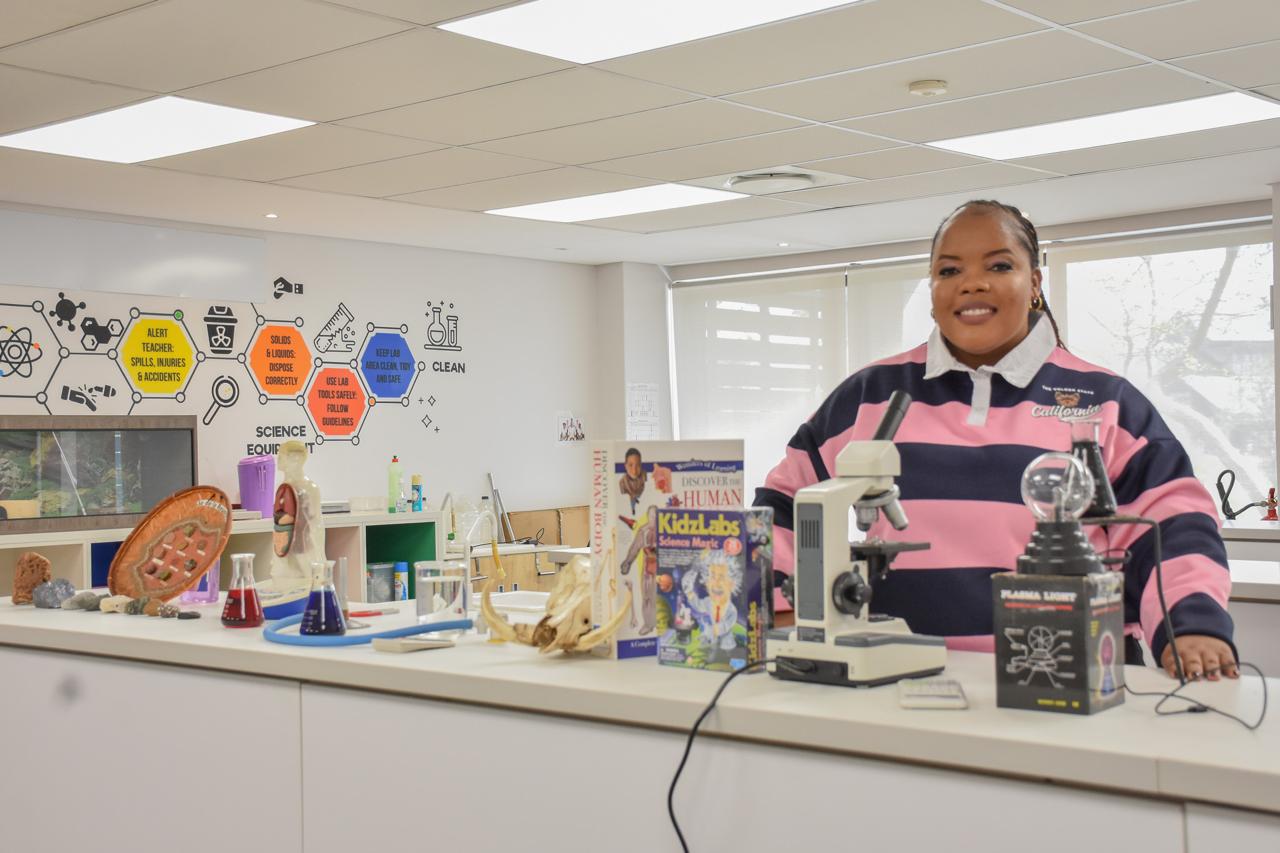
Today I am a seasoned head of science, and I am completing a PhD in Science and Technology Education at Wits. In 2026, I was privileged to be recognised by the Sunday World Unsung Heroes as one of South Africa’s top maths and science educators. I have presented my research at an international conference, and I have had the honour of supervising and mentoring maths and science student teachers.
I do not say this to boast. I say it because the distance between where I started and where I stand is the whole argument: if someone who had never seen a Bunsen burner can end up teaching chemistry, the barriers in front of you are not as solid as they look.
A key, not just a subject
Mathematics and Physical Sciences are not just blocks on a timetable. They are keys. Engineering, medicine, pharmacy, actuarial science, data science, architecture and astronomy all ask for them. Without them, those doors do not close slowly. They close on the day you apply.
But the stakes are bigger than one application form. South Africa needs people who can stabilise the grid, model the next drought, write the code, design affordable medical devices and build industries that create jobs. Those people are not coming from somewhere else. They are sitting in this year’s exam halls. The problems of the next forty years will be solved by people your age. That is what I mean when I call you the new face of innovation.
And innovation needs everyone. Too many young people, especially girls and learners from rural and township schools, are still quietly steered away from maths and science. It’s too hard. It’s not for people like you. Take something easier. Nobody has to ban you from a subject. They only have to convince you that you do not belong in it.
In March 2025, Dr Rakeshnie Ramoutar-Prieschl, then acting deputy director-general at the Department of Science, Technology and Innovation, noted that women make up less than 30% of South Africa’s STEM workforce. Numbers such as that are not set in boardrooms. They are set in Grade 10, when a learner chooses subjects, or has them chosen for them. Every one of you sitting a STEM paper this month is already changing that story.
Wonder and belonging
I have taught maths and science for years. I call my classroom a class of wonder and belonging. Wonder, because science starts with Why? and What if? Belonging, because a learner who feels they are in the wrong room will never ask those questions out loud.
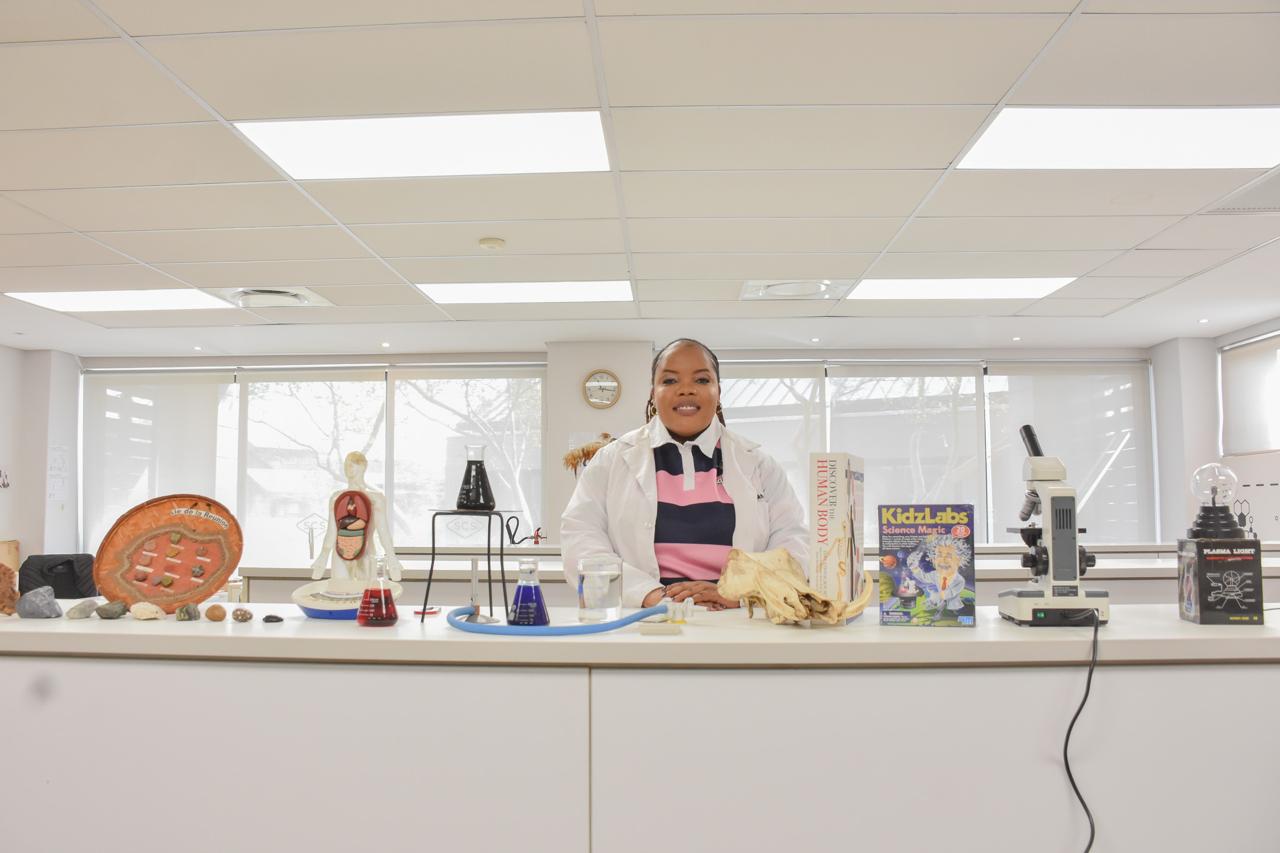
So we measure angles in maths and use them to design model Mars rovers. We make soap, then sell it, and chemistry meets entrepreneurship. We make fire from animal dung and learn that knowledge from home counts as science too. Tablets are tools for designing and building, never a reward for good behaviour. And when an experiment fails, we treat it as information, not humiliation.
READ: Mpumalanga pupils seek Constitutional Court reprieve in fight for matric results
That is what innovation actually looks like: curiosity, failure, honesty, and another attempt. You have been doing it all year without calling it that.
For the papers still ahead
You have done the work. You have the formulae, the definitions, the late nights. Trust them.
- Read every question twice. Underline what is given and what is asked.
- Show your working. Method earns marks even when the final answer slips.
- Watch your units. A correct number with the wrong unit is an unfinished answer.
- Don’t get stuck. If a question refuses to open, move on and come back to it with fresh eyes.
- Sleep. A rested brain recalls more than an exhausted one that crammed until 3am.
- When you meet a question that looks impossible, and you will, remember that it is not a verdict on whether you belong in science. Every engineer, every doctor and every physicist has stared at a problem they could not solve. Read it again. Show your working. Take the marks that are there and move on.
If you have already written some of your STEM papers, do not relive them in the corridor. That paper is finished. Close that book and open the next one.
After the last paper
When the results come out and you weigh your options for 2027, someone may tell you engineering is too hard, medicine is too long, or science is not for people from your school, your village or your background. If you want it, choose it anyway. And if your marks do not land where you hoped, remember that the road into STEM has more than one entrance: rewrites, bridging and extended programmes, and TVET pathways have carried many people to the same destination.
Some of you will become engineers. Some will become doctors, coders, inventors and teachers. Some will debate beautifully in isiZulu or siSwati and solve differential equations in the same afternoon. Nobody gets to close a door on you because of who you are or where you come from.
I first walked into a laboratory after matric. You have already walked into the exam room. Finish what you started.
Dear matriculant, the future is waiting for your answers. Show your working.
- Cebolakhe Zondo is head of science at a co-educational school and a PhD candidate in Science and Technology Education at the University of the Witwatersrand. She was named one of South Africa’s top maths and science educators in the 2026 Sunday World Unsung Heroes. She writes in her personal capacity.
- This week, close to a million young South Africans are sitting in exam halls across the country.
- Some of you are halfway through your STEM papers: Mathematics, Physical Sciences, Life Sciences, Information Technology, Engineering Graphics and Design.
- Some of you begin on Monday.
- Whether you write the NSC or the IEB, whether your school has a fully equipped laboratory or a laboratory that exists only in a textbook, I want to tell you what somebody should have told me at your age: You are the new face of innovation Not the scientists in documentaries.
- Not the engineers in faraway countries.


