


In my last Health Matters column, published shortly after our municipal elections, I posed a provocative question: If you fail to vote or fail to vote responsibly, are you a killer?
My argument was that voting in municipal elections is not simply about choosing politicians. Whether we realise it or not, when we vote we choose people whose decisions can have life-or-death implications at municipal level.
Municipalities are among the most important public-health institutions, even though we seldom think of them that way. How municipalities are governed determines whether we live in healthy, safe communities or environments where preventable illness, injury and death become part of everyday life.
Across the country, political parties are negotiating who will govern municipalities where no party secured an outright majority. Political ideologies, competing ambitions, personalities and the allocation of positions of power dominate much of the discussion. As a public-health practitioner, what I see unfolding in the coalition negotiations does not fill me with confidence that politicians fully appreciate the importance of municipalities as public-health institutions.
Voters understand what politicians don’t
Yet the dramatic changes in voting patterns suggest that voters may understand something their politicians have not fully grasped. I read the election results as a growing unwillingness to accept that political loyalty should take precedence over the delivery of the services on which people’s lives depend.
Voters may disagree about which political parties should govern but surely the message emerging from the elections is that municipalities exist to serve the people who live in them, not the political interests of those who govern them.
Recent research by the South African Institute of Race Relations (IRR) offers an interesting insight. Its March poll of registered voters found that 75% wanted better municipal services through improved value for money rather than higher rates and charges, while 61% rated the value they received for their taxes as poor. The IRR argues that value for money provides common ground on which coalition governments could be built, even where parties disagree on other issues.
While politicians negotiate over who gets to govern, the people who elected them appear to agree on something simple – money should be spent transparently, responsibly and in ways that deliver value to the people.
More needed than coalition guidelines
On November 11, the minister of cooperative governance and traditional affairs issued non-binding Guidelines for Stable Coalitions in Local Government. The guidelines encourage coalition partners to enter into written agreements identifying common policy priorities, with the provision of basic municipal services as their primary goal. Such written agreements would be a step in the right direction but there is an important omission in the guidelines.
While considerable attention is given to allocating political positions, managing disagreements and maintaining stability, the guidelines do not explicitly require coalition agreements to contain measurable service-delivery commitments.
I am suggesting that coalition agreements should include a Municipal Public Health and Safety Charter. Keep it simple: identify priority risks, tell me what will be done about them, by when, at what cost and who will be accountable. I want a face and a name.
Political parties were happy to fill every lamppost with their candidates’ smiling pictures when they were courting my vote. Now I want to see those pictures again, linked to deliverables. I want to know which political leader is answerable and which municipal official is responsible for addressing the public-health risks.
This is not an unreasonable request. Surely an agreement that specifies who gets to govern should also specify what they have agreed to deliver?
Ensuring value for money
This brings us back to the IRR’s central proposition that most voters want value for money. The IRR’s report makes another important point. Value for money is not necessarily the same as obtaining the lowest price. Government spending may legitimately pursue wider social or environmental benefits, provided the benefits are identified, their costs made transparent and their delivery demonstrated.
This is where a public-health lens adds something critical to the debate. What should value for money mean to South Africans? We can boil this down to four questions:
• Was the money spent legally? This is the basic question of governance and compliance.
• Were the goods or services delivered and at a reasonable price? This speaks to transparent procurement and delivery.
• Did spending the money make people’s lives better, healthier and safer? This is the question of public value.
• What did we prevent from happening because we spent the money strategically? This is the major public-health addition.
The Auditor-General has said a lot about the first two questions. But it is the last two that receive far too little attention. A municipality can follow procurement regulations, obtain competitive prices and account for every rand spent, yet fail to improve the lives of its residents or prevent future public-health emergencies. Money spent is an input. Value is an outcome.
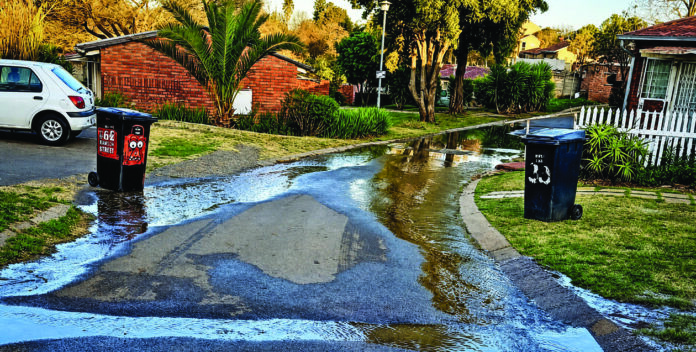
As an example, imagine two municipalities, each spending R10 million on wastewater infrastructure. The first repeatedly repairs burst sewer pipes, responds to sewage spills and pays for emergency clean-ups. The second invests in preventative maintenance, identifies vulnerable infrastructure early and reduces the frequency of sewage spills. Both can report that they spent R10 million on sanitation. Both may have complied with every procurement regulation. But they did not deliver the same value. The second potentially prevented disease, protected the environment and avoided the additional costs of infrastructure failure.
Tracking deliverables
It is important to remember that when public health succeeds, often nothing happens. No cholera outbreak. No child killed at a dangerous crossing. No devastating fire spreading through an informal settlement. No dramatic news headlines about those tragedies. But preventing such harm represents some of the greatest returns on public expenditure.
Municipalities have budgets, development plans and reporting systems. What is missing is a clear connection between expenditure and results. This is where a simple Municipal Public Health and Safety Charter, supported by public reporting, can be transformative.
Reporting would allow us to track key deliverables: How many dangerous crossings have been made safer? How many failing wastewater systems have been rehabilitated? How many households can emergency services now locate reliably? How many known risks have been addressed before somebody suffers the consequences?
A coalition can remain intact for five years while essential services continue to deteriorate. We should not simply be asking whether the money was spent correctly. We should be asking what difference it made to people’s lives and, perhaps more importantly, what illness, injury and death could have been prevented if that money had been spent more wisely.
• Dr Wolvaardt is the founder of the Foundation for Professional Development and has recently stepped down as its managing director.
- Municipal elections impact public health significantly as municipalities govern environments affecting illness, injury, and death rates.
- South African voters demonstrate dissatisfaction with political loyalty prioritized over effective service delivery, with 75% favoring better services without higher charges.
- The minister's non-binding Guidelines for Stable Coalitions lack requirements for measurable service-delivery commitments in coalition agreements.
- A proposed Municipal Public Health and Safety Charter would specify public-health priorities, accountability, costs, and timelines in coalition agreements.
- Value for money in municipal spending must consider legality, service delivery, improvement in residents' wellbeing, and prevention of future public-health emergencies.


