


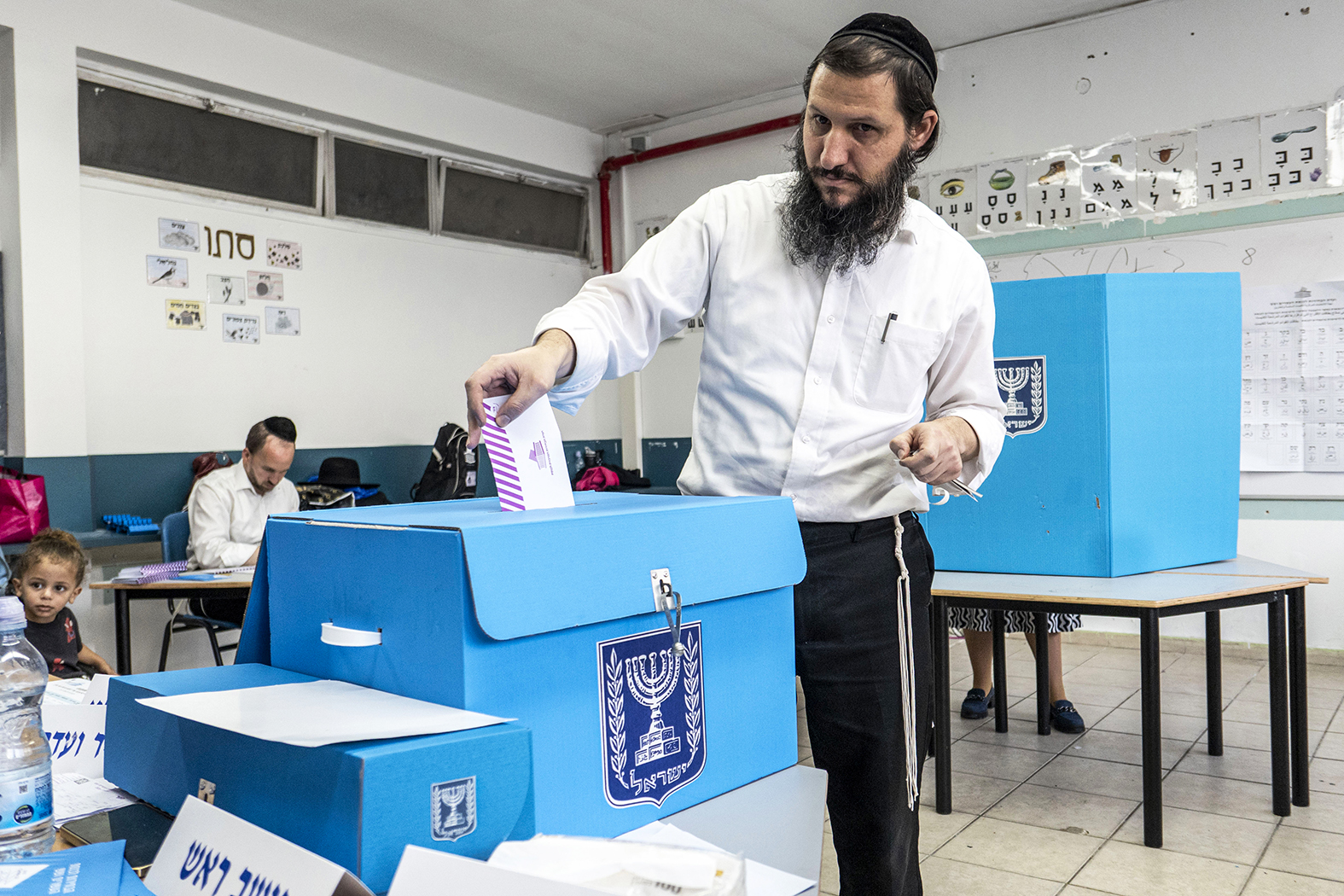
Who would have thought that Benjamin Netanyahu would be politically breathing at the end of these general elections in Israel. After all, the polls suggested that Israeli society was fed up with him and his far-right coalition partners. Alas, the racism of Israeli society runs deep, the cognitive dissonance is remarkable and the moral panic obvious.
Just like in the case of Tom Bradley, the California mayor who thought he could run for governor, we yet again experience the Bradley effect, an example of social desirability bias. Specifically, some voters give inaccurate polling responses for fear that, by stating their true preference, they would open themselves to criticism of racial motivation.
Members of the public might feel pressure to provide an answer that is deemed to be more publicly acceptable or political correct. After all, you don’t openly want to say you support genocide.
None of the contesting parties, bar the Arab ones, suggested an end to the genocide in Gaza. All of them preached a Zionist coalition – in other words, not with the Arab parties. And yet here we are; the Arab parties also came out in their numbers and secured a historic 19 seats in the Knesset. Which means the elections have gridlocked between the two main candidates. Netanyahu and his opponent, Gadi Eisenkot, can each form a government only if they enter into a coalition with some, if not all, the Arab parties. We will have to see if the two candidates will dare make such a political move. To finally give equal rights to the Palestinians living in Israel, I think not.
Record numbers of Israelis came to the polls and still the country seems split in half. But this is not really the reality in the body politic. Two halves suggest different political positions and yet this is hardly the case. This one is a classic case of replacing one devil with another.
I guess one of the facts we can celebrate is that technically, Netanyahu has lost support in Israel, having had 68 seats and now 53. Admittedly, not all votes have been counted at this point but the numbers will not sufficiently alter the status quo.
All the while, war looms large in the background. Netanyahu wanted to drop some bombs on Iran just days before the voting but his Generals said no. They understood that their boss wanted to manipulate the people on the eve of the elections and that would have been unfair. Commendable, I guess, but certainly not the most moral army in the world.
Then to add fuel to the fire, Netanyahu, upon realising he had lost his majority, began to spread rumours that the Arab parties have been assisted by foreign governments, hence their remarkable performance in the elections.
Islamophobia from the Lukid Party reared its ugly head; no surprise here. He wants Israelis to believe this foreign interference malarkey. Shame on him.
Where does all this leave the people of Israel and the Palestinians in Gaza and the West Bank?
Unfortunately, if no deal is struck between the main candidates and the Arab parties, Netanyahu continues as prime minister while a fresh election is declared within the next six months.
The impasse will almost certainly result in a resumption of war with Iran.
Netanyahu will live another day and will not face the corruption charges that are waiting for him. He could decide to form a minority government but this would be a non-starter since the opposition have most of the seats in Parliament.
Eisenkot could do the unthinkable — enter into a coalition with the Palestinians, oust Bibi and then negotiate cleverly about how exactly the Arabs would be occupying positions of power in the executive branch of the government.
The Arabs would have to push back hard though. Among their demands would obviously be an end to hostilities in Gaza and the West Bank. That could be a bitter pill and a stretch too far for Eisenkot.
At the end of the day though, does all this matter if all the Zionist parties have made it crystal clear that they will never support an independent Palestinian State? In other words, the emancipation of the Palestinians will remain a mirage in the desert of Palestine.
• Dr Oscar van Heerden is a senior research fellow at the Centre for African Diplomacy and Leadership at UJ
- Israeli general elections resulted in a political deadlock, with Benjamin Netanyahu and Gadi Eisenkot unable to form a government without the cooperation of Arab parties.
- Arab parties secured a historic 19 seats in the Knesset, marking significant voter turnout from Arab Israelis.
- Netanyahu's Likud Party lost seats, declining from 68 to 53, but he may remain prime minister if no coalition is formed.
- Netanyahu accused Arab parties of receiving foreign government assistance to boost their election performance, spreading Islamophobic rhetoric.
- A coalition including Arab parties is unlikely to be formed as Zionist parties refuse to support an independent Palestinian state, prolonging the conflict situation.
Who would have thought that Benjamin Netanyahu would be politically breathing at the end of these general elections in Israel. After all, the polls suggested that Israeli society was fed up with him and his far-right coalition partners. Alas, the racism of Israeli society runs deep, the cognitive dissonance is remarkable and the moral panic obvious.
Just like in the case of Tom Bradley, the California mayor who thought he could run for governor, we yet again experience the Bradley effect, an example of social desirability bias. Specifically, some voters give inaccurate polling responses for fear that, by stating their true preference, they would open themselves to criticism of racial motivation.
Members of the public might feel pressure to provide an answer that is deemed to be more publicly acceptable or political correct. After all, you don’t openly want to say you support genocide.
None of the contesting parties, bar the Arab ones, suggested an end to the genocide in Gaza. All of them preached a Zionist coalition – in other words, not with the Arab parties. And yet here we are; the Arab parties also came out in their numbers and secured a historic 19 seats in the Knesset. Which means the elections have gridlocked between the two main candidates. Netanyahu and his opponent, Gadi Eisenkot, can each form a government only if they enter into a coalition with some, if not all, the Arab parties. We will have to see if the two candidates will dare make such a political move. To finally give equal rights to the Palestinians living in Israel, I think not.
Record numbers of Israelis came to the polls and still the country seems split in half. But this is not really the reality in the body politic. Two halves suggest different political positions and yet this is hardly the case. This one is a classic case of replacing one devil with another.
I guess one of the facts we can celebrate is that technically, Netanyahu has lost support in Israel, having had 68 seats and now 53. Admittedly, not all votes have been counted at this point but the numbers will not sufficiently alter the status quo.
All the while, war looms large in the background. Netanyahu wanted to drop some bombs on Iran just days before the voting but his Generals said no. They understood that their boss wanted to manipulate the people on the eve of the elections and that would have been unfair. Commendable, I guess, but certainly not the most moral army in the world.
Then to add fuel to the fire, Netanyahu, upon realising he had lost his majority, began to spread rumours that the Arab parties have been assisted by foreign governments, hence their remarkable performance in the elections.
Islamophobia from the Lukid Party reared its ugly head; no surprise here. He wants Israelis to believe this foreign interference malarkey. Shame on him.
Where does all this leave the people of Israel and the Palestinians in Gaza and the West Bank?
Unfortunately, if no deal is struck between the main candidates and the Arab parties, Netanyahu continues as prime minister while a fresh election is declared within the next six months.
The impasse will almost certainly result in a resumption of war with Iran.
Netanyahu will live another day and will not face the corruption charges that are waiting for him. He could decide to form a minority government but this would be a non-starter since the opposition have most of the seats in Parliament.
Eisenkot could do the unthinkable — enter into a coalition with the Palestinians, oust Bibi and then negotiate cleverly about how exactly the Arabs would be occupying positions of power in the executive branch of the government.
The Arabs would have to push back hard though. Among their demands would obviously be an end to hostilities in Gaza and the West Bank. That could be a bitter pill and a stretch too far for Eisenkot.
At the end of the day though, does all this matter if all the Zionist parties have made it crystal clear that they will never support an independent Palestinian State? In other words, the emancipation of the Palestinians will remain a mirage in the desert of Palestine.
• Dr Oscar van Heerden is a senior research fellow at the Centre for African Diplomacy and Leadership at UJ


