


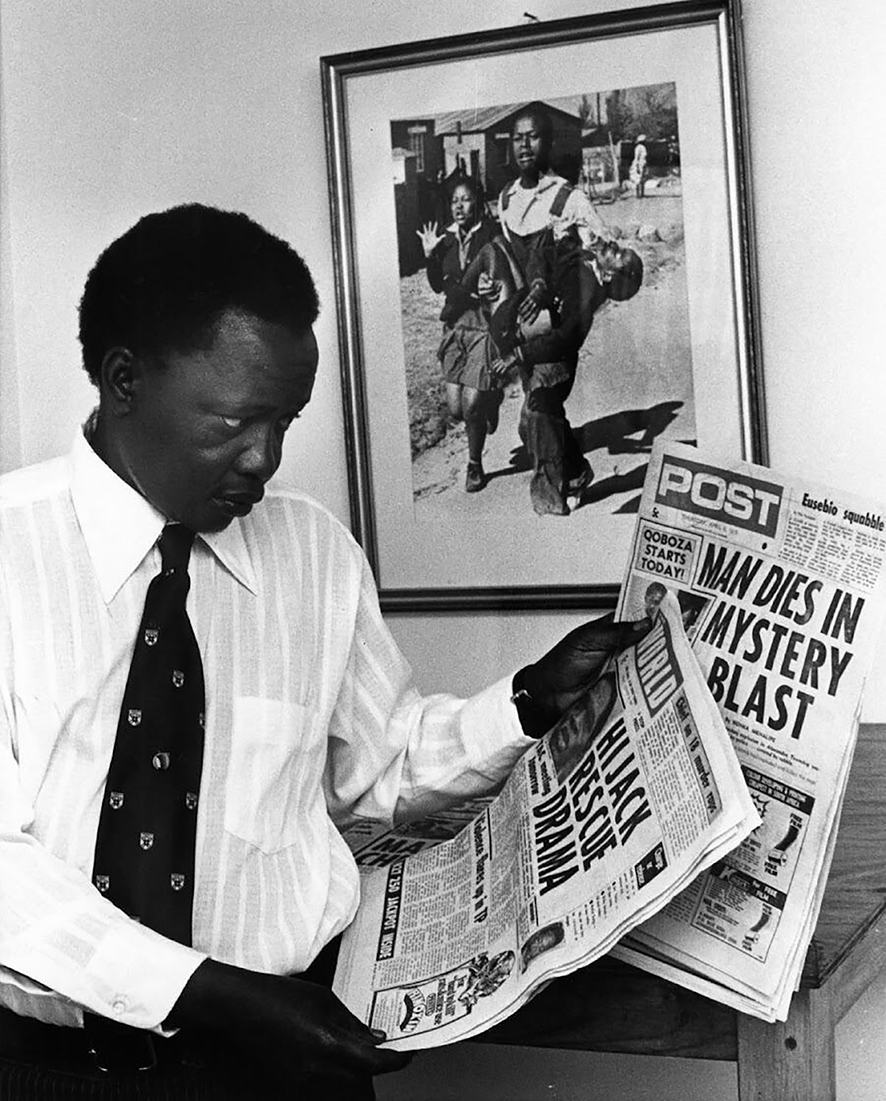
Forty-nine years ago, the state walked into a newsroom and switched off the lights, confident the darkness would stay. It didn’t. Next year will be 50 years since October 19, 1977 – Black Wednesday.
Justice Minister Jimmy Kruger banned The World and Weekend World newspapers, Pro Veritate and 19 Black Consciousness organisations. He detained journalists Percy Qoboza, Aggrey Klaaste, Joe Tlholoe, Mathatha Tsedu and Don Mattera. He banned activist cleric Beyers Naudé and Daily Dispatch editor Donald Woods. He closed the Black People’s Convention, the SA Students Organisation, the Soweto Students Representative Council and 16 others.
A month earlier, the apartheid state machinery killed the leader of the Black Consciousness Movement, Steve Biko.
A year earlier, on June 16, 1976, schoolchildren took to the streets rejecting Bantu Education. The state shot them.
To write the same obituary again would be to do what Kruger wanted: treat The World newspaper as dead. It is not. It migrated. Apartheid thought black news needed a printing press. It didn’t. It needed a street corner, a classroom or a church.
The news returned to where it always lived – in the mouths of people. The World newspaper sold 100 000 copies a day because it spoke like Soweto. It wrote about pass raids, rent hikes, soccer and funerals. It was banned because it refused to translate black pain into white comfort. The refusal moved to the Sowetan, which rose from its ashes. To community radio stations in the ’90s. To the small weeklies that covered taxi violence and municipal theft.
Today it lives where Qoboza could never have imagined — in a voice note. At 5am, the black world The World newspaper once served gets its news on WhatsApp. “Water off in Duduza.” “Road closed in KwaMashu.” “Funeral of MaDlamini in Khayelitsha on Saturday.” Same urgency, same mix of critical and ordinary. This is our victory and our warning.
The victory is that Black Wednesday failed. You cannot ban consciousness. The ideas of the organisations banned that day have outlived the banning orders. You find them in shack-dwellers fighting evictions, in students demanding decolonised education and in the insistence that black life must be written by black hands.
The children of 1976 became the parents of #FeesMustFall.
The warning is how censorship has changed. In 1977, censorship needed a policeman, a van, a proclamation in the Government Gazette.
Today, you don’t need to ban anything. You make journalism unaffordable and unbelievable. You don’t close a newspaper. You let distribution collapse and advertising go to Google and Facebook. You don’t detain Qoboza; you drown him in 10 000 fake accounts.
The apartheid state said The World newspaper was a threat to national security. Today, every fragile municipality, tenderpreneur and faction has learnt the same line: “The story is anti-our movement. That journalist is counter-revolutionary.” Same trick, new clothes.
Taking the story forward means we must stop mourning The World and start defending what replaced it. The freedom to publish is in our Constitution. The ability to publish — to pay a reporter to sit through a four-hour council meeting, to check a fact twice — is dying.
Kruger thought he was ending a conversation. He was only changing its platform. The question for the next 50 years is whether anyone will be left with the skill, time and protection to listen carefully, verify, and write it down clearly for the next morning.
The World newspaper was banned. The world it covered refused to be.
• Mbatha is a current affairs analyst
- On October 19, 1977, known as Black Wednesday, Justice Minister Jimmy Kruger banned The World and Weekend World newspapers, among others, and detained prominent journalists and activists.
- The banning followed the killing of Black Consciousness Movement leader Steve Biko in 1977 and the 1976 schoolchildren protests against Bantu Education that were violently suppressed.
- The World newspaper, which sold 100,000 copies a day by addressing black South African issues with authenticity, was banned because it refused to soften black pain for white audiences.
- After the ban, black news dissemination migrated from print to community radio, small weeklies, and now to digital platforms like WhatsApp voice notes.
- Modern censorship differs by undermining journalism financially and spreading misinformation online rather than outright bans, risking the survival of quality investigative reporting.


