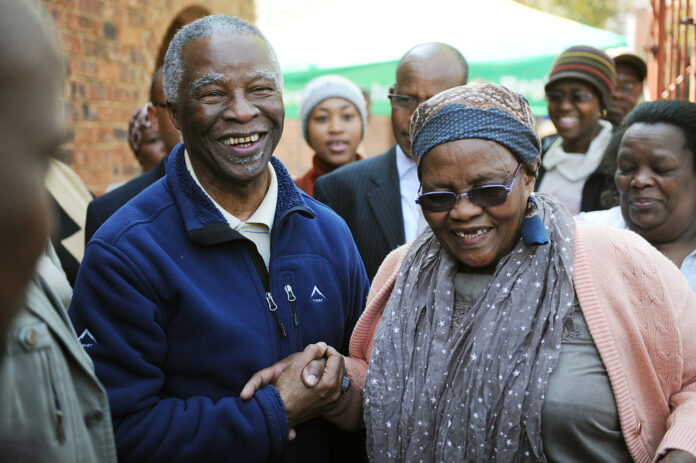
In the early decades of South Africa’s democracy, few campaign strategies proved as potent as door-to-door mobilisation. Championed during the presidency of Thabo Mbeki, this approach became a defining feature of the ANC electoral machinery, particularly in the watershed 2004 South African general election and 2006 South African municipal elections.
It was not merely a tactic, it was an extension of the ANC’s liberation ethos: meeting people where they are, listening to their grievances, and translating proximity into political legitimacy.
Two decades later, however, South Africa’s political terrain has shifted dramatically. Voter behaviour is evolving, trust in institutions is uneven, and socio-economic frustrations are more acute. The question is no longer whether door-to-door campaigning once worked but whether it remains viable in a fragmented, digitally mediated, and increasingly sceptical electorate.
Door-to-door mobilisation was central to the ANC’s dominance in the first decade of democracy. In 2004, the party secured nearly 70% of the national vote, consolidating its position as the dominant political force.
This success was not accidental. The ANC’s campaign machinery relied heavily on grassroots structures – branches, volunteers, and community networks. Door-to-door engagement allowed the party to personalise its message, reinforce its liberation credentials, and maintain a direct line of communication with voters.
Door-to-door campaigning remains viable because South Africa is still a society marked by inequality and uneven access to digital platforms. In many rural and peri-urban areas, face-to-face engagement remains one of the most effective ways to reach voters. However, its effectiveness is no longer guaranteed. The political context has changed in at least three important ways:
Declining political trust and loyalty
The ANC’s electoral dominance has weakened over time, with signs of declining support emerging as early as the late 2000s. Voters are increasingly issue-driven rather than loyalty-driven. Door-to-door campaigns that rely on historical allegiance may therefore fall flat unless they engage meaningfully with current concerns such as unemployment, corruption, and service delivery.
Urbanisation and time poverty
South Africa is more urban and fast-paced than it was in 2004. Many voters, particularly in cities, are less available for extended personal engagement.
The rise of digital political communication
Recent research shows that social media, targeted messaging, and data analytics now play a critical role in shaping political narratives. Door-to-door campaigning, if used in isolation, risks being outdated.
Anticipated challenges
Door-to-door campaigning requires significant human and financial resources. In a context of declining party membership and organisational strain, sustaining such efforts may be difficult.
The effectiveness of the strategy depends on the credibility of those conducting it. If volunteers are perceived as disconnected from community realities, the strategy can backfire.
Rather than abandoning door-to-door campaigning, the ANC, and other political parties, should consider integrating it into a hybrid campaign model. Using data analytics to tailor messages to specific voter segments can enhance campaign effectiveness. Digital platforms allow for continuous engagement beyond election cycles.
Structured engagements, such as community meetings, can complement door-to-door efforts by reaching larger audiences while maintaining a participatory ethos. Shifting from identity-based to issue-based messaging can resonate more strongly with contemporary voters. This requires a deeper understanding of local socio-economic dynamics.
Door-to-door campaigning is not obsolete, but its continued relevance lies in its ability to build trust, gather insights, and mobilise voters at a grassroots level. However, in a rapidly changing political environment, it must evolve.
- Tenza is a PhD student at Wits
- In the early decades of South Africa’s democracy, few campaign strategies proved as potent as door-to-door mobilisation.
- Championed during the presidency of Thabo Mbeki, this approach became a defining feature of the ANC electoral machinery, particularly in the watershed 2004 South African general election and 2006 South African municipal elections.
- It was not merely a tactic, it was an extension of the ANC’s liberation ethos: meeting people where they are, listening to their grievances, and translating proximity into political legitimacy.
- Two decades later, however, South Africa’s political terrain has shifted dramatically.
- Voter behaviour is evolving, trust in institutions is uneven, and socio-economic frustrations are more acute.