


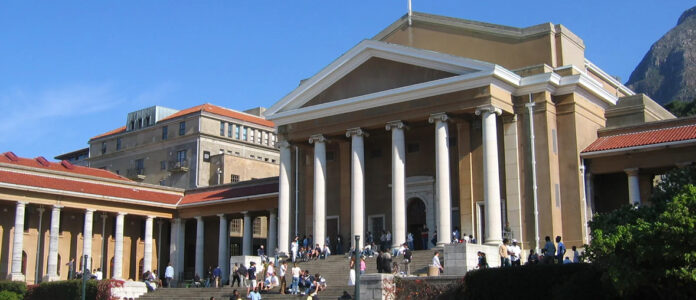
South Africa’s universities occupy a special place in our democracy. They are centres of knowledge, innovation and debate, and they shape the minds that will lead our country into the future. But they are not above the law, and cannot be insulated from the lived realities of South Africans.
In recent weeks, our portfolio committee on higher education’s oversight work has been characterised in some quarters as “academic xenophobia”. I reject that label. Parliamentary oversight is not hostility; it is a constitutional duty to interrogate governance, spending and compliance in public institutions.
The authors of Academic Xenophobia, African scholars in South African universities, argue that discrimination in universities can be subtle sometimes, expressed through institutional processes and gatekeeping. That is precisely why clarity matters: rigorous oversight should not be conflated with prejudice, and legitimate compliance questions should not be dismissed through slogans.
Our engagements with universities can be robust because the stakes are high: young graduates are unemployed, families are under pressure, and taxpayers expect value for money. Asking hard questions is not an attack on anyone; it is how democratic accountability works.
For example, following remarks attributed to Professor Srila Roy, the University of the Witwatersrand publicly distanced itself from the comments. That episode showed how quickly public debate can be inflamed and why careful, evidence-led discussion is essential.
Universities South Africa (USAf) also entered the debate with a statement headlined, “USAf makes the case for global talent in SA’s universities.”
While global talent can and does strengthen our system, the statement blurred an important distinction: supporting international scholarship is compatible with insisting on lawful, transparent recruitment and fair opportunity for South Africans.
The reaction from many South Africans was immediate: they want answers about whether publicly funded institutions are prioritising the development of local talent and acting in the public interest.
To be clear: foreign academics are not the problem. Many have made important contributions to our higher education system, particularly in scarce-skills fields such as science, engineering and health sciences.
Their work strengthens our institutions, supports research and contributes to global academic exchange.
What South Africans are demanding is simple: that the rule of law applies consistently. If institutions recruit internationally, they must do so transparently, on the basis of genuine skills needs, and in full compliance with legal requirements.
In our oversight engagements, we have encountered allegations and examples suggesting that some universities, TVET colleges and CET colleges may be appointing foreign nationals in circumstances where qualified South Africans are available. Where this occurs, it raises serious constitutional, governance and labour-market concerns.
The Department of Higher Education and Training (DHET), as the executive authority responsible for the sector, must strengthen coordination and oversight across its entities. And where immigration or labour compliance is in question, the Departments of Home Affairs and Employment and Labour must ensure that the applicable processes are enforced.
Public universities are funded by the people of South Africa. They exist to advance the public interest. They cannot stand apart from the laws or from the realities faced by millions of unemployed graduates.
Recent governance failures at the College of Cape Town illustrate why oversight matters. Findings by the Stabilisation and Governance Support Team pointed to serious procedural irregularities. Whatever the nationality of any individual involved, the lesson is the same: it is ordinary South Africans who pay the price. Qualified graduates remain unemployed. Academic career paths narrow and the credibility of our higher education system is damaged.
University autonomy and academic freedom are cornerstones of democracy. But autonomy does not mean immunity.
South Africa cannot build a capable state or competitive economy without deliberately developing our own academics. Transformation is not only about student access; it is also about building a strong South African professoriate and research community.
The portfolio committee on higher education and training will continue to exercise its constitutional oversight responsibilities without fear or favour.
This is not about undermining universities; it is about ensuring that publicly funded institutions operate within the law and in the national interest.
Tebogo Letsie is the chairperson of the portfolio committee on higher education and training in Parliament, and he writes in his personal capacity.
- South African universities play a crucial role in the country's democracy as hubs of knowledge, innovation, and debate.
- They are instrumental in shaping future leaders of the nation.
- Despite their importance, universities are not exempt from the law.
- They must also remain connected to the everyday realities faced by South Africans.
- The full article is available in the e-edition of Sunday World via the provided link.


