Budget 2026: Has SA reached the turning point or walking a tightrope?
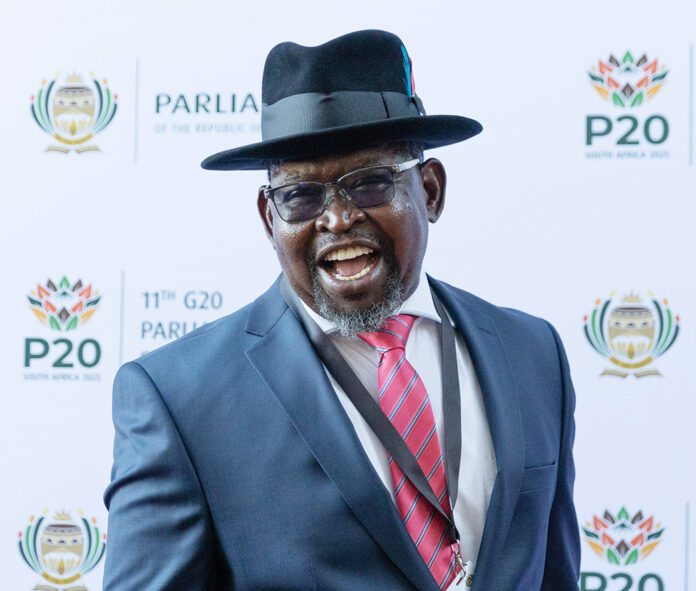
When Minister of Finance Enoch Godongwana stood before Parliament on Wednesday, he declared that South Africa had reached “a turning point” in the management of its public finances. After years of dismal headlines – junk status, state capture, a grey listing – the temptation to believe him is immense. The 2026 Budget certainly offers evidence of stabilisation, but beneath the favourable numbers lies a more nuanced reality: South Africa may have stopped the bleeding, but it has not yet healed the wound.
The minister is reporting progress in the mammoth task of debt stabilisation. Gross loan debt will stabilise at 78.9% of GDP in 2025/26 before declining to 76.5% by 2028/29. The budget deficit narrows to 4.5%, and debt service costs are finally growing more slowly than overall expenditure – a first this decade.
The markets have signalled their approval: the rand strengthened and bond yields fell following the speech.
Yet, these figures deserve scrutiny. The debt peak of 78.9% is actually higher than the 77.9% forecast in November’s medium-term budget. This illustrates how fiscal projections remain vulnerable to external shocks. Moreover, the shift to a “principles-led” fiscal anchor rather than a numerical target raises questions about whether the hardest decisions are being deferred. Lending institutions and ratings agencies have advised Treasury to set a fiscal anchor – basically a hardstop at which government cannot borrow above a certain debt-to-GDP ratio.
Godongwana is treading carefully on this, knowing that setting a hard limit could backfire in case of unplanned emergencies or occurrences that suddenly demand more from the fiscus.
For individual taxpayers, this budget delivers long-overdue relief. Personal income tax brackets and rebates are fully adjusted for inflation – the first time in two years taxpayers have been protected from bracket creep. The R13.7-billion package includes an increased tax-free savings limit (from R36 000 to R46 000) and higher retirement contribution caps.
Perhaps the most candid admission in this budget concerns local government. Treasury acknowledges that 63% of municipalities are in financial distress. The response is a shift from oversight to “structural intervention”: the Municipal Infrastructure Grant will now bypass failing municipalities entirely.
This is sensible pragmatism – citizens should not suffer for administrative failure – but it effectively concedes that large parts of local government are beyond repair.
Economic growth is projected at 1.6% in 2026, rising to 2% by 2028.
Business Unity South Africa welcomes the improvement but rightly notes this is “still too modest to meaningfully address unemployment at scale”.
So, is South Africa turning the corner? In fiscal management, yes. But turning a corner is not the same as reaching your destination.
This budget buys time and builds trust, but the hard work of building a capable state and an inclusive economy lies ahead.