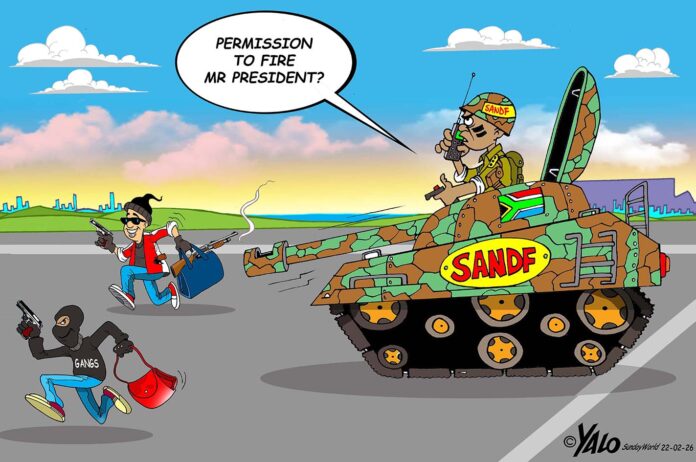
Anticipation is building about what Finance Minister Enoch Godongwana will tell the nation when he unveils his budget on Wednesday. He is expected to outline the country’s spending priorities as he navigates how to direct more money towards growth-led initiatives such as the R1-trillion infrastructure programme over the medium term, how to satisfy demand for increased social spending, all the while taking heed of calls from ratings agencies and lenders to consider setting a fiscal anchor.
A fiscal anchor is a long-term constraint on fiscal policy, such as a rule setting a debt limit, designed to anchor expectations and ensure the sustainability of public finances. It is a self-imposed constraint to curb excessive borrowing. South Africa has a R6-trillion debt pile, with debt-service costs peaking at R426.3-billion in 2025/26, the single largest government expenditure item per annum. This means the government spends more on servicing debt, at repayments of R1.7-billion per day, than it does on health and policing.
The International Monetary Fund has advised South Africa to introduce a fiscal rule set on a prudent debt ceiling, committing to public debt not exceeding a specific percentage of GDP – basically a fiscal anchor. It also advises government to maintain the principle of achieving and maintaining a primary budget surplus, as has been achieved over several past budgets. A primary budget surplus refers to when government revenue exceeds spending, excluding interest repayments. The development finance institution supports National Treasury’s view that maintaining a primary surplus will help bring down the debt-to-GDP ratio, projected for the 2025/26 financial year at 77.9%, to more acceptable levels.
However, in seeking to maintain such fiscal prudence, Godongwana must never lose sight of the fact that economic growth is a central pillar of fiscal policy. A country struggling to achieve 2% economic growth cannot afford to make austerity the focal point of its fiscal policy.
Money must flow towards growth-led initiatives such as fixing our bulk water systems to avoid the water shortages that have caused widespread anger in Joburg and other cities. It must go towards building roads that connect cities, secondary towns and villages to enable movements that are vital for economic stimulation.
It must expand the provision of electricity by meeting its side of the commitment to stimulate private sector investment in the rollout of the transmission network nationwide to keep up with increasing demand for energy.
Furthermore, in a country where 32.1% of the adult population is unemployed, and one in four has given up hope of ever finding work, the government has a responsibility to keep funding social programmes that keep hunger at bay.
This includes committing to above-inflation increases to the old age grant and the child support grant, and extending the life of the social relief of distress grant, while the debate over whether the fiscus can afford a higher basic income grant is still dividing opinions.
All South Africans have a stake in what the finance minister will announce when he takes to the podium on Wednesday. Pragmatism must win on the day.
Visit SW YouTube Channel for our video content
- Anticipation is building about what Finance Minister Enoch Godongwana will tell the nation when he unveils his budget on Wednesday.
- He is expected to outline the country’s spending priorities as he navigates how to direct more money towards growth-led initiatives such as the R1-trillion infrastructure programme over the medium term, how to satisfy demand for increased social spending, all the while taking heed of calls from ratings agencies and lenders to consider setting a fiscal anchor.
- A fiscal anchor is a long-term constraint on fiscal policy, such as a rule setting a debt limit, designed to anchor expectations and ensure the sustainability of public finances.
- It is a self-imposed constraint to curb excessive borrowing.
- South Africa has a R6-trillion debt pile, with debt-service costs peaking at R426.3-billion in 2025/26, the single largest government expenditure item per annum.