


The human cost of the Middle East crisis is devastating, particularly for those caught in the conflict, whose lives, families and livelihoods have been shattered. South Africa’s suffering is different but the economic consequences of a crisis thousands of kilometres away are difficult to ignore.
Petrol prices are heading towards R30 a litre, businesses face rising costs and consumers are under pressure. Higher fuel prices feed into transport, food and production costs, raising inflationary risks and leaving households with less money.
With unemployment high and economic growth weak, South Africa can ill afford another shock. Yet there is a counterpoint. The global turmoil has pushed gold and other commodity prices higher, potentially boosting South Africa’s mining sector, export earnings and the value of its gold holdings.
Could we turn some of the good fortune into an opportunity to strengthen the economy? There is a route through which improved fiscal conditions can create room for investment.
Minister, the question is not whether we can spend a windfall tomorrow. It is whether we can use it intelligently to build a stronger economy for tomorrow.
South Africa’s gross gold and foreign exchange reserves reached $75.43-billion (R1.2-trillion) at the end of last month. Rising gold prices can increase the value of the country’s gold holdings, although exchange-rate movements and other assets also influence the total. The reserves are not a government spending account. However, the Gold and Foreign Exchange Contingency Reserve Account provides a mechanism through which certain gains can support public finances.
Under the arrangement, R150-billion is being transferred to National Treasury over three financial years to reduce government borrowing, including a final R25-billion tranche in 2026/27.
The money cannot be redirected to new spending priorities. Its purpose is to reduce debt and strengthen public finances. That is where the opportunity lies.
South Africa spends enormous amounts servicing government debt. Reducing borrowing requirements can help contain debt-service costs and ease pressure on future budgets, creating more room for productive expenditure.
The question is what we do with the opportunity. Do we merely welcome healthier fiscal metrics or use the breathing room to accelerate investment, unlock private capital and tackle infrastructure constraints?
We cannot sustainably reduce unemployment without expanding economic activity or broaden the tax base without more businesses investing, producing and employing people. Nor can we expect stronger growth while freight logistics, electricity transmission and water infrastructure constrain the productive economy.
Where the commodity windfall translates into fiscal benefits, it should form part of a broader growth strategy. Debt reduction matters but so does creating conditions under which economic growth makes that debt burden more manageable.
Public-private partnerships (PPPs) must be central to the strategy. Government cannot fund every infrastructure requirement from a constrained budget. Private capital, expertise and operational capacity must be brought into the equation. South Africa needs well-structured PPPs that attract investment into freight rail, ports, electricity transmission and water infrastructure.
Government must provide policy certainty, predictable regulation, transparent procurement and bankable projects. Investors need confidence to commit capital.
The objective should be to use limited public resources to unlock greater private investment instead of relying on additional borrowing for every project.
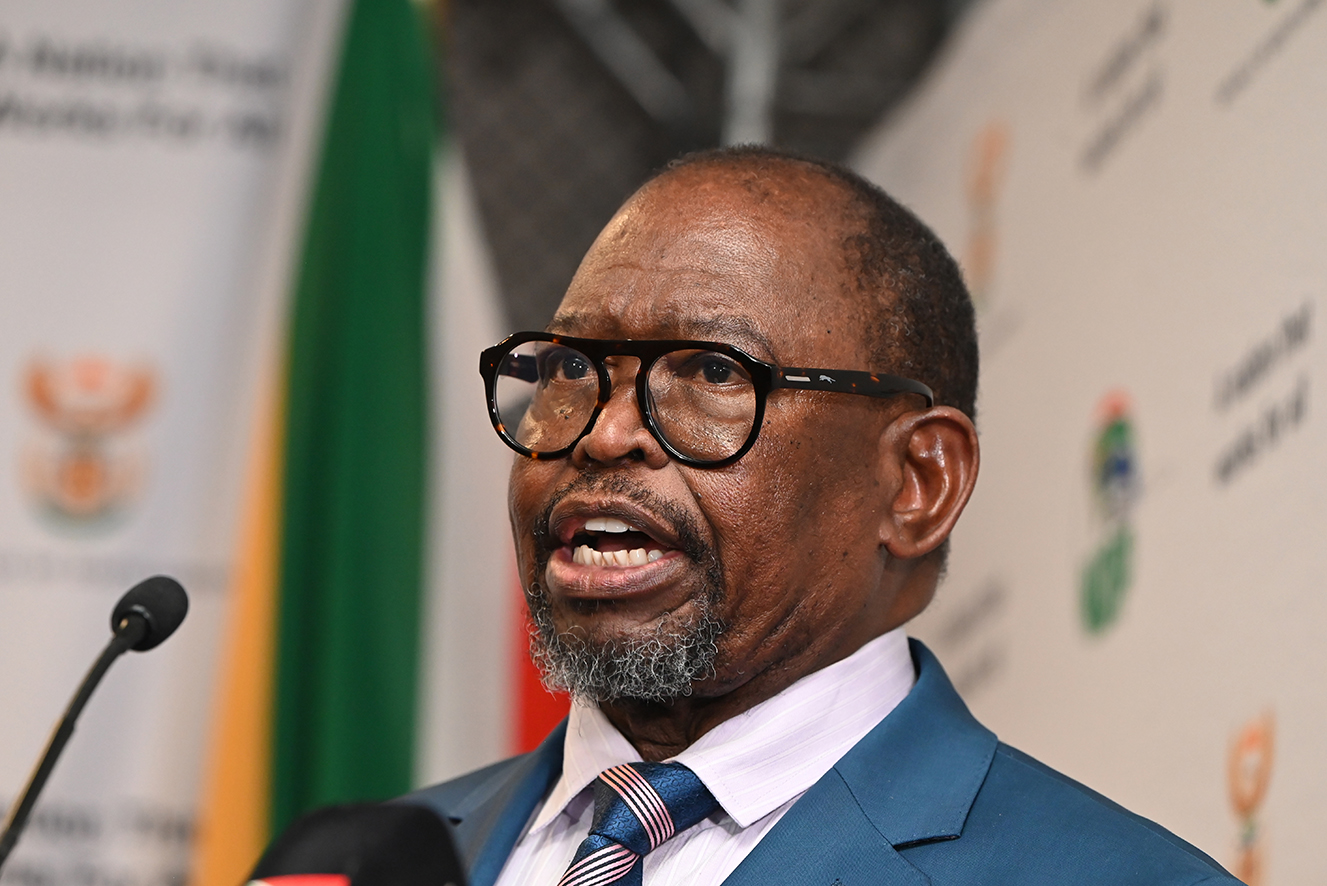
The Medium-Term Budget Policy Statement on Wednesday presents Finance Minister Enoch Godongwana with an opportunity to connect fiscal discipline with a credible growth strategy. Fuel-price pressures make that more urgent.
Temporary relief may sometimes be justified but no fuel levy adjustment can substitute for an economy that creates jobs, attracts investment and produces more goods and services.
If higher commodity prices strengthen our fiscal position, we should use the opportunity to address the structural weaknesses that leave the economy vulnerable.
Minister, we cannot choose the international circumstances confronting us. We can choose how we respond.
Turn fiscal breathing room into infrastructure investment, use PPPs to multiply the investment and turn growth into jobs.
We cannot subsidise our way out of stagnation. We must invest, build and grow our way out.
• Van Doesburgh is an economist, the head of economics at CPUT, CEO of Economics Investment Group and a regular commentator and business consultant on South Africa’s economic landscape, focusing on financial markets, policy and business strategy. vandoesburghm@cput.ac.za
- South Africa is experiencing rising petrol prices nearing R30 a litre, increased business costs, and inflationary pressures due to the Middle East crisis.
- Higher gold and commodity prices may boost South Africa's mining sector, export earnings, and the value of gold reserves, currently at $75.43-billion (R1.2-trillion).
- R150-billion from the Gold and Foreign Exchange Contingency Reserve Account is being transferred to National Treasury over three years to reduce government borrowing, with the final tranche of R25-billion in 2026/27.
- Reducing government debt through these transfers aims to lower debt-service costs and create fiscal space for investment in infrastructure and economic growth.
- Public-private partnerships (PPPs) are recommended to attract investment in critical infrastructure like freight rail, ports, electricity transmission, and water, supported by policy certainty and transparent procurement.


