


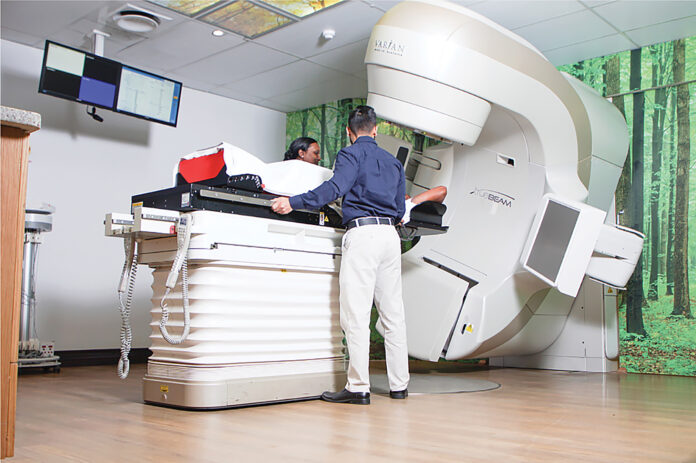
Healthcare is more than just a hospital or a doctor’s office; it is about the years of investment in the infrastructure that allow the delivery of healthcare solutions to the benefit of the medical aid scheme members. Healthcare is no different.
Conversations about healthcare funding often focus on contribution increases, benefit design, and how to provide affordable and accessible healthcare solutions.
Yet beneath all that lies a far less glamorous but far more consequential reality: infrastructure.
The provision of healthcare needs people, systems, and, increasingly, technology solutions.
Infrastructure in healthcare administration is multilayered. It is the actuarial depth that ensures benefits are priced responsibly and sustainably.
It is the clinical governance framework that safeguards members against waste, fraud, abuse, and error while ensuring appropriate care.
It is the claims processing engine that pays providers accurately and timeously. It is the data architecture that turns information into insight. And it is the human infrastructure, the consultants, case managers, and service teams who translate complexity into reassurance for members at their most vulnerable moments.
When this infrastructure is strong, it is largely invisible.
Members receive authorisations promptly. Claims are paid without friction. Providers are reimbursed on time. Trustees receive accurate, actionable reporting. Regulators see compliance and stability. Awards such as the Ask Afrika Orange Index, PMR Africa Awards, and BHF recognitions follow not because they are chased, but because consistent experience is delivered year after year.
When infrastructure is disrupted, however, the consequences can be swift and unforgiving. South Africa’s medical scheme landscape continues to provide sobering reminders of the risks posed by financial instability and governance lapses.
The provisional curatorship of Sizwe Hosmed in late 2025 serves as a stark modern warning; with solvency ratios plummeting far below the 25% requirement, the scheme’s distress forced members to pay cash upfront as claims went unpaid amid the regulator’s concerns about apparent procurement irregularities and financial mismanagement.
This instability mirrors the prolonged struggles of Transmed Medical Fund, which failed to meet statutory solvency levels for four consecutive years, and the recent volatility at Medihelp, where a significant 2023 solvency dip required an urgent recovery plan.
Each case had its own complexities. No two failures are identical. But the common thread was clear: when financial resilience, governance discipline, and administrative infrastructure are misaligned or abruptly destabilised, members bear the brunt.
Healthcare administration is not a plug-and-play function.
It cannot be swapped out overnight without consequence.
Data migrations are intricate. Benefit rules are nuanced. Provider networks are relationship-driven. Call-centre scripts reflect years of refinement.
Clinical protocols are embedded within systems that have evolved alongside regulatory change.
Even small disruptions can produce cascading effects – delayed claims, confused members, frustrated providers, and reputational damage that far outlives the transition period.
In an environment where public sector healthcare infrastructure is itself under strain – from ageing hospital buildings to fragmented data systems – the private funding ecosystem carries an even greater responsibility to demonstrate stability.
If water insecurity increases disease burden and drives utilisation, schemes must be operationally equipped to manage higher claims volumes.
If economic pressure forces members to scrutinise every rand spent, service failures become less tolerable.
Infrastructure is no longer a back-office concern; it is a frontline differentiator.
This is why a 40-year legacy matters
Longevity in healthcare administration is not simply a function of market share; it is the outcome of compounded investment. Investment in scalable technology platforms that can handle surges in utilisation. Investment in cybersecurity at a time when health data is a prime target. Investment in analytics capabilities that allow trustees to anticipate risk rather than react to crisis. Investment in training and retaining skilled professionals in a sector where institutional memory is invaluable. Investment in governance frameworks that align with
regulatory evolution.
It is also an investment in continuity. Continuity of systems. Continuity of expertise. Continuity of relationships.
In periods of change, it can be tempting to view administration as a commodity. Price becomes the headline metric.
Promises of rapid transformation and lower costs can appear compelling. But in healthcare, where trust and stability underpin everything, infrastructure should never be reduced to a line item. It is the core that holds the entire funding edifice upright.
South Africa’s broader infrastructure crisis offers a cautionary parallel. Years of underinvestment do not show immediate effects. The pipes corrode quietly. The grid weakens incrementally. The maintenance backlog grows invisibly. Then, suddenly, failure feels abrupt and catastrophic, even though it was years in the making.
Healthcare administration operates on the same principle.
Strong infrastructure is built patiently and protected deliberately. Once weakened, it is extraordinarily difficult to restore quickly.
As policymakers reflect on the state of the nation, and as trustees and executives across the healthcare ecosystem evaluate their own strategies, the lesson is simple but profound: infrastructure is not ancillary to performance; it is performance.
Disrupt it carelessly, and the consequences reverberate across members, providers, and balance sheets alike.
Forty years of experience have taught us that the true measure of the impact of infrastructure is seen in systems quietly humming in the background. It is the member who receives authorisation without anxiety. The oncology patient whose treatment continues uninterrupted. The provider who is paid accurately and on time. The trustee who sleeps at night knowing the scheme’s operational backbone is secure.
In healthcare, as in nations, infrastructure is the difference between fragility and resilience. And resilience, especially now, is everything.
- Bray is chief operations officer of Medscheme, an AfroCentric Group Company
- Healthcare is more than just a hospital or a doctor’s office; it is about the years of investment in the infrastructure that allow the delivery of healthcare solutions to the benefit of the medical aid scheme members.
- Healthcare is no different.
- Conversations about healthcare funding often focus on contribution increases, benefit design, and how to provide affordable and accessible healthcare solutions.
- Yet beneath all that lies a far less glamorous but far more consequential reality: infrastructure.
- The provision of healthcare needs people, systems, and, increasingly, technology solutions.


