


One in five households is uncertain where its next meal will come from, while almost three million children regularly go to bed hungry. One in three deaths among children under five is linked to severe acute malnutrition.
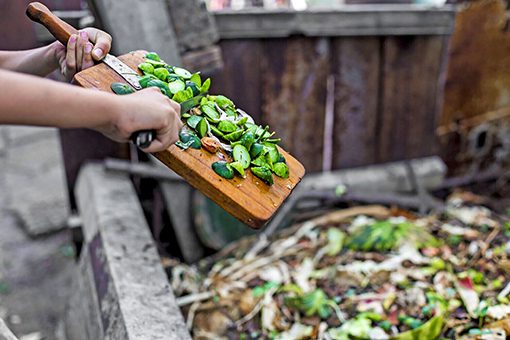
Yet South Africa produces enough food to feed its population. About 10.3-million tonnes of edible food, equivalent to 34% of local production, is wasted annually, costing the economy R61.5-billion, or 2.1% of GDP.
The contradiction between hunger and food waste requires the same level of coordinated intervention devoted to crises such as electricity, infrastructure and crime.
South Africa needs a sustainable food system that produces nutritious food and improves the movement of the food to people who need it.
Almost half of losses and waste, 49%, occur during food processing and packaging, while consumption accounts for 18%. Addressing this requires an integrated approach involving government departments responsible for agriculture, the environment, health and social welfare, alongside farmers, manufacturers, retailers and consumers.
Regulations governing food disposal and producer responsibility could be strengthened alongside incentives that encourage companies to direct surplus food to food banks and non-profit distributors.
Affordability presents another challenge. Nutrient-dense foods including fruit, vegetables, nuts and animal-source products, account for almost 70% of the cost of a healthy diet.
Weak cold-chain systems, unreliable electricity and inefficient storage and transport networks also push up costs while worsening waste.
Action is required throughout the supply chain.
Farmers can align production more closely with market demand while finding alternative markets for produce rejected because of its appearance. Smaller, oddly shaped or damaged fruit and vegetables can create opportunities for agro-processing businesses producing soups, juices and other products.
Consumers can also be encouraged to accept imperfect produce at discounted prices.
Processors can improve food safety and preservation techniques to extend shelf life, while distributors and retailers can support local suppliers to reduce transport distances and maintain freshness.
Retailers can discount products approaching their sell-by dates and redirect surplus food to food banks, children’s homes, shelters and non-profit organisations rather than dumping it.
Households have a role too. Better meal and shopping planning, buying local and seasonal produce and preserving or freezing excess food can reduce unnecessary waste.
South Africa has committed under the UN Sustainable Development Goals to halve per capita food waste at retail and consumer level and reduce supply-chain losses by 2030.
Poverty, inequality, hunger, food waste, climate change and water scarcity are interconnected problems. Every tonne of edible food dumped represents wasted water, energy and fertiliser while adding to environmental pressures.
That waste is difficult to justify in a country where millions struggle to eat adequately.
A successful food system cannot be measured only by whether South Africa produces enough calories. It should be measured by whether the food it produces reaches and nourishes its people rather than ending up in a landfill.
•Prof Jako Volschenk is the associate professor of Strategy and Sustainability at Stellenbosch Business School
- One in five South African households is uncertain where its next meal will come from, and nearly three million children regularly go to bed hungry.
- South Africa wastes about 10.3 million tonnes of edible food annually, equivalent to 34% of local production, costing the economy R61.5 billion or 2.1% of GDP.
- Almost half (49%) of food losses and waste occur during processing and packaging, with consumption accounting for 18%.
- Nutrient-dense foods make up almost 70% of the cost of a healthy diet, while weak cold-chain systems and inefficient transport increase costs and waste.
- South Africa has committed to halving per capita food waste at retail and consumer level and reducing supply-chain losses by 2030 under the UN Sustainable Development Goals.


