


As a labour federation that represents the working class and the poor, Cosatu must draw lessons from other leftist and revolutionary movements across the globe.
At the height of the 1979 revolution in Nicaragua, led by Daniel Ortega of the Sandinistas, the party sought to deliver the highly sought dividend of the revolution – land.
The Sandinistas implemented a massive land reform programme, giving land seized from the propertied class and estates belonging to the powerful and wealthy family of Somoza to the landless peasants.
While this was celebrated as a revolutionary act by the people who were the main beneficiaries of the programme, those who lost their land approached the courts, pleading with the judicial system to protect them from further loss of private property. The courts ruled against the new government of Ortega and in favour of the class that was losing land.
The peasants, who saw their acquisition of the land as the delivery of social justice, were outraged. They perceived the courts as pushing back the gains of the revolution. They saw the judicial system as an institution that wanted to retain the social injustices and inequality that the revolution sought to end.
The courts lost credibility by ruling in favour of the propertied class and against the interests of the majority.
In our country, the Department of Home Affairs triggered massive unrest, especially in Durban, after it tried to implement a Constitutional Court order dealing with asylum seekers. While affirming that it upholds the rule of law and respects the apex court, the department had to withdraw its plan to implement the order.
What is clear is that there are instances where a court makes judgments that can seem to undermine the interests of the majority. But one can never argue that courts should seek to deliver judgments based on popular sentiments. They are there to interpret the law. But in interpreting this law, the court should also appreciate the difficult journey the country has embarked on to address the inequalities brought about by more than 300 years of colonialism and apartheid.
It was not long ago that the highest professional rank a black police officer could attain was a sergeant. It was not long ago that all judges were white.
This background is important in arguing that while there are visible signs of transformation in the judiciary, there is a perception that justice functions for the rich in our country. How many of our working-class people can afford to take their matter to the Constitutional Court?
The plight of the working class and the poor is what drives Cosatu. It is in this context that our national congress which concluded its business earlier this week passed resolutions aimed at improving the lives of ordinary people.
Two of the key resolutions adopted were on the National Health Insurance (NHI) and the cost of living.
On these specific issues, the declaration released after the congress states: “Congress reaffirms its militant and unapologetic support for the implementation of the National Health Insurance Act.
“The public health system must be strengthened through the filling of vacancies, improved conditions of service, the absorption of community health workers and the development of state-owned pharmaceutical capacity.”
On the issue of the cost of living: “Congress declares that the escalating cost of living is one of the central challenges facing working-class households.
“Cosatu shall intensify the campaign for the regulation of administered prices, expansion of the zero-rated food basket and opposition to above-inflation increases in electricity, transport and municipal tariffs.
“The federation shall pursue the development of a workers’ cost-of-living index to strengthen collective bargaining and inform public policy.”
In a couple of weeks, the Constitutional Court is expected to give a ruling on a challenge brought by the Board of Healthcare Funders and the Western Cape government against the legislative process that produced the NHI Act.
The main argument is there was insufficient consultation before the Act was passed.
Perhaps the court should have asked the applicants if there had been sufficient consultations, would they have supported the NHI?
Like in the case of the Sandinista revolution, why would anybody oppose measures geared at addressing social injustice? Why would anybody oppose universal health coverage?
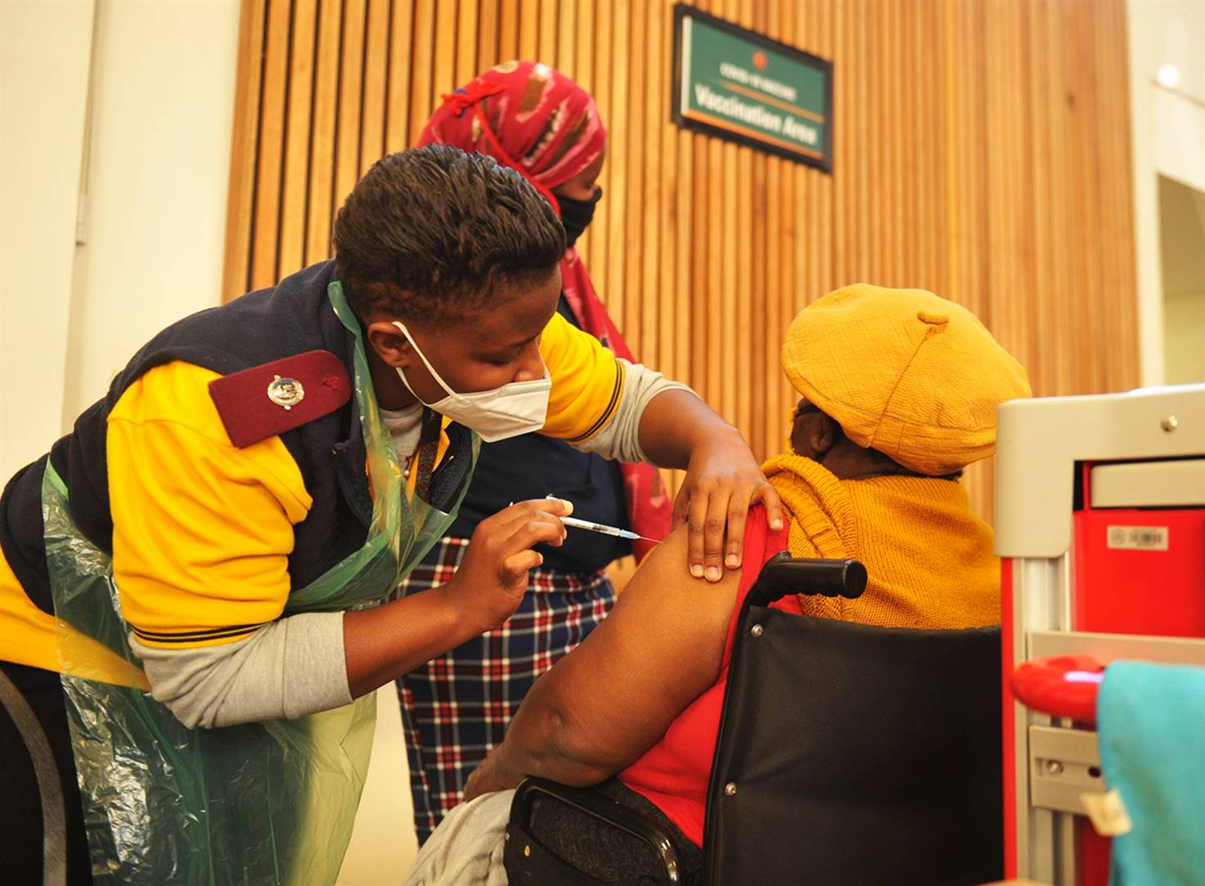
The NHI is a fund that will ensure that all people in South Africa receive the healthcare they need without being burdened by payment at the point of service.
It is not a plot to get rid of private clinics and hospitals. It is a fund that will help poor people, who cannot use the well-resourced facilities because they cannot afford expensive medical aid.
More importantly, the NHI will also help workers and professionals who do have medical aid cover. Often, people on medical aid are told their savings have been exhausted as early as June, meaning that for the rest of the year they are without medical cover.
Congress has directed us to look at the issue of the cost of living. While the rising cost of fuel, because of the war launched by the imperialist America and Israel on Iran, has a direct impact on food inflation, there is also no denying that the increasing cost of medical aid is one of the central issues that forces labour to demand higher salary increases.
The implementation of the NHI will benefit the working class who bear the burden of rising costs of medical costs. As the leadership of Cosatu, we embrace the mandate of unapologetically supporting the implementation of the NHI. This is social justice. It will end inequality in the provision of healthcare in our country.
Cosatu can mobilise its more than 1.5-million members to force the government to implement the NHI. But that will be unfortunate. A democratic government that has a mandate to redress the social injustices brought by apartheid should not have to be forced to end inequality in the provision of healthcare.
Our political and economic stability depends on all of us showing the majority of the poor and the working class that we, unlike the courts in Nicaragua in 1979, are not reversing the gains of the revolution by sustaining inequality in the provision of healthcare.
• Shingange is the Cosatu president.
- In 1979 Nicaragua, the Sandinistas led by Daniel Ortega implemented land reforms redistributing land from the wealthy Somoza family to landless peasants, but courts ruled in favor of the dispossessed landowners, causing outrage among peasants.
- South Africa's Department of Home Affairs withdrew plans to implement a Constitutional Court order on asylum seekers due to widespread unrest, despite affirming respect for the rule of law and the apex court.
- Cosatu's recent national congress passed resolutions supporting the National Health Insurance (NHI) Act and addressing the escalating cost of living affecting working-class households.
- The Constitutional Court is expected to rule soon on a challenge to the NHI Act by the Board of Healthcare Funders and the Western Cape government, who argue that consultations before the Act were insufficient.
- Cosatu, representing over 1.5 million members, strongly supports the NHI as a measure to ensure universal healthcare access and reduce inequality in South Africa's healthcare system.


