


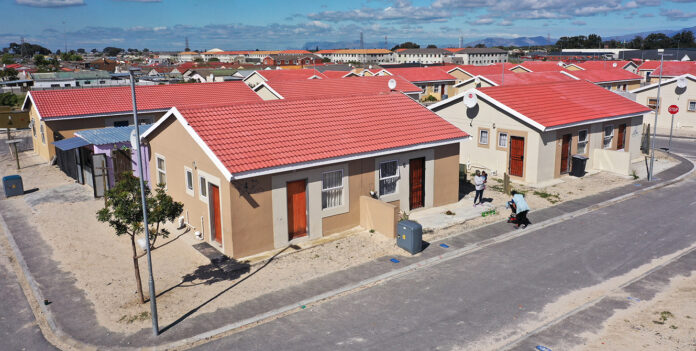
Personally, one of the proudest things about being a resident of Khayelitsha, in Cape Town, is having the community of Mitchell’s Plain as neighbours.
The histories and present-day realities of these two communities are intertwined. The joys and sorrows of Khayelitsha are the joys and sorrows of Mitchell’s Plain.
Like Khayelitsha, Mitchell’s Plain is one of South Africa’s largest townships created by the apartheid regime.
The idea of that regime, as it would seem, is the idea of the current mayor of the City of Cape Town to keep African and coloured people nearly 30km from the city centre.
As reported in Sunday World (“Locals must look beyond posh places for rentals”, May 10), Cape Town mayor Geordin Hill-Lewis states that people should look at affordable areas such as Mitchells Plain for rentals.
Let me be clear; what is worrisome is the metro’s long-term housing and jobs strategy.
Besides the rapid gentrification of the Cape Town city centre and its surrounds pushing up purchasing and rental prices that local Capetonians cannot afford, the DA has a history of, literally, dumping our people, as apartheid did, in places such as Wolwerivier and Blikkiesdorp.
By the way, the DA leader and mayor insists that “we are not into market manipulation, and [he] wouldn’t get involved in policies like that”. But even in the capital of capitalism, the US, the Trump administration has proposed a bill, now before Congress, to address affordability in housing.
At the same time, let us remember that the City of Cape Town has by far the highest housing backlog of all the metros in South Africa. The backlog is over 600 000 units, with Johannesburg at a backlog that is 200 000 units less.
Furthermore, it takes a passenger an hour to travel from Mitchells Plain to the CBD on the city’s administered MyCiti buses, costing them approximately R25 during peak time for the trip. This amounts to approximately R1 000 per month.
Neither the Metrorail service nor the Golden Arrow Bus Service are administered by the city, and therefore it cannot be that the city relies on these in its strategy.
To add insult to injury, while the Atlantic Seaboard route of the MyCiti bus (routes 106 and 107) has a service every 10 minutes during peak time, the people of Mitchell’s Plain, wait for up to 20 minutes for a bus.
For those who are fortunate enough to be able to afford their own car and petrol or diesel prices, they have to factor in 40 minutes of peak hour travel per trip given that in 2025 the INRIX Global Traffic Scorecard ranked Cape Town sixth in the world and number one in South Africa, for traffic delays.
According to the scorecard, the average driver loses approximately 96 hours a year in peak congestion, roughly four full days spent sitting in traffic.
Yet, the scorecard also exposes the holes in the mayor’s housing and jobs strategy. The routes most affected by these traffic delays are those closer to Mitchells Plain and Khayelitsha: the N1, N2 and M5. Road users in the shadow of the mountain suffer far less from congestion.
Providing adequate housing and getting public transport right have been monumental failures for the DA-run City of Cape Town.
We thought that Hill-Lewis would bring fresh ideas into the city and the DA.
We are not surprised, though, that he simply wants to replicate Verwoerd’s jobs and housing strategy through re-enforcing apartheid-era spatial planning.
- Tyhido is the leader of the opposition in the City of Cape Town.
- Khayelitsha and Mitchell’s Plain are large townships created under apartheid, with intertwined histories and present struggles.
- Cape Town Mayor Geordin Hill-Lewis encourages residents to seek affordable rentals in townships like Mitchell’s Plain, reflecting ongoing spatial segregation reminiscent of apartheid policies.
- The City of Cape Town faces a housing backlog of over 600,000 units, the highest among South African metros, with inadequate public transport services aggravating residents' commuting challenges.
- Public transport options for Mitchell’s Plain residents are limited and costly, with long travel times and infrequent MyCiti bus service, compared to better services in wealthier areas like the Atlantic Seaboard.
- The article criticizes the DA-led city government for perpetuating apartheid-era spatial planning and failing to provide sufficient housing and efficient transport, undermining hopes for new and effective policies.


