
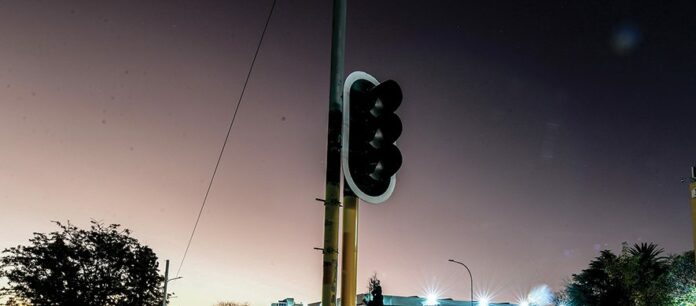
The Gauteng Department of Roads and Transport’s (GDRT) multi-year targeted programme focused on traffic lights repairs and restoration across the provincial road network is in full swing. Since the start of the programme, the GDRT has successfully brought back and restored over 70 key intersections along the provincial network to facilitate mobility and safety.
This follows calls for a restoration programme following theft and vandalism of traffic and streetlights along provincial routes to facilitate mobility, improve road safety, reduce congestion, enhance infrastructure reliability, and ensure their continued functionality.
To be implemented over 36 months, the restoration programme involves repairs, installation and upgrading of new and existing traffic signals, retrofitting and maintenance of existing assets. This follows the appointment of contractors to fast-track the programme.
With a complement of 547 signalised intersections under GDRT’s responsibility, over 400 are currently operational. Approximately 150 are earmarked for or are currently undergoing repairs and upgrades.
Gauteng province has over 4 500 signalised intersections in its entire road network.
GDRT recognises the wins but acknowledges there is a lot of work still to be done to ensure all intersections, small and large, are restored.
Modernisation and technology deployment
Deployment of technology has resumed, as a preventative intervention, on several key intersections and includes installation of new traffic signals, upgrading and maintenance of existing infrastructure, retrofitting of existing assets, and enabling connection to the Transport Management Centre (TMC). The TMC is an integrated hub serving as the backend of the province’s integrated, multimodal, digitalized public transport system.
This includes installation of new technology enabling remote surveillance (CCTV cameras), rollout of smart controllers as well as track and trace components at critical intersections. These also serve as early warning mechanisms for faster law-enforcement dispatchment and perpetrator identification.
Other security upgrades feature strengthened controller boxes, underground wiring chambers, and protective bollards to prevent theft and vehicular impact.
These have been prompted by the need for improved theft and vandalism detection, following repeated vandalism, exploring mechanisms for perpetrator identification and enhancing law-enforcement efforts.
These are further strategic interventions to improve mobility, reduce congestion, enhance road safety and the reliability of traffic signaling for the efficient functioning of the provincial road network.
Ongoing challenge of theft and vandalism
Despite strides being recorded, restoration teams have had to revisit a number of intersections due to:
- Replacement of knocked-down poles because of mainly accidents;
- Copper cables and controller replacement due to theft and vandalism; or
- To reset flashing controllers.
These human, criminal and related activities have contributed to undermining the progress made, compromise road safety and place an unnecessary financial burden on government.
The Department has had to deal with a range of developments while continuing to respond to faults and damages in real time.
We are currently dealing with multiple issues including vandalism, theft, accidents, ageing infrastructure and the urgent need to modernise traffic signals on our network. This has led to us having a long-term programme to deal with these issues rather than implementing temporary fixes. To achieve the programme’s objectives, we kindly appeal for understanding and cooperation during the restoration process.
It can’t be right that teams go out and conduct restoration, then days later, traffic lights are not working. At this rate, we cannot rule out systematic thuggery or sabotage that has prompted the Department to pursue forensic investigations into these criminal activities.
Intersections requiring repeated restoration
Below are some of revisited busy intersections because of repeated cable theft and vandalism:
- R21 and N12 off-ramp
- Main Street and Cedar Street
- Grayston Drive and M1 South/North
- Olifantsfontein and R101
- R101 and New Road
- R55 and SAMRAND
- R101 and Grand Central
- Hendrik Potgieter and Nic Diederich
- Malibongwe Drive and River Street
- Christian De Wet and Rooibok Street
- R23 and R554
APARC strengthening public-private collaboration
Our partners, as part of the Adopt and Protect a Robot Campaign (APARC), have contributed to and are key in improving the pace of restoration. Through the support, a number of critical intersections have been restored and protected.
The campaign is the Department’s wider initiative involving private sector partners, with over thirty (30) active Memoranda of Understanding (MOUs), supporting the adoption and protection of traffic signals and strengthening road safety interventions. Partners include property developers, communities and business associations.
This approach is a realization that this scourge can only be tackled through collaboration and mobilization of public and private resources. This has enabled and facilitated the participation of business and communities, whilst promoting active citizenry, improved policing and public awareness.
To further complement these efforts, GDRT is appealing to communities, motorists, bikers, cyclists, pedestrians and runners to play their part and report suspicious activities, theft and vandalism to the authorities.
Alternatively, residents can report theft and vandalism by sending an email to: hotline@gauteng.gov.za and to report out-of-order, vandalised traffic signals, an email can be sent to: TrafficSignals@gauteng.gov.za for attention and/or referral to the responsible local authority.
Do not look the other way when you witness illegal activities along public roads or anywhere. We all have a duty to report to authorities. Simply reporting helps prevent an intersection becoming dangerous for hundreds or even thousands of other road users.
Recovering costs and protecting public resources
Meanwhile, GDRT has taken a position to institute legal claims, as a third party, to recover costs for damages to traffic infrastructure, subject to applicable legal and evidentiary requirements.
This was prompted by a record number of vehicle-related damages to traffic signal infrastructure on the provincial network. Every time this happens, GDRT is forced to redirect funds towards repeated maintenance and repairs, putting extra strain on limited public financial resources.
In accordance with provisions of the Gauteng Transport Infrastructure Act, where applicable, a court may, following a conviction, order an offender to compensate the MEC or repair, remove or restore damaged provincial infrastructure.
GDRT is further appealing for understanding and cooperation as we assure road users the Department is hard at to provide a safe and efficient road infrastructure.
Subscribe To Our Newsletter or get the news delivered to your phone via our WhatsApp Channel.
- Kedibone Diale-Tlabela currently serves in the Gauteng Provincial Government as the MEC for Roads & Transport.
- The Gauteng Department of Roads and Transport’s (GDRT) multi-year targeted programme focused on traffic lights repairs and restoration across the provincial road network is in full swing.
- Since the start of the programme, the GDRT has successfully brought back and restored over 70 key intersections along the provincial network to facilitate mobility and safety.
- This follows calls for a restoration programme following theft and vandalism of traffic and streetlights along provincial routes to facilitate mobility, improve road safety, reduce congestion, enhance infrastructure reliability, and ensure their continued functionality.
- To be implemented over 36 months, the restoration programme involves repairs, installation and upgrading of new and existing traffic signals, retrofitting and maintenance of existing assets.
- This follows the appointment of contractors to fast-track the programme.