


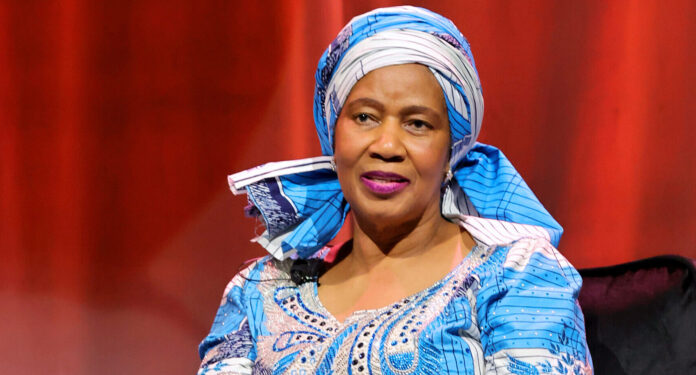
Hamba kahle is what we say when someone is leaving. Go well. It is a blessing and an instruction at once, a wish that the road treats the traveller kindly.
Few South Africans of her generation walked as many roads or walked them as well as Phumzile Mlambo-Ngcuka, who died on Friday at the age of 71.
Her first road began in a kitchen in Clermont, outside Durban, where she was born in 1955. Her father was a teacher who brought exercise books home to mark. Her mother, a community nurse, ran evening literacy classes at the kitchen table for adults whom apartheid had kept from learning to read. From the age of 11, Mlambo-Ngcuka was her assistant. Everything that followed can be traced back to that table.
She matriculated at Ohlange High School in Inanda, the school founded by John Dube and went back there to teach after graduating from the National University of Lesotho.
Her fiancé, Bulelani Ngcuka, was jailed for refusing to testify against ANC comrades. In 1983 she became the first president of the Natal Organisation of Women, a UDF affiliate. A year later the road led to Geneva and the World YWCA, where she built a global programme for young women while pressing for apartheid’s isolation.
She came home to work with women in rural communities. In 1994 she walked into the first democratic Parliament and become chair of the portfolio committee on public administration. Promotion followed: deputy minister of trade and industry, then minister of minerals and energy from 1999. In 2005 she became the country’s first female deputy president, steering the AsgiSA growth plan and the Jipsa skills drive. When the ANC recalled Thabo Mbeki in September 2008, she resigned alongside him.
Mlambo-Ngcuka did not cling, bargain or sulk. She went well.
Then came perhaps her most remarkable chapter. In 2013, she was sworn in as UN under-secretary-general and executive director of UN Women, which she led for eight years. She launched HeForShe, which asked men to stand up for gender equality rather than leave women to fight alone. The girl from Clermont had become a woman setting the global agenda for half of humanity.
Retirement, for her, was a word without meaning. She had earned a doctorate from the University of Warwick on using mobile technology to train teachers in poor countries. Her Umlambo Foundation supports more than 60 schools in Limpopo. She became chancellor of the University of Johannesburg in 2022 and this year she was a fellow at Germany’s Robert Bosch Academy, studying how young people are prepared for work.
There is a lesson here for our public life, where too many leaders treat office as a possession to be guarded. Mlambo-Ngcuka held some of the highest posts in the land and in the world and left each one without drama, carrying what she had learnt to the next classroom.
We extend our condolences to her husband, Bulelani, her children and the Mlambo and Ngcuka families.
Hamba kahle, Mama Phumzile. You went well. Now rest well.
- Phumzile Mlambo-Ngcuka was born in 1955 in Clermont, outside Durban, and died at the age of 71.
- She was the first president of the Natal Organisation of Women and later served as minister of minerals and energy from 1999.
- In 2005, she became South Africa’s first female deputy president and resigned when Thabo Mbeki was recalled in 2008.
- From 2013 to 2021, she was UN under-secretary-general and executive director of UN Women, launching the HeForShe campaign.
- She earned a doctorate from the University of Warwick and was chancellor of the University of Johannesburg in 2022.
Hamba kahle is what we say when someone is leaving. Go well. It is a blessing and an instruction at once, a wish that the road treats the traveller kindly.
Few South Africans of her generation walked as many roads or walked them as well as Phumzile Mlambo-Ngcuka, who died on Friday at the age of 71.
Her first road began in a kitchen in Clermont, outside Durban, where she was born in 1955. Her father was a teacher who brought exercise books home to mark. Her mother, a community nurse, ran evening literacy classes at the kitchen table for adults whom apartheid had kept from learning to read. From the age of 11, Mlambo-Ngcuka was her assistant. Everything that followed can be traced back to that table.
She matriculated at Ohlange High School in Inanda, the school founded by John Dube and went back there to teach after graduating from the National University of Lesotho.
Her fiancé, Bulelani Ngcuka, was jailed for refusing to testify against ANC comrades. In 1983 she became the first president of the Natal Organisation of Women, a UDF affiliate. A year later the road led to Geneva and the World YWCA, where she built a global programme for young women while pressing for apartheid’s isolation.
She came home to work with women in rural communities. In 1994 she walked into the first democratic Parliament and become chair of the portfolio committee on public administration. Promotion followed: deputy minister of trade and industry, then minister of minerals and energy from 1999. In 2005 she became the country’s first female deputy president, steering the AsgiSA growth plan and the Jipsa skills drive. When the ANC recalled Thabo Mbeki in September 2008, she resigned alongside him.
Mlambo-Ngcuka did not cling, bargain or sulk. She went well.
Then came perhaps her most remarkable chapter. In 2013, she was sworn in as UN under-secretary-general and executive director of UN Women, which she led for eight years. She launched HeForShe, which asked men to stand up for gender equality rather than leave women to fight alone. The girl from Clermont had become a woman setting the global agenda for half of humanity.
Retirement, for her, was a word without meaning. She had earned a doctorate from the University of Warwick on using mobile technology to train teachers in poor countries. Her Umlambo Foundation supports more than 60 schools in Limpopo. She became chancellor of the University of Johannesburg in 2022 and this year she was a fellow at Germany’s Robert Bosch Academy, studying how young people are prepared for work.
There is a lesson here for our public life, where too many leaders treat office as a possession to be guarded. Mlambo-Ngcuka held some of the highest posts in the land and in the world and left each one without drama, carrying what she had learnt to the next classroom.
We extend our condolences to her husband, Bulelani, her children and the Mlambo and Ngcuka families.
Hamba kahle, Mama Phumzile. You went well. Now rest well.


