


Oil refineries are burning in the Middle East as tensions between the United States and Iran continue to escalate. Missiles and airstrikes have sent shockwaves through global energy markets, threatening supply routes at the Strait of Hormuz and pushing oil prices sharply upward.
For South Africa, this is not a distant geopolitical drama unfolding on our television screens. It is a warning.
Fragility of global fossil-fuel system
Beyond the devastating human toll – thousands of civilians caught in the crossfire – the conflict has once again exposed the fragility of the global fossil-fuel system. Decisions taken by political leaders such as Donald Trump and Benjamin Netanyahu reverberate across the planet within hours, rattling oil markets and sending fuel prices soaring.
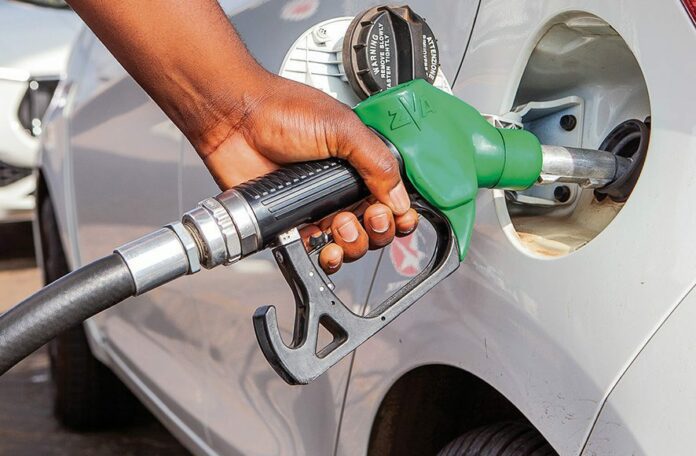
And when those prices rise, South Africans feel it almost immediately at the petrol pumps, with taxi fares, electricity costs and food prices. Every oil price spike ripples through our economy, squeezing households that are already under immense financial pressure.
SA’s energy security is dangerously fragile
This is the uncomfortable truth: South Africa’s energy security remains dangerously fragile.
Moments like this often trigger a predictable response from policymakers and industry lobbyists. They argue that the solution is to develop more oil and gas infrastructure at home – new pipelines, gas terminals and fossil-fuel power stations.
But this response misunderstands the lesson.
Doubling down on fossil fuels will not protect South Africa from global volatility. It would only deepen our exposure to it.
More importantly, it would lock the country into decades of pollution, price instability and stranded infrastructure just as the world is accelerating away from fossil fuels.
Energy debate is about human security
The real lesson from the Middle East is not that South Africa needs more oil and gas. It is that we need to be far less dependence on them.
The energy debate is often framed as an environmental issue. But the dangers of fossil-fuel dependence run far deeper than climate change.
They are about human security.
When an economy builds its development model around oil and gas, it ties its stability to one of the most volatile industries on Earth. Energy supply becomes entangled with geopolitics, military power and global conflict.
Energy dependence turns distant conflicts into global economic shocks
The current crisis is a stark example. Global tensions repeatedly escalate because powerful economies rely heavily on oil-producing regions. Energy dependence turns distant conflicts into global economic shocks.
If South Africa locks itself into a fossil-fuel-driven development model, we place ourselves directly in the path of those same shocks.
Energy systems should shield a nation from geopolitical instability. Fossil fuels do the opposite.
The argument against expanding oil and gas infrastructure is not ideological. It is grounded in economics, geography and basic risk management.
Fossil fuels expose SA to extreme price volatility
First, new fossil-fuel projects are incompatible with global climate targets. The world’s leading climate scientists at the Intergovernmental Panel on Climate Change have made it clear that additional fossil-fuel expansion pushes the planet further away from limiting global warming to 1.5°C. Methane leaks from gas infrastructure can wipe out the supposed climate advantages of gas within a matter of years.
In other words, the “bridge fuel” narrative is increasingly difficult to defend.
Second, fossil fuels expose South Africa to extreme price volatility. The country imports most of its petroleum products. When wars break out or supply chains are disrupted, prices spike overnight. We saw this during the Russia–Ukraine War and we are witnessing it again today.
These price shocks do not remain confined to energy markets. They cascade through the entire economy.
Transport becomes more expensive. Food prices climb. Manufacturing costs rise. Inflation accelerates.
Poorest households bear the brunt
And the burden falls most heavily on the poorest households.
For millions of South Africans, the consequences of fuel volatility are immediate and deeply personal.
Workers often spend an extraordinary share of their income simply getting to work. In some cases, more than half of a worker’s salary disappears into transport costs. When petrol prices surge, taxi fares and bus costs inevitably follow.
For many families, there is simply no financial buffer left.
The impact is even harsher for young people trying to enter the labour market. The country already faces one of the highest youth unemployment rates in the world. For job seekers, transport costs can determine whether a job opportunity is reachable or permanently out of reach.
A job interview across town becomes unaffordable. Training opportunities become inaccessible. Daily job searches become financially impossible.
Fossil-fuel volatility actively reinforces inequality
High fuel prices act like an invisible barrier, trapping millions of young people outside the formal economy.
In this sense, fossil-fuel volatility does more than strain household budgets. It actively reinforces inequality.
Despite these risks, fossil-fuel expansion continues to be promoted through powerful narratives.
Gas is frequently presented as a “clean bridge fuel”. New drilling projects are marketed as engines of economic development. Fossil-fuel companies frame themselves as partners in the energy transition while continuing to invest heavily in carbon-intensive infrastructure.
Messaging amounts to greenwashing
Much of this messaging amounts to greenwashing.
For South Africa, the stakes are particularly high. We are a country where the majority of young people are unemployed and where millions live below the poverty line. Every investment decision shapes the economic opportunities available to the next generation.
Pouring billions of rands into fossil-fuel infrastructure risks locking the country into industries that are already declining globally.
It is not a development strategy. It is a delay tactic.
The transition is already underway
Fortunately, South Africa is not starting from zero.
The Renewable Energy Independent Power Producer Procurement Programme has already demonstrated the potential of renewable energy to deliver power quickly and at globally competitive prices. Since its launch in 2011, the programme has attracted billions of rands in investment and brought substantial wind and solar capacity onto the grid.
But the transition must now accelerate.
Renewable energy must be paired with battery storage, grid upgrades and smarter electricity demand management. Old coal infrastructure can be repurposed for new energy industries. Regions like Mpumalanga can become hubs for solar manufacturing, wind development, green hydrogen and battery production.
Instead of abandoning coal communities, South Africa can rebuild them around new industries.
Clean-energy transition
The clean-energy transition should not become another story of imported technology and temporary foreign contractors.
South Africa has the skills, engineers and innovators capable of building a thriving renewable-energy economy. What is needed is a deliberate focus on domestic ownership, local manufacturing and large-scale skills development.
This means investing in training programmes, supporting local supply chains and ensuring that new energy infrastructure is built with South African expertise.
The transition must not only decarbonise the economy. It must democratise it.
The war unfolding in the Middle East is not simply a geopolitical crisis. It is a reminder of how fragile and dangerous the fossil-fuel economy has become.
Countries that depend heavily on oil remain vulnerable to conflicts they cannot control and price shocks they cannot predict.
South Africa still has a choice
We can continue investing in a volatile energy system tied to global conflict and declining industries. Or we can build a renewable-energy economy rooted in our own resources – our wind, our sunshine and our people.
The fires burning in the Middle East should be a wake-up call: Energy security is no longer just about keeping the lights on. It is about protecting the economic future, human security and dignity of millions of South Africans.
And the safest path forward is clear: accelerate the transition to clean energy, invest in local innovation, and build an energy system that belongs to the people it serves.
Kati is part of Fossil Free South Africa
- Oil refineries are burning in the Middle East as tensions between the United States and Iran continue to escalate.
- Missiles and airstrikes have sent shockwaves through global energy markets, threatening supply routes at the Strait of Hormuz and pushing oil prices sharply upward.
- For South Africa, this is not a distant geopolitical drama unfolding on our television screens.
- It is a warning.
- Fragility of global fossil-fuel system Beyond the devastating human toll – thousands of civilians caught in the crossfire – the conflict has once again exposed the fragility of the global fossil-fuel system.


