


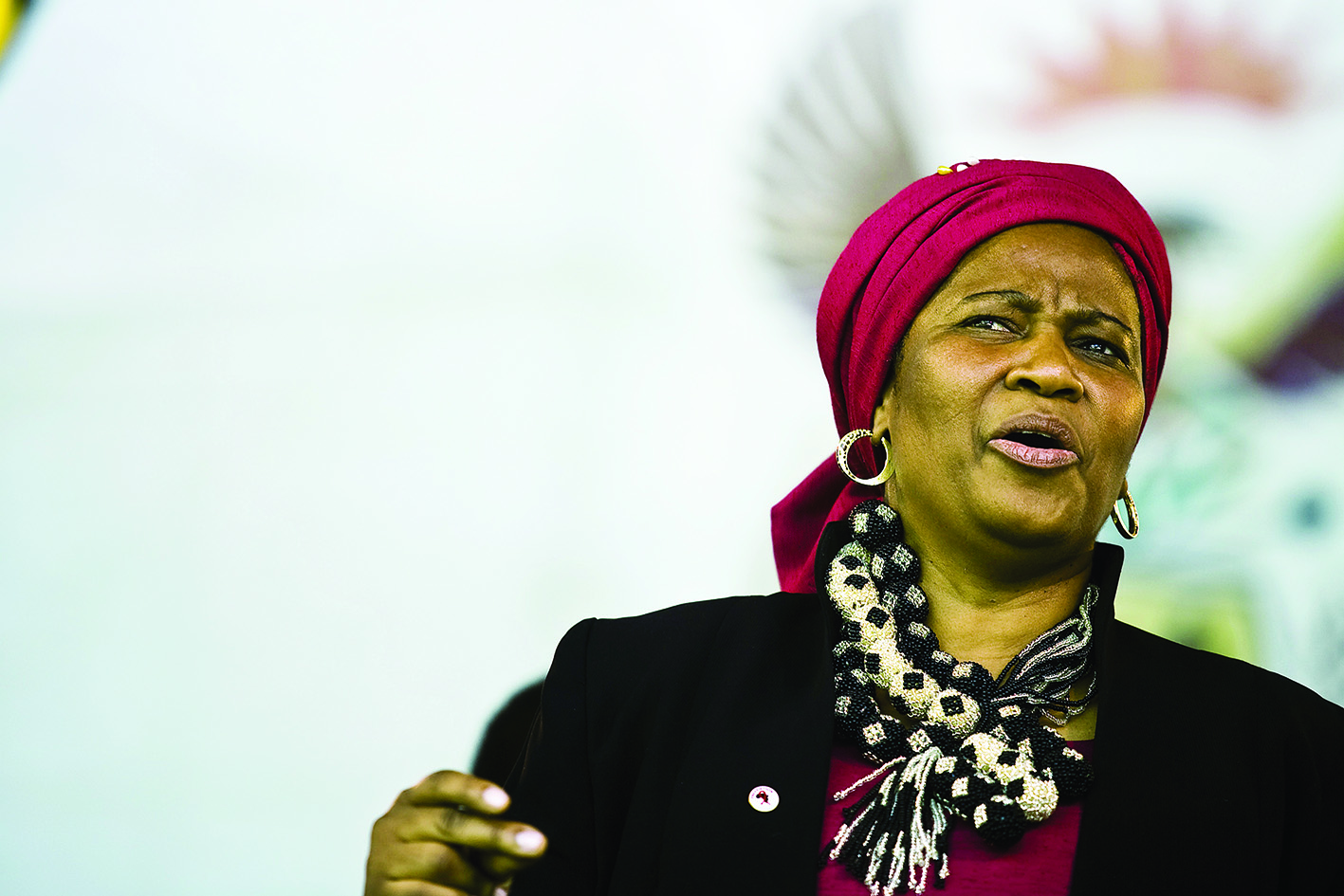
South Africa has lost a daughter whose life of service reached from our communities and institutions to the world stage.
Dr Phumzile Mlambo-Ngcuka belonged to the ANC but her death is a moment of reflection for the whole country and for all those across the continent and the world whose lives were touched by her work.
We remember her as a leader whose authority rested not only on the positions she held but on the values she brought to them: humility, ethical conduct and a deep sense of service. She never treated leadership as entitlement. She understood it as a responsibility to people.
That understanding was shaped early.
Education at the core
Mlambo-Ngcuka was an educationist throughout her life, from her schooling at Ohlange to her postgraduate work in educational planning and policy. Education was not an incidental part of her story; it was one of the threads that ran through it. Her journey reflected a conviction that learning could help equip people to serve and lead.
She carried that commitment into public life. As deputy minister of trade and industry, minister of minerals and energy, MP and later, the deputy president of South Africa, she served in roles that helped shape our democratic institutions.
Transforming industry
Mlambo-Ngcuka was the first woman to serve as deputy president, a historic achievement that recognised her leadership and enlarged the sense of possibility for women and girls across the country.
As minister of minerals and energy, she worked to broaden ownership and inclusion in the mining sector. The presence of more women, including black women, in mining is part of the change she helped advance.
The transformation of an industry shaped by exclusion requires more than words; it requires decisions, policies and sustained effort.
Commitment to gender equality
Mlambo-Ngcuka’s leadership also carried a clear commitment to gender equality. She encouraged those who came after her and understood that progress must include the girl child and the boy child. For her, equality was not a slogan to be repeated on ceremonial occasions.
It had to be reflected in the opportunities available to women, in their safety and dignity, in their presence in decision-making and in the way institutions served them.
For many younger women in the movement, her example was not distant or abstract.
Mlambo-Ngcuka made time to guide, explain and remind the next generation that leadership demands purpose and work. We looked up to her like a big sister: a woman of purpose who could sit a younger comrade down and explain what our generation needed to do.
That combination of stature and approachability was part of her character. She affirmed people but she also expected them to think seriously about the responsibilities they carried.
Global responsibility
As executive director of UN Women and a UN under-secretary-general, Mlambo-Ngcuka helped make gender equality a global responsibility and represented South Africa with distinction.
Her role in the institution gave her a platform to advocate for women and girls across different societies, while carrying with her the experience of a country working to overcome the deep inequalities of its past.
Mlambo-Ngcuka’s public service did not end when her time at the UN concluded.
In later years, she continued to serve the continent through the African Union’s peace efforts. As a member of the AU Panel of the Wise and its High-Level Panel for the Ethiopia peace process, she contributed to mediation efforts and advocated for the needs of people displaced by conflict, particularly women and children.
We should also remember the person beyond public office.
Mlambo-Ngcuka was a wife and mother and someone whose family life was part of who she was. Public service can demand much from those who undertake it and those closest to them.
As we honour her contribution to the country, the ANC also extends its respect and sympathy to her husband, her children and the wider Mlambo and Ngcuka families.
What should her death ask of us? That we learn from the example she set. The ANC must draw from the leadership she embodied: leadership grounded in service, guided by principle and measured by whether it improves people’s lives.
We must continue the work Mlambo-Ngcuka championed in education, in transforming our economy, in building a more inclusive mining sector and in creating a society in which women and girls can participate fully and safely.
• Bhengu is the national spokesperson of the ANC.
- South Africa has lost a daughter whose life of service reached from our communities and institutions to the world stage.
- Dr Phumzile Mlambo-Ngcuka belonged to the ANC but her death is a moment of reflection for the whole country and for all those across the continent and the world whose lives were touched by her work.
- We remember her as a leader whose authority rested not only on the positions she held but on the values she brought to them: humility, ethical conduct and a deep sense of service.
- She never treated leadership as entitlement.
- She understood it as a responsibility to people.


