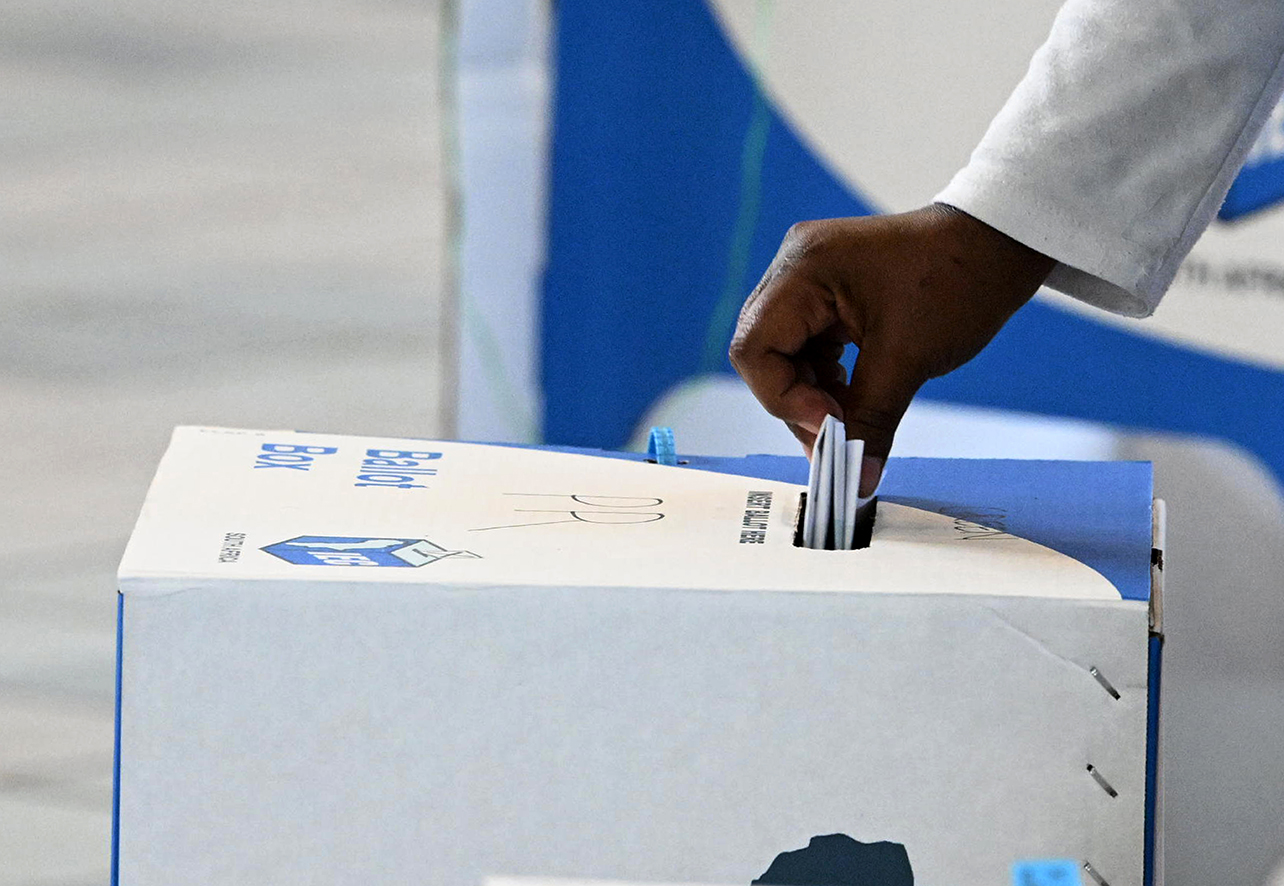
In the days since South Africans went to the polls on November 4 2026, political commentary has been understandably fixated on coalition arithmetic in Johannesburg, Tshwane, and eThekwini. Yet beneath the horse-trading over mayoral chains lies a deeper structural geometry that quietly governs our economy, our service-delivery failures, and our politics: South Africa is locked in a steep Zipf State.
Understanding the Zipf curve
In urban economics, Zipf’s Law describes an empirical regularity observed across mature economies: when cities or municipalities are ranked from largest to smallest by population, the second-largest city is roughly half the size of the largest, the third is a third as large, and so on – a power-law rank-size distribution with an exponent, or slope, close to unity. When that slope grows excessively steep, a country suffers from hyper-primacy. Capital, formal jobs, skilled labour, and bulk infrastructure pile up at the very top of the urban pyramid while intermediate towns stagnate and rural municipalities hollow out into remittance-dependent dormitories.

You do not need a supercomputer to see South Africa’s Zipf curve bending out of shape; you only need to read our four post-apartheid censuses from 1996 through 2022 alongside the local ballot boxes of 2026. Over those twenty-six years, South Africa’s population grew from roughly 40.5 million to 62.03 million. Yet that growth has been overwhelmingly absorbed by a handful of metropolitan anchors—Johannesburg, Cape Town, eThekwini, Ekurhuleni, and Tshwane—while Gauteng and the Western Cape acted as net demographic magnets pulling hundreds of thousands of working-age adults out of Limpopo and the Eastern Cape.
Hollowed-out towns and rural peripheries
Consider what this macro-curve looks like from the bottom up, starting at the periphery and working inward through contiguous Enumeration Areas and placenames rather than hiding behind smooth national averages. Take two emblematic local municipalities at opposite ends of the country: Dr AB Xuma (Ngcobo) in the Eastern Cape’s Chris Hani District, and Blouberg (Bochum / Senwabarwana) in Limpopo’s Capricorn District.
Across consecutive census cycles, Ngcobo’s headline population contracted from more than 155 500 in 2011 to 132 799 in 2022 as working-age adults left in search of livelihoods, leaving behind an official unemployment rate above 45%, youth joblessness topping 55%, and roughly 37% of residents without access to piped water. In Bochum and the wider Blouberg corridor, households similarly navigate expansive rural distances, pit-sanitation backlogs, and circular labour migration toward Polokwane and Gauteng. Meanwhile, the small nodal towns inside these rural municipalities – places like Ngcobo’s town centre and All Saints, or Senwabarwana’s urban core – are caught in a vice. They serve as daily service hubs for tens of thousands of surrounding villagers, yet their reticulated water, sewerage, and electricity networks have buckled under decades of deferred maintenance and unfunded mandates.
The ballot-box revolt in small towns
When voters in Ngcobo’s town wards broke away from traditional party loyalties in November 2026 – handing surging support to hyper-local civic movements like the Ngcobo Yethu Civic Organization and opposition challengers right inside the urban core – they were delivering a verdict on the Zipf State. Rural voters are no longer a passive, captive demographic reservoir. Where taps run dry in nominal town centres and youth unemployment traps a generation between collapsing village economies and unaffordable metro townships, civic patience evaporates.
Five shifts to flatten the curve
If South Africa wants both fiscal stability and democratic renewal, we cannot treat municipal distress as an endless series of bailouts or coalition rescues. We have to deliberately flatten the Zipf slope – strengthening the middle tier of secondary cities and district service towns so prosperity and infrastructure are distributed across the hierarchy rather than hoarded at the top. Doing so requires five concrete shifts.
First, redirect bulk infrastructure capital toward intermediate economic corridors. National grant formulas still reward existing population scale and revenue bases, reinforcing metropolitan dominance. Ring-fenced capital grants must prioritize regional water schemes, grid substations, and freight-rail or road links in secondary towns and district hubs—turning places like Queenstown, Mthatha, Tzaneen, and Senwabarwana into genuine agro-processing and logistics anchors rather than waystations to Johannesburg.
Second, fix operational reticulation in nodal towns before building showcase projects. Census data repeatedly exposes a dangerous illusion: municipalities report high nominal rates of household pipe connections while residents endure dry taps and raw sewage spills. Treasury and water boards must tie municipal infrastructure transfers to audited operational uptime – metering, leak repair, pump maintenance, and ring-fenced revenue collection – in the exact peri-urban wards where service expectations and system failures collide.
Third, unlock dead capital through cadastral and tenure formalization. Across former homeland towns and peri-urban fringes, millions of households live on land with ambiguous tenure that cannot be mortgaged, insured, or cleanly billed for rates. Linking ground-level settlement footprints to formal Surveyor-General cadastral records and issuing bankable title deeds or secure long-term leaseholds would let small businesses borrow, expand, and build local balance sheets.
Fourth, target the Labour Disappearance Index where young people actually live. In high-out-migration districts, youth unemployment is not merely cyclical; it reflects the disappearance of local formal employment. Public employment programmes, vocational colleges, and small-business procurement must be anchored in local value chains – climate-resilient agriculture, renewable micro-grids, construction maintenance, and rural digital services – so young adults are not forced to choose between destitution at home and precarious shack living on the edge of a metro.
Fifth, govern from the ground up with forensic spatial data. Municipal averages are political sedatives; they allow a thriving town main street to mask waterless peripheral villages, or rural grant stability to hide urban reticulation collapse. Every municipal Integrated Development Plan and budget should be audited at the sub-place and Enumeration Area mesh level, tracking where services actually work and where they fail.
Geography is destiny no longer
South Africa’s 2026 local elections proved that geography is destiny no longer – voters across small towns and rural districts will punish failure just as swiftly as suburbanites in the metros. Flattening our Zipf curve is not an abstract exercise in spatial statistics. It is the practical work of making every town worth living in, investing in, and voting for.
- Dr Pali Lehohla is a professor of practice at the University of Johannesburg, a research associate at Oxford University, and a distinguished alumnus of the University of Ghana. He is the former statistician-general of South Africa.
Subscribe To Our Newsletter or get the news delivered to your phone via our WhatsApp Channel.
- Since 1996, South Africa's population grew from 40.5 million to 62.03 million, with most growth absorbed by major metros like Johannesburg, Cape Town, and eThekwini.
- Smaller towns and rural municipalities, such as Ngcobo in the Eastern Cape and Blouberg in Limpopo, have experienced population decline, high unemployment, and inadequate infrastructure.
- In the 2026 local elections, voters in small towns like Ngcobo shifted support toward hyper-local civic movements, reflecting dissatisfaction with service delivery failures.
- Five proposed shifts to flatten South Africa’s steep Zipf curve include redirecting infrastructure grants, repairing municipal services, formalizing land tenure, targeting youth employment locally, and using detailed spatial data for governance.
- Dr Pali Lehohla, former statistician-general of South Africa, emphasizes that flattening the Zipf curve is essential for equitable service delivery, economic opportunity, and democratic renewal across the country.