
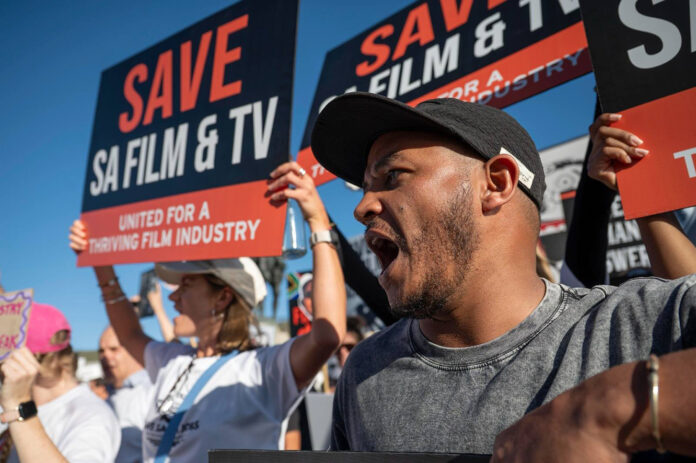
South Africa’s creative economy stands at an inflection point. The employment and labour minister published a notice in the Government Gazette expressing her intention to deem performers in advertising, artistic and cultural activities as employees – but only for specified provisions of key labour statutes, including the Basic Conditions of Employment Act (BCEA), the National Minimum Wage Act, the Compensation for Occupational Injuries and Diseases Act, and certain provisions of the Labour Relations Act.
This is not a revolution, nor is it the abolition of freelance work. And it is certainly not the imposition of full-time employment status on every creative professional in the country.
It is a targeted, consultative intervention – one that has been years in the making.
To understand where we are, one must appreciate the chronology.
As early as 2018, the South African Guild of Actors (Saga) made the decision to convene exploratory meetings with industry stakeholders to discuss working conditions and minimum rates. Participants included the Commercial Producers’ Association (CPA), which made clear that it viewed the industry as effectively “self-regulated”.
Hardly a surprising position considering their own very large domain of influence and control.
Our desire to explore the topic of negotiating minimum standards in the industry resulted in both Saga and the Personal Managers’ Association (PMA) being reported to the Competition Commission for alleged price fixing.
In October 2019, veteran actress Vatiswa Ndara addressed an open letter to then minister Nathi Mthethwa detailing widespread abuse and exploitation of performers by production houses. The letter ignited national debate not only online, but also in local media and by December, the Department of Employment and Labour published a notice of its intention to deem certain film and television workers as employees solely for certain provisions in labour law.
Then came COVID-19
Far from putting a halt to our efforts to improve conditions in the industry, from 2020 to 2023, stakeholder engagements continued. Written submissions were filed and a departmental report concluded that a sectoral determination – a tailored regulatory instrument under the BCEA – would be the most appropriate mechanism for our sector.
It is worth remembering that the entertainment industry is not entirely unregulated. Sectoral determination 10 (GN R882 of 29 July 2004) already governs the employment of child performers under the age of 15 in film, advertising and live entertainment.
Seeking out similar protections for adult performers is, therefore, hardly revolutionary.
While Saga was the first to submit its version of a sectoral determination for adults in the industry, three other industry organisations, including the PMA (agents) and Stunts-SA made submissions.
In January 2025, Saga and the PMA secured a conditional five-year exemption under section 10 of the Competition Act, enabling us to explore the benefits of collective negotiation without breaching competition law. Objections were lodged – and later withdrawn.
Now, in 2026, the minister published a notice calling for submissions, with one notable change. No longer were they calling from “persons” in the industry, but rather it had been narrowed to “performers” specifically. The deadline for public comment has now passed.
What does the notice actually do? It deems performers to be “employees” for defined statutory protections – minimum wage, working time standards, compensation for occupational injuries, and certain fixed-term contract protections.
The purpose is straightforward: to ensure that those who are economically dependent, vulnerable to abuse, and working under employment-like conditions are not excluded from baseline labour protections.
What It does not do is convert every freelancer into a permanent employee. It does not abolish independent contracting. It does not impose a global earnings cap. It does not automatically strip performers of tax deduction benefits.
For years, powerful stakeholders have insisted that the sector functions best through “self-regulation”. In practice, this has meant unilateral rule-setting by dominant producer bodies, with minimal bargaining power afforded to performers and when performers attempted to negotiate changes, they were met with legal threats and competition complaints.
Transformation of the sector is not optional. Whether anyone likes it or not, it is inevitable. The only remaining question is whether it will be shaped collaboratively – or imposed in response to intransigence.
The department has indicated that stakeholder input may culminate in a tailored sectoral determination designed specifically for film, television, advertising and live entertainment. This mechanism would allow for flexibility. It would be structured to accommodate project-based work, and to recognise short-term engagements. But such nuance requires participation.
Those who chose to spend the consultation period spreading fear – ominously predicting “massive job losses” and “industry collapse” – may soon find themselves governed by rules they declined to help shape.
There will be difficult trade-offs, which is precisely why consultation exists. But one cannot credibly claim to defend flexibility while refusing to sit at the table where flexibility is being negotiated.
When the balance of power is so heavily weighted towards those that continue to exploit performers, provide little protection and line their own pockets, it is clear that self-regulation has never been more than a way for a small sector of the industry to exercise control.
The time has come for that balance to be redressed and for performers and industry professionals to have protection and legal recourse against unsafe, underpaid and unfair working conditions. The time has come for South Africa’s creative industry to align with international best practices.
Alarmist talk with half-truths and incomplete information, unfounded claims and blatant lies, does a disservice to the members of our industry who would benefit positively from the proposed changes, while protecting the interests of those that have profited from the grey areas that currently exist.
Regulation is coming, of that there is no doubt. The question now is whether it will reflect a balanced, evidence-based accommodation of the sector’s unique realities – or whether it will be crafted without any meaningful input from those who chose obstruction over participation.
The transformation of South Africa’s creative economy is underway. The time for fear-mongering has passed. Now is the time for responsible engagement.
- Devnarain is chairman of the South African Guild of Actors
Visit SW YouTube Channel for our video content


