


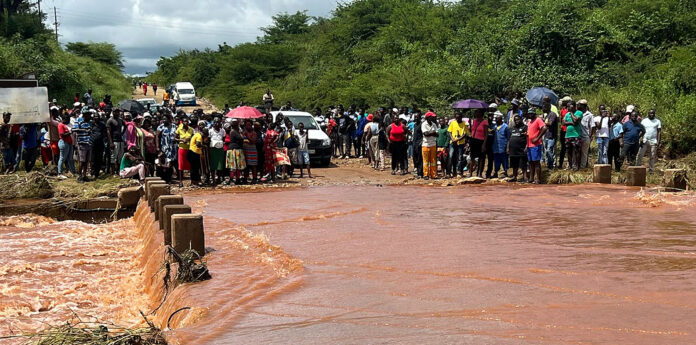
As a climate activist in South Africa, I have watched with growing alarm as extreme weather becomes our new normal. Last month, devastating floods swept through Limpopo and Mpumalanga, killing people, displacing thousands, and destroying infrastructure in what the South African Red Cross declared a national disaster. These were not isolated events.
Last year, floods in the Eastern Cape claimed 49 lives, wildfires scorched both the Western and Eastern Cape, and towns faced severe water shortages amid prolonged drought. Across Southern Africa, more than 100 people have died from torrential rains this season alone. Climate change is intensifying cyclones, floods, droughts, and heat – and it is the poorest who pay the highest price through food insecurity, water scarcity and economic disruption. If this is our “summer of extremes”, it must be a turning point.
The government has taken steps, but they remain dangerously insufficient. The Climate Change Act of 2024 mandates adaptation planning, and in 2025 the Coastal Adaptation Response Plan was launched to protect vulnerable areas.
South Africa’s updated Nationally Determined Contribution reaffirms commitments under the Paris Agreement, yet progress remains uneven.
In the Climate Performance Ranking 2026, South Africa ranks 41st as a low performer. While renewable energy expansion is promised, continued dependence on fossil fuels continues to delay a real transition.
This raises an uncomfortable question: where is the Presidential Climate Commission?
While the appointment of new commissioners for the 2026–2030 term has brought diverse representation, the commission’s impact remains difficult to measure. It has produced a Just Transition Framework, hosted dialogues on methane reduction, engaged communities in KwaZulu-Natal, and convened youth conferences.
These are important steps, but they fall short of the urgency demanded by worsening climate impacts. Support for municipalities and large-scale mobilisation of climate finance remain largely aspirational.
The deeper problem is systemic. Climate policy in South Africa remains fragmented, inconsistently implemented, and weakened by governance failures and financing gaps. Despite high public awareness – with nearly 80% of South Africans recognising climate change as a threat – action lags behind intention. Global cooperation has also faltered. The promise of climate finance made during South Africa’s G20 presidency last year now faces headwinds, with geopolitical shifts further constraining access to fair funding.
One critical barrier to progress is the continued social licensing of fossil fuel companies. Even as floods devastate communities, coal, oil and gas corporations are still allowed to market themselves as drivers of development across the continent. This narrative is deeply misleading. Fossil fuel advertising normalises extraction, obscures environmental harm, and delays the transition we urgently need. South Africa must move toward a fossil fuel advertising ban, similar to tobacco restrictions, to end greenwashing and prevent polluters from shaping our development future.
But bans alone are not enough. What South Africa urgently needs is consistent, coherent climate policy grounded in a multi-layered approach. Energy policy cannot undermine water security.
Industrial strategy cannot contradict emissions targets. Adaptation planning must be integrated with housing, health, food systems, and labour policy. Alignment must extend from national government to municipalities, where climate impacts are felt most acutely and where implementation often fails.
At the centre of this approach must be community and youth agency. Climate policy cannot be something done to communities; it must be built with them.
Too often, climate adaptation and recovery are financed through loans that lock South Africa into long-term debt to the Global North. This undermines sovereignty and shifts the burden of climate impacts onto future generations. Climate finance must prioritise grants, debt relief, and loss-and-damage mechanisms that reflect historical responsibility and enable long-term resilience.
Business has begun to respond, but unevenly. Initiatives supporting low-carbon investment and climate-smart agriculture show promise, yet pilot projects are not enough. Corporate action must align with national climate commitments through scaled investment and innovation, not incremental gestures.
Breaking the impasse will require pressure from below. Communities, labour and civil society must organise to demand accountability. Trade unions can push for job-secure transitions, and civil society can amplify evidence-based demands in public forums.
The science is clear, the impacts are undeniable, and the public is ready. What is missing is the political will to act, and that is something citizens can, and must, demand.
- Kati is with Fossil Free South Africa, a campaign for fossil fuel divestment and sustainable reinvestment


