


With the Electoral Commission of South Africa set to declare results of the local government elections today, coalition governments face a test beyond surviving votes of no confidence.
How parties exercise shared power will determine whether divided electoral mandates produce administrations that function through collaboration, political blame shifting or opportunities for capture of state institutions.
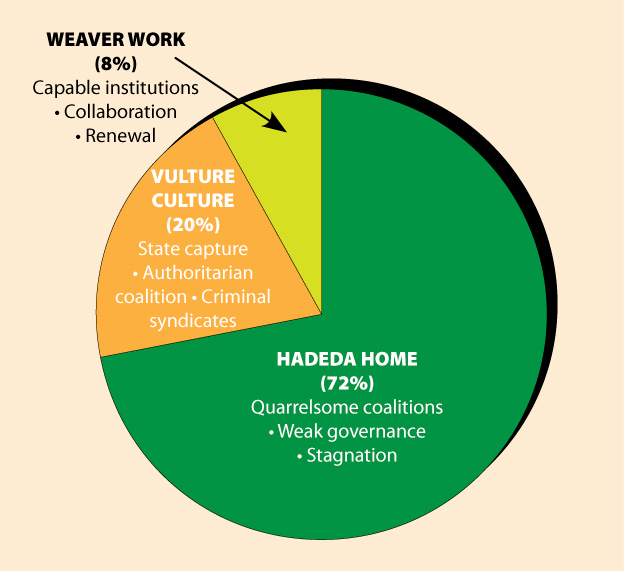
The 2026 Indlulamithi Barometer places 72% of national indicators in Hadeda Home, characterised by quarrelsome coalitions, weak governance and stagnation; 20% in Vulture Culture, where criminal syndicates capture the state that is led by an authoritarian and populist coalition; and 8% in Weaver Work, where capable institutions and cooperation with civil society and business enable renewal after a period of rupture. Of the three possible pathways, a loud and bickering Hadeda Home scenario is dominant this year.
The Indlulamithi Scenarios and Barometer also point towards a period of inflection taking shape between this year’s local government elections and the 2029 national government elections. We might pivot either towards the Vulture Culture scenario or Weaver Work scenario, depending on choices made by citizens at the ballot.
Therefore, across municipalities, leadership changes will carry lasting institutional consequences.
Political rivalry and self-interest in the Hadeda Home
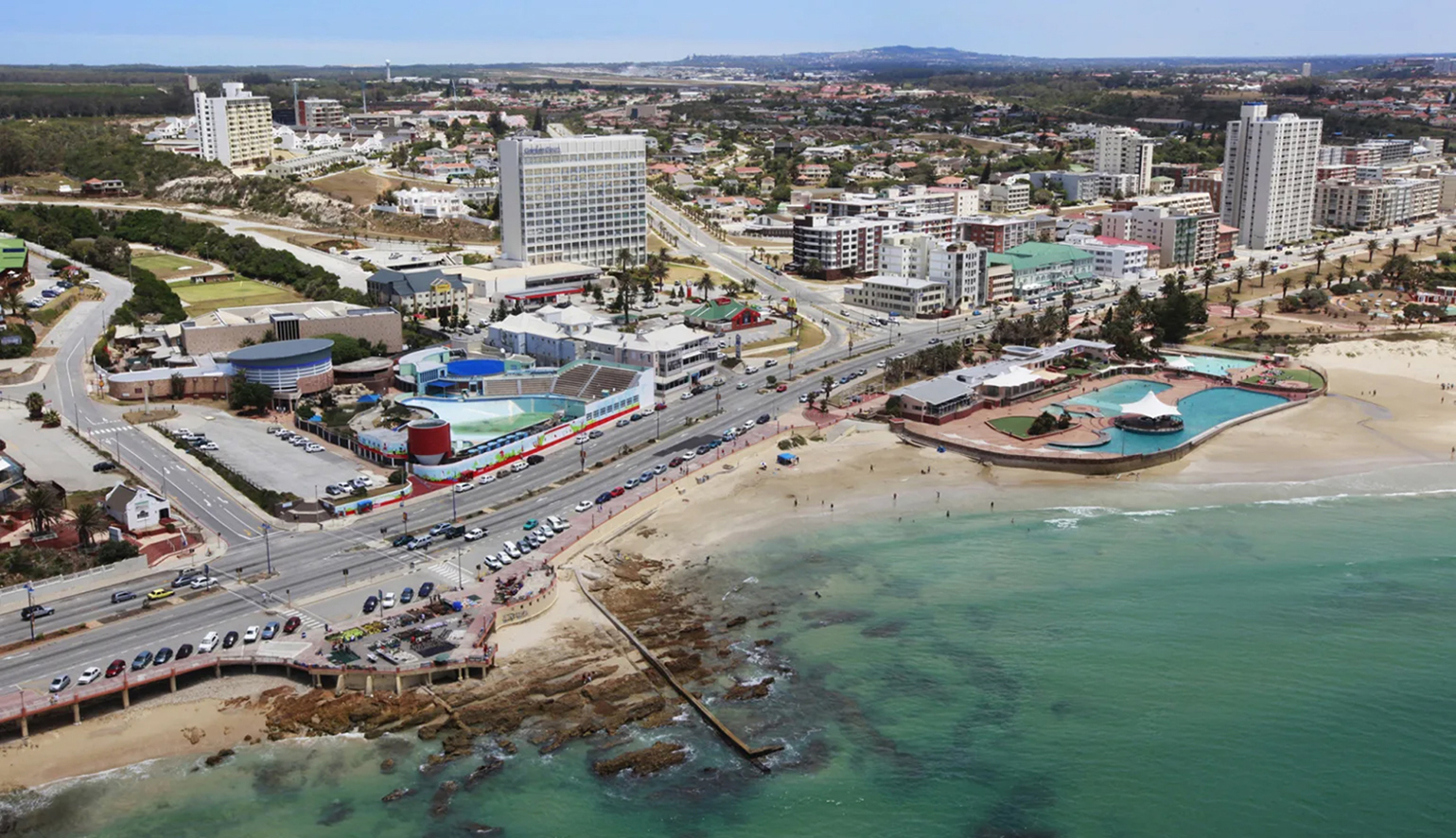
Nelson Mandela Bay Metropolitan Municipality demonstrates how repeated political changes become an enduring administrative problem.
Since the November 2021 elections, four mayors from the ANC, the DA and the National Alliance have held office. Coalition combinations shifted while 12 acting city managers passed through the administration. Continuity became difficult precisely where it was most needed.
The Auditor-General recorded a 67% vacancy rate among senior management in 2023/24. In May this year, Parliament confronted prolonged acting appointments, weaknesses in financial controls and the suspension of City Manager Noxolo Nqwazi, which had cost more than R6.7 million. Replacing political leaders without rebuilding professional management leaves budgets, procurement and infrastructure programmes exposed to further disruption.
Residents encounter the consequences at their taps. Many water interruptions affected several areas and, alarmingly, the Gelvandale reservoir stood at 0% and Chelsea at 9%. A failed Nooitgedagt pump subsequently cut daily pumping capacity by about 20 million litres. Sustained repairs require decisions that outlast each contest over the mayoral chain. Every interruption forces families and businesses to improvise while the costs of delayed maintenance accumulate.
The City of Tshwane Metropolitan Municipality reveals the same tension. Its four mayors since 2021 have been Randall Williams of the DA, Murunwa Makwarela of the Congress of the People, Cilliers Brink of the DA and Nasiphi Moya of ActionSA. Political turnover coincided with administrative strain: City Manager Johann Mettler was suspended in July this year before the high court ordered his reinstatement.
Tshwane’s 2023/24 annual report recorded 125 vacant senior management positions out of 420, a 29.76% vacancy rate, alongside two vacancies among 10 top management posts. Such gaps limit the municipality’s ability to supervise complex systems and respond quickly when procurement or infrastructure fails. Last month’s water contamination crisis in Bronkhorstspruit exposed the human cost of municipal failures. Government reported 408 cases of gastrointestinal illness between October 7 and 18, predominantly among children. Tests detected severe bacterial contamination. The treatment works supplied water without chlorination from September 24 to October 14 because of supplier difficulties and without warning residents.
The river supplying the works was polluted by sewage from dysfunctional wastewater infrastructure. Failures in treatment, procurement and communication show why political leaders must ensure that infrastructure is maintained, chemical supplies are reliable, warning systems function and standards are disclosed immediately when they fail.
The KwaZulu-Natal Government of Provincial Unity shows how narrow majorities increase the leverage of individual partners. The IFP, ANC, DA and National Freedom Party (NFP) jointly hold a one-seat majority in the 80-member provincial legislature. A single defection or withdrawal can upset the apple cart.
That vulnerability was exposed by the dispute involving NFP representative Mbali Shinga, the MEC for Social Development. After a court setback last month over her expulsion and legislative position, she indicated she would appeal. An internal party contest therefore acquired consequences for the province’s governing majority.
A majority this narrow encourages repeated negotiation over political support. The test is whether parties agree on policy and responsibilities or make access to resources the price of survival. Endless blame-shifting and surviving a vote of no confidence cannot replace duties that come with public office.
Towards Weaver Work
Weaver Work requires commitments citizens can test through transparency. Coalition agreements should be entered into upfront and published for citizens’ discernment. At bureaucratic level, managers need the authority to appoint skilled professionals without continuous political interference; and councillors need informative and timely reports to enforce accountability.
The Mapungubwe Institute of Strategic Reflection Coalitions Barometer found no statistically reliable association between coalition instability and municipal audit outcomes. The finding demands precision: to understand governance, examine service reliability, vacancies, procurement records and responses to failures, rather than assuming political turnover alone explains every broken system.
Indlulamithi SA Scenarios for 2035 show that the country’s future is neither predetermined nor beyond our influence. Moving from Hadeda Home, while preventing the potential for Vulture Culture and working towards Weaver Work requires active citizens, capable institutions, activist business and a political elite that is willing to listen and sustain collective action. Political parties may be compelled to share power as South Africa’s coalition politics mature but sharing office is only the beginning.
• Kashe-Katiya is the project lead at Indlulamithi initiative, launched in 2018 to model, track and guide South Africa’s path towards national development
- The Electoral Commission of South Africa is set to declare local government election results, testing coalition governments on their ability to share power effectively.
- The 2026 Indlulamithi Barometer places 72% of national indicators in the Hadeda Home scenario, marked by quarrelsome coalitions and weak governance.
- The Nelson Mandela Bay Metropolitan Municipality has had four mayors since November 2021, with a 67% senior management vacancy rate reported by the Auditor-General in 2023/24.
- Tshwane Metropolitan Municipality experienced high political turnover with four mayors since 2021, a 29.76% senior management vacancy rate, and ongoing administrative challenges including a suspended city manager.
- Water contamination in Bronkhorstspruit led to 408 cases of gastrointestinal illness caused by severe bacterial contamination due to failures in treatment and infrastructure maintenance.
With the Electoral Commission of South Africa set to declare results of the local government elections today, coalition governments face a test beyond surviving votes of no confidence.
How parties exercise shared power will determine whether divided electoral mandates produce administrations that function through collaboration, political blame shifting or opportunities for capture of state institutions.
The 2026 Indlulamithi Barometer places 72% of national indicators in Hadeda Home, characterised by quarrelsome coalitions, weak governance and stagnation; 20% in Vulture Culture, where criminal syndicates capture the state that is led by an authoritarian and populist coalition; and 8% in Weaver Work, where capable institutions and cooperation with civil society and business enable renewal after a period of rupture. Of the three possible pathways, a loud and bickering Hadeda Home scenario is dominant this year.
The Indlulamithi Scenarios and Barometer also point towards a period of inflection taking shape between this year’s local government elections and the 2029 national government elections. We might pivot either towards the Vulture Culture scenario or Weaver Work scenario, depending on choices made by citizens at the ballot.
Therefore, across municipalities, leadership changes will carry lasting institutional consequences.
Nelson Mandela Bay Metropolitan Municipality demonstrates how repeated political changes become an enduring administrative problem.
Since the November 2021 elections, four mayors from the ANC, the DA and the National Alliance have held office. Coalition combinations shifted while 12 acting city managers passed through the administration. Continuity became difficult precisely where it was most needed.
The Auditor-General recorded a 67% vacancy rate among senior management in 2023/24. In May this year, Parliament confronted prolonged acting appointments, weaknesses in financial controls and the suspension of City Manager Noxolo Nqwazi, which had cost more than R6.7 million. Replacing political leaders without rebuilding professional management leaves budgets, procurement and infrastructure programmes exposed to further disruption.
Residents encounter the consequences at their taps. Many water interruptions affected several areas and, alarmingly, the Gelvandale reservoir stood at 0% and Chelsea at 9%. A failed Nooitgedagt pump subsequently cut daily pumping capacity by about 20 million litres. Sustained repairs require decisions that outlast each contest over the mayoral chain. Every interruption forces families and businesses to improvise while the costs of delayed maintenance accumulate.
The City of Tshwane Metropolitan Municipality reveals the same tension. Its four mayors since 2021 have been Randall Williams of the DA, Murunwa Makwarela of the Congress of the People, Cilliers Brink of the DA and Nasiphi Moya of ActionSA. Political turnover coincided with administrative strain: City Manager Johann Mettler was suspended in July this year before the high court ordered his reinstatement.
Tshwane’s 2023/24 annual report recorded 125 vacant senior management positions out of 420, a 29.76% vacancy rate, alongside two vacancies among 10 top management posts. Such gaps limit the municipality’s ability to supervise complex systems and respond quickly when procurement or infrastructure fails. Last month’s water contamination crisis in Bronkhorstspruit exposed the human cost of municipal failures. Government reported 408 cases of gastrointestinal illness between October 7 and 18, predominantly among children. Tests detected severe bacterial contamination. The treatment works supplied water without chlorination from September 24 to October 14 because of supplier difficulties and without warning residents.
The river supplying the works was polluted by sewage from dysfunctional wastewater infrastructure. Failures in treatment, procurement and communication show why political leaders must ensure that infrastructure is maintained, chemical supplies are reliable, warning systems function and standards are disclosed immediately when they fail.
The KwaZulu-Natal Government of Provincial Unity shows how narrow majorities increase the leverage of individual partners. The IFP, ANC, DA and National Freedom Party (NFP) jointly hold a one-seat majority in the 80-member provincial legislature. A single defection or withdrawal can upset the apple cart.
That vulnerability was exposed by the dispute involving NFP representative Mbali Shinga, the MEC for Social Development. After a court setback last month over her expulsion and legislative position, she indicated she would appeal. An internal party contest therefore acquired consequences for the province’s governing majority.
A majority this narrow encourages repeated negotiation over political support. The test is whether parties agree on policy and responsibilities or make access to resources the price of survival. Endless blame-shifting and surviving a vote of no confidence cannot replace duties that come with public office.
Weaver Work requires commitments citizens can test through transparency. Coalition agreements should be entered into upfront and published for citizens’ discernment. At bureaucratic level, managers need the authority to appoint skilled professionals without continuous political interference; and councillors need informative and timely reports to enforce accountability.
The Mapungubwe Institute of Strategic Reflection Coalitions Barometer found no statistically reliable association between coalition instability and municipal audit outcomes. The finding demands precision: to understand governance, examine service reliability, vacancies, procurement records and responses to failures, rather than assuming political turnover alone explains every broken system.
Indlulamithi SA Scenarios for 2035 show that the country’s future is neither predetermined nor beyond our influence. Moving from Hadeda Home, while preventing the potential for Vulture Culture and working towards Weaver Work requires active citizens, capable institutions, activist business and a political elite that is willing to and sustain collective action. Political parties may be compelled to share power as South Africa’s coalition politics mature but sharing office is only the beginning.
• Kashe-Katiya is the project lead at Indlulamithi initiative, launched in 2018 to model, track and guide South Africa’s path towards national development


