


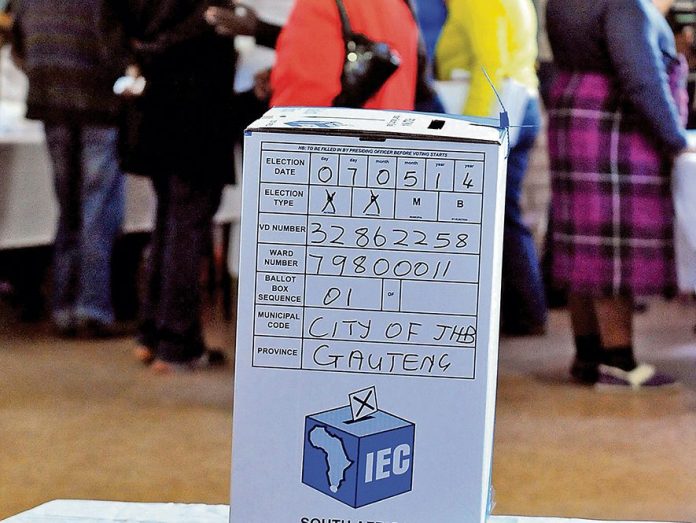
As the dust settles on local government elections, the political noise will inevitably fade, replaced by the sobering reality of municipal balance sheets, ageing infrastructure, and community expectations.
For months, energy has featured prominently on the campaign trail, usually framed as a national grievance. Voters heard endless debates about Eskom, load shedding, bulk tariffs, and high-level climate commitments. Yet, as new municipal councils take office and coalitions are forged, a critical truth becomes apparent: the real battleground for South Africa’s energy future is local.
South Africa no longer needs to debate the philosophy of the Just Transition. We are past the point of ambitious policy papers and high-level pledges. The immediate challenge facing every incoming councillor, municipal manager, and mayor is operational execution.
The manifesto blind spot
During the campaign season, energy policy was too often treated as a slogan rather than an economic engine. Party manifestos offered sweeping promises of “green cities” and “affordable electricity,” but largely glossed over the hard, unglamorous plumbing required to get there.
Voters were rarely asked to consider the operational prerequisites of municipal energy reform:
● How will a bankrupt municipality clear its share of the R120-billion in overdue municipal debt owed to Eskom?
● Do incoming leaders understand municipal wheeling frameworks to enable independent power producers and local businesses to trade energy?
● Are local development trusts and socio-economic commitments being treated as tick-box compliance or as active pathways for local enterprise and job creation?
Energy is no longer just a utility management issue. It is the foundational infrastructure of local economic survival. If our municipalities cannot manage distribution networks, integrate rooftop solar safely, and protect vulnerable households through smart tariff structuring, no amount of national policy will save local economies from stagnation.
Three tests of municipal leadership
As municipal leadership assumes office, their success or failure over the next five-year term will be measured against three non-negotiable operational realities:
1. Financial health is energy security
You cannot transition a municipality to clean energy if its balance sheet is broken. Persistent defaults on bulk electricity accounts invite supply restrictions, legal battles, and financial collapse. New leaders must prioritise transparent financial governance, using public oversight tools like National Treasury’s Municipal Money portal, to restore fiscal discipline before attempting complex decentralisation projects.
2. The network is the bottleneck
Generation is opening up through independent power producers, but distribution belongs to local government. Local substations, transformers, and cables are crumbling across many parts of the country. A council’s competence is no longer judged by speeches, but by its average turnaround time for repairing a blown transformer or securing local grid capacity for business expansion.
3. Transition equals participation
A true “Just Transition” cannot be managed from a boardroom. When renewable energy projects break ground in or near municipalities, they carry commitments to local employment, supplier development, and community ownership. Local government must act as an effective bridge, ensuring that clean energy investments translate into real skills, local procurement, and tangible economic inclusion for residents.
Moving from slogans to systems
The election cycle is over, but the work of building South Africa’s energy resilience has only just begun.
The test of true leadership over the next five years will not be found in campaign rhetoric. It will be found in administrative maturity, technical competence, and the ability to turn abstract energy policy into operational reality on the ground.
South Africa’s energy transition will ultimately succeed or fail at the municipal level. It is time to stop talking about the future of power, and start executing it.
- Zambane is the Founder and CEO of Kani Development Solutions, focusing on
operational participation infrastructure for energy, mining, and infrastructure.
- As the dust settles on local government elections, the political noise will inevitably fade, replaced by the sobering reality of municipal balance sheets, ageing infrastructure, and community expectations.
- For months, energy has featured prominently on the campaign trail, usually framed as a national grievance.
- Voters heard endless debates about Eskom, load shedding, bulk tariffs, and high-level climate commitments.
- Yet, as new municipal councils take office and coalitions are forged, a critical truth becomes apparent: the real battleground for South Africa’s energy future is local.
- South Africa no longer needs to debate the philosophy of the Just Transition.


