


Growing up, we were taught to respect our elders. This fundamental principle of upbringing was deeply rooted in both European religious doctrine and African family values, two traditions that did not necessarily have to coexist within the same individual to command obedience.
Whether you raised your hands in worship before Jesus Christ or knelt in reverence at an ancestral altar, one message echoed across generations: Hlonipha abadala (respect your elders).
This enduring injunction to respect seniority found an intriguing expression in our beloved South African political theatre on two occasions within a fortnight.
The first unfolded when ANC national chairperson Gwede Mantashe stormed out of the gates of a combustible Cosatu congress two weeks ago after organisers committed what he evidently considered a cardinal sin against the established order of political seniority.
They wanted the ANC to speak before its “junior” alliance partners.
For Mantashe, who was representing President Cyril Ramaphosa, this was no innocent rearrangement of the programme. It was an affront to the ANC’s historical standing, an attempt to diminish the liberation movement before its own political relatives.
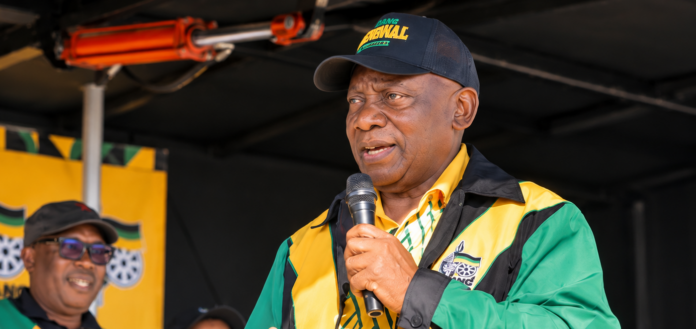
Before the dust had settled, Ramaphosa himself would invoke the sanctity of hierarchy during an ANC election rally at Sinaba Stadium in Daveyton on Tuesday afternoon, this time against Ekurhuleni mayor Nkosindiphile Xhakaza, whose apparent transgression was delivering brief remarks after the president had spoken.
“iProtocol ayivumi,” Ramaphosa protested, unaware, perhaps, that his microphone was broadcasting the exchange.
“Tell your mayor, you don’t speak after the president,” he declared, instructing Gauteng Premier Panyaza Lesufi to convey the message to Xhakaza, before turning to Xhakaza himself. “There is no protocol here.”
Two incidents. One political family. And an uncomfortable question: At what point does respect for seniority cease to be a noble tradition and become an obsession with superiority?
When seniority becomes superiority
Psychologist Alfred Adler described a superiority complex as exaggerated self-importance, sometimes compensating for underlying feelings of inadequacy.
Diagnosing either politician would be intellectually irresponsible. But the theory invites examination of an organisation whose electoral dominance has diminished while its appetite for ceremonial supremacy apparently remains undiminished.
To be fair, hierarchy is not inherently oppressive.
African royal courts, European monarchies and Asian imperial dynasties developed elaborate traditions governing who speaks, who bows and who occupies the highest seat.
Such conventions preserve institutional dignity, continuity and discipline.
Even Scripture commands respect for elders. Leviticus 19:32 instructs believers to honour the aged.
Yet the same Bible introduces a fascinating contradiction.
When the young Jeremiah protested that he was too inexperienced to become a prophet, God dismissed his objection: “Do not say, ‘I am too young.’”
Jesus himself astonished religious teachers at 12 and later confronted established authorities, calling some hypocrites and “a brood of vipers.”
The lesson is profound. Age may command respect, but it does not monopolise wisdom.
The emperor’s infamous sense of fashion
Consider Hans Christian Andersen’s The Emperor’s New Clothes.
An emperor becomes so obsessed with appearances that his courtiers pretend to admire garments that do not exist.
Nobody dares challenge his magnificent imaginary wardrobe until a child announces the embarrassing truth: the emperor is naked.
The child’s observation was not disrespectful. It was accurate. There’s no suggestion that ANC elders are naked emperors. One question should be asked, however.
Could the ANC be approaching a similar crossroads, where protecting the dignity of political elders becomes more important than confronting uncomfortable realities about its denuding decline at the polls?
The liberation movement lost its outright national parliamentary majority in 2024. Voters had already rearranged the political hierarchy, irrespective of who traditionally occupied the highest chair.
READ MORE: WATCH | Mantashe walks out of Cosatu congress over speaking order
Yet Mantashe’s argument deserves consideration.
Institutions cannot casually abandon established conventions whenever somebody finds them inconvenient. Historical relationships carry obligations, and agreed protocols should not be unilaterally rewritten.
But Cosatu is an independent federation, not an ANC department. Political partnership cannot permanently substitute for mutual respect.
READ MORE: Cosatu blasts ANC over ‘backroom deal’ with DA in government of national unity
Likewise, Ramaphosa deserves the dignity attached to the presidency. However, a party election rally is not necessarily governed by every ceremonial convention applicable to state occasions.
When protocol overshadows the message
And what if Xhakaza had realised that Ramaphosa’s message had not sufficiently resonated with the constituency he knows intimately? What if the mayor merely wanted to reinforce an important point in language his community would better appreciate?
These are hypothetical possibilities, not established explanations of his remarks.
Nevertheless, they expose the danger of allowing speaking order to overshadow political communication.
A mayor may be junior in rank but superior in local knowledge. A young activist may lack decades of experience yet recognise dangers invisible to a veteran accustomed to unquestioned obedience.
Indeed, the ANC’s own revolutionary history demonstrates that younger generations sometimes had to challenge their elders to advance the liberation struggle.
READ MORE: ANC-led alliance in limbo as Cosatu congress collapses
Tradition, political survival and the final word
The question, therefore, is not whether traditions should survive.
It is whether traditions should survive unchanged when the circumstances that sustained them have fundamentally shifted.
Would the ANC rather lose electoral ground with every ceremonial privilege intact, or surrender some of its obsession with seniority to recover the confidence of ordinary South Africans?
Respect for elders remains a beautiful inheritance. But respect becomes servitude when it forbids correction, and leadership becomes vanity when the final word matters more than the message.
Perhaps the ANC’s greatest challenge is not learning how to speak last.
It is learning how to listen first.
For even an emperor, however magnificent his throne, cannot command the truth to remain silent.
RELATED
- ANC national chairperson Gwede Mantashe left a Cosatu congress after organisers placed the ANC to speak after its "junior" alliance partners, which he saw as disrespectful to the ANC's historical standing.
- President Cyril Ramaphosa insisted at an ANC election rally that Ekurhuleni mayor Nkosindiphile Xhakaza should not speak after him, emphasizing adherence to protocol.
- The ANC lost its outright national parliamentary majority in the 2024 elections, while its emphasis on ceremonial hierarchy remains strong.
- The article highlights tension between upholding traditional respect for seniority and adapting political communication to current realities and local understanding.
- The ANC's leadership faces the challenge of balancing respect for elders with the need to listen and respond effectively to the electorate to regain confidence.


