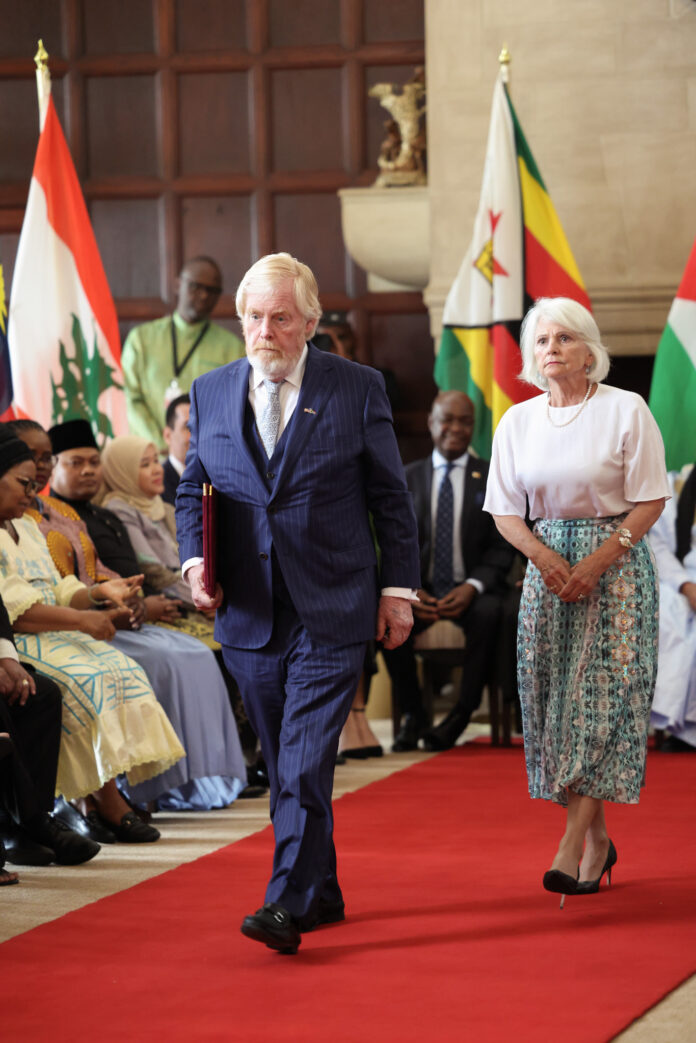
On Wednesday, April 8, a diplomatic event where President Cyril Ramaphosa received Letters of Credence from newly designated heads of mission should have been an exercise in reaffirming protocol and partnership. Instead, again, it became a platform for unexpected controversy after US Ambassador Leo Brent Bozell III’s pointed remarks to the media about South Africa’s black economic empowerment (BEE) policy.
Ambassador Bozell’s comments – delivered in the wake of Ramaphosa’s address on diplomatic engagement – are as politically charged as they are diplomatically unusual. The president had just taken pains to remind ambassadors that their role is to “relate constructively with Pretoria, respecting the sovereign policy choices of a democratic South Africa.”
That Bozell would then publicly criticise one of the country’s cornerstone economic redress policies raises significant questions about the boundaries of international diplomacy and the enduring asymmetries in US-South Africa relations.
First, Bozell’s remarks can be read as a breach of diplomatic etiquette. Letters of Credence ceremonies are highly formal, symbolic events. The decorum expects ambassadors to reaffirm mutual respect and non-interference. In reference, for Bozell to use the occasion to critique BEE – casting it as “an obstacle to fair business and a potential source of division” – is, at best, tone-deaf and, at worst, a thinly veiled assertion of US economic priorities over South African sovereignty.
This is not simply a matter of “saying the quiet part out loud.” It echoes a familiar pattern in which Western diplomats presume to define the boundaries of legitimacy for African policymaking. The timing, immediately after the president’s call for respectful engagement, underscores either a profound misunderstanding or a deliberate disregard for the country’s post-apartheid transformation agenda.
To be clear, there is robust, legitimate debate in South Africa about the efficacy and fairness of BEE. Critics argue it has been co-opted by elites and has failed to deliver broad-based empowerment, while supporters maintain it is indispensable for correcting structural injustice. However, this is a debate for South Africans, not foreign ambassadors, to lead.
Bozell’s intervention risks reinforcing perceptions of neocolonial meddling. It undermines the very principle the president underscored: that South Africa’s policies are the product of its democratic process and historical context.
For all its faults, BEE remains an attempt to redress centuries of dispossession. For an American envoy to denounce it in such a manner is historically insensitive, especially given the US’s own fraught racial and economic history.
It is also necessary to recognise the power imbalance inherent in such statements. The United States, as a global superpower and key investor, is not a neutral actor. Public criticism from its ambassador carries the weight of economic leverage. Bozell’s remarks are not just words; they are signals to investors, multinationals, and even local business elites. They shape perceptions, potentially undermining the legitimacy of transformative policies.
In the end, the American envoy’s undiplomatic candour does not serve US-South Africa relations. If the intention was to prompt a more “business-friendly” environment, it may have the opposite effect, hardening local resolve to defend sovereignty against perceived external interference.
Constructive engagement means listening, understanding context, and offering support where invited – not dictating terms or critiquing hard-won policies at ceremonial events.
Ramaphosa was right to remind the diplomatic corps of their responsibility to engage respectfully. Ambassador Bozell’s remarks should serve as a cautionary tale: the era of paternalistic diplomacy should be over. This country’s path to socioeconomic justice is for South Africans to chart and for true partners to respect.
- Mnisi is writing in his personal capacity
- On Wednesday, April 8, a diplomatic event where President Cyril Ramaphosa received Letters of Credence from newly designated heads of mission should have been an exercise in reaffirming protocol and partnership.
- Instead, again, it became a platform for unexpected controversy after US Ambassador Leo Brent Bozell III’s pointed remarks to the media about South Africa’s black economic empowerment (BEE) policy.
- Ambassador Bozell’s comments – delivered in the wake of Ramaphosa’s address on diplomatic engagement – are as politically charged as they are diplomatically unusual.
- The president had just taken pains to remind ambassadors that their role is to “relate constructively with Pretoria, respecting the sovereign policy choices of a democratic South Africa.” That Bozell would then publicly criticise one of the country’s cornerstone economic redress policies raises significant questions about the boundaries of international diplomacy and the enduring asymmetries in US-South Africa relations.
- First, Bozell’s remarks can be read as a breach of diplomatic etiquette.