


We are an open society but not a common society. This is fundamentally our challenge in Mzansi; what is often referred to as the “national question”, meaning race relations in South Africa, which we saw playing out yet again in these local government elections.
I once wrote about everyone remaining within their respective laagers through the voting patterns but I had thought we had turned the corner this time around, but alas.
A friend put it aptly: when the DA wins and forms coalitions, it is democracy; when things do not go their way, it is betrayal. The manner some among the chattering classes bemoaned Helen Zille’s failure to become mayor, as if she was our only hope, is sad. Talking of black unity and how this will be a recipe for disaster in Joburg.
There’s such a thing as democracy
Whatever happened to democracy, guys? I had said all along that, yes, Zille would win the popular vote but would fall short of an outright majority and, hence, would have to form a coalition with someone to form a government.
I also said, to those who cared to listen, that such a coalition partner would insist they wanted to be the mayoral candidate and not Zille. This is exactly what happened and Gogo Helen simply could not stomach such an arrangement. And you know why?
Because from the start, her campaign was so arrogant and beset with pointing out everyone’s faults, as if she was the only person that could save Jozi. When the time arrived for her to seek out partners, the same people she mocked turned against her.
Perhaps there’s a lesson to be learnt from this behaviour, Zille.
Upper-middle class pro-DA
The predominantly white and black upper-middle class that voted for the DA in Joburg is horrified by the future of our beloved city. But fear not. Let us allow the new leadership to show us what they can do for us.
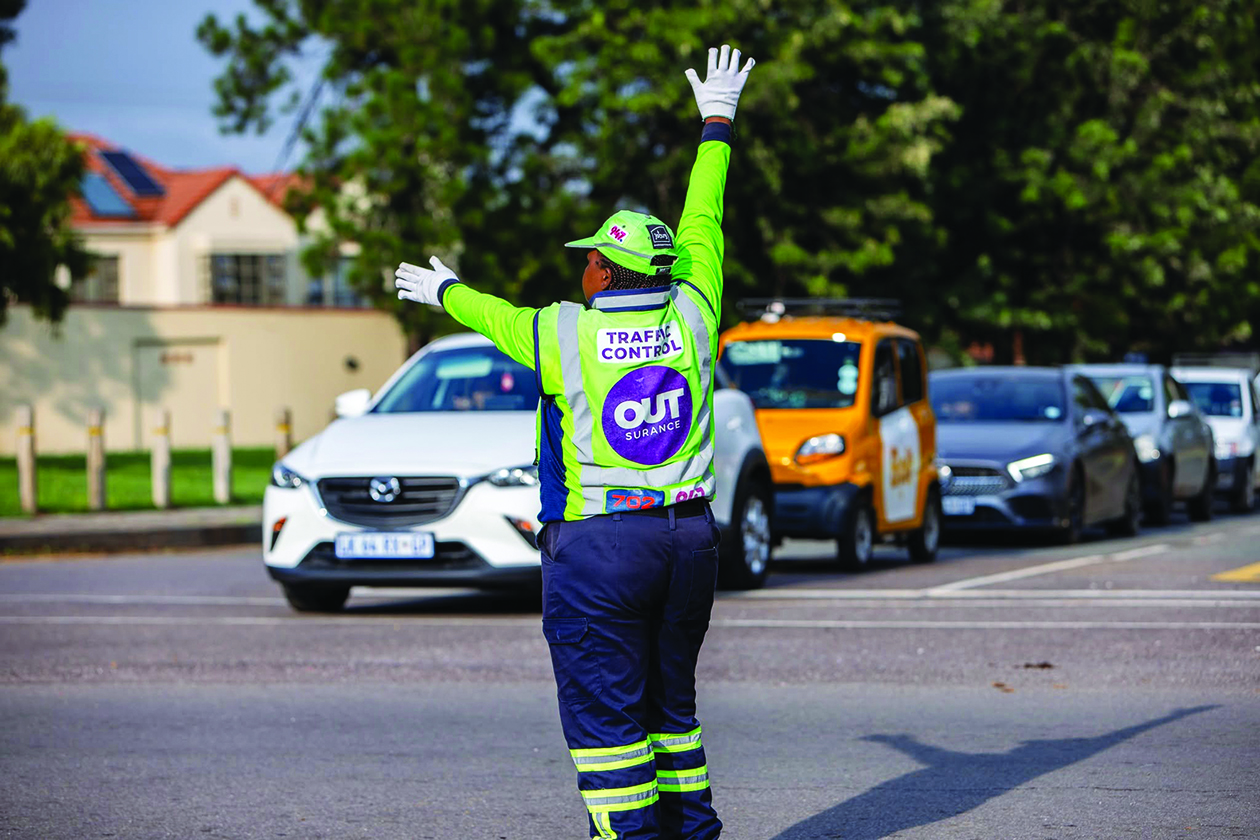
Here in Ward 90, we have been without electricity for 48 hours and counting. Water challenges abound throughout the city and flash floods have wreaked havoc over these past few days. Traffic lights are routinely not working; that used to be on rainy days only but now it’s a permanent feature.
In my experience from other African cities, for now, South Africans are adhering to the laws of the road but soon it will collapse into chaos and no one will follow the rules anymore.
Relying on a private company, such as OUTsurance, to alleviate the congestion at intersections is not the answer. The city’s leadership needs to take responsibility and accountability for these problems.
Joburg’s drainage system is clogged and cannot deal with the massive volumes of water, hence we, the citizens, suffer from flooding.
Racial politics added to the mix
Yet, through it all, we have time to infuse racial politics into the mix. We still allow identity politics to enter the fray. And it’s all because it’s considered normal. Racism has become normalised in our society and it’s why I say we are an open society but not a common one. We talk of rugby and braai and we sing our national anthem with pride but at the drop of a hat, racism creeps in again.
The DA mistreated its erstwhile black leaders; that’s why they all left one by one. It’s only logical that they would have attitudes towards the DA leadership and, in particular,
Zille. She invites you in, kisses you on the lips and then undermines and patronises you to the point where those leaders decide to leave the party they thought could be a political home for them. Some serious introspection needed, Mama Helen, don’t you think?
I’m not sure how we break from these practices in elections, because they are not good for nation-building. The national question is critical to be addressed head on in our country.
Lest we submit to it and continue to allow small groups of South Africans to undermine our sovereignty by calling on foreign governments to come and intervene in our domestic affairs. To institute punitive action against our government. And yet we continue to treat these acts with kid gloves because we fear what the perception will be concerning the national question.
As I have advocated numerous times, we have created an open society post-apartheid; what remains is how to create a common one. This is what will baffle us for generations to come.
• Dr Van Heerden is a senior research fellow at the Centre for African Diplomacy and Leadership at UJ
- The article discusses South Africa's ongoing challenge with race relations, referred to as the "national question," which was highlighted during recent local government elections.
- Helen Zille won the popular vote in Johannesburg but failed to secure an outright majority and rejected coalition demands that included not being the mayoral candidate.
- Johannesburg is currently facing infrastructure issues including prolonged power outages, water problems, traffic light failures, and flooding caused by a clogged drainage system.
- The DA reportedly mistreated its black leaders, leading to their departure from the party and fostering mistrust towards its leadership, especially Helen Zille.
- The author argues South Africa has become an open society post-apartheid but struggles to become a common society due to normalized racism and identity politics.


