


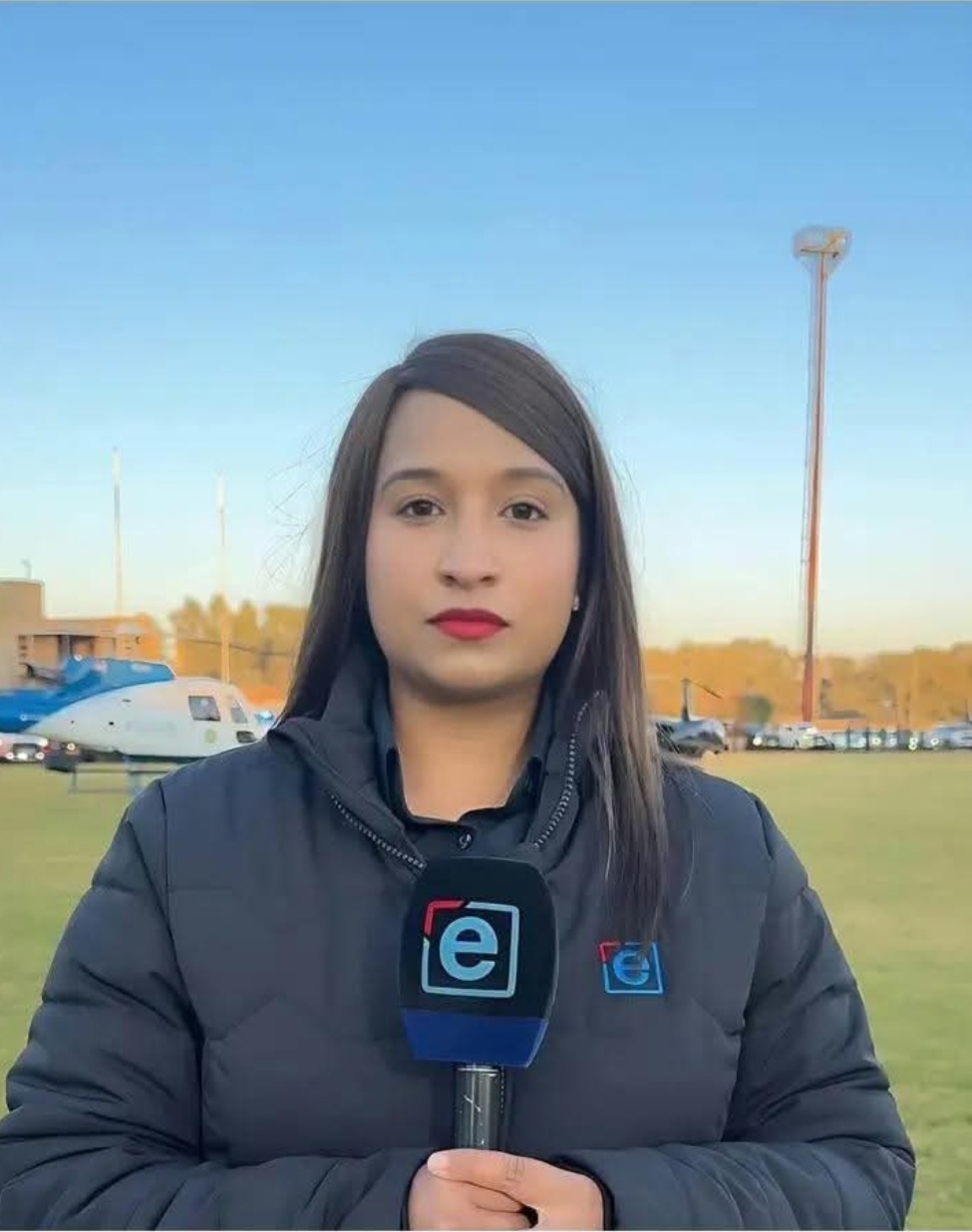
South Africa rarely grieves for its journalists. We read their stories, consume their headlines and debate their reporting but seldom pause to consider the people behind the bylines. Nabeelah Shaikh’s passing changed that.
The eNCA investigative reporter was pregnant with her second child when she passed away on November 14 after a short illness. She leaves her husband, her young daughter and a country poorer for her loss. She was only 34 years old.
I was deeply moved by the outpouring of grief that followed. My heart goes out to her family and friends. I stand in solidarity with her colleagues who, despite carrying the weight of losing a valued member of their team, continue to do the work. The cameras still roll, the deadlines are still met and the stories are still told. Journalism does not stop for grief, even when grief sits beside you in the newsroom.
More than an award-winning journalist
Nabeelah’s talent revealed itself early. At just 23 years old, she wrote “Isis wants you: how we cracked the secret route” for the Sunday Tribune, exposing how young South Africans were being recruited into the Islamic State.
She tracked down locals who claimed to be fighting for Isis and uncovered the routes and methods used to recruit and move them across borders. The story earned her a regional Vodacom Journalist of the Year award, but it also exposed her and her family to death threats. I often wonder whether the public truly understands the risks journalists sometimes take in pursuit of the truth.
She deserves the accolades for her sterling work, but journalism is never ultimately about awards. At its best, it changes lives and serves the public good. Yet behind every byline is a person making sacrifices that readers rarely see, and for Nabeelah, those sacrifices were made not only as a journalist, but also as a mother.
The invisible balancing act
I know something of the balancing act she faced. Beyond being an exceptional reporter, Nabeelah was also navigating the demands of motherhood while pursuing a career that rarely respects personal boundaries. As someone who was a mother while working as a journalist, I understand those competing pressures all too well. The hours are relentless. Your child needs you, but so does the story.
Even at home, you never completely switch off. There is always another lead to follow, another source to call. Nabeelah carried these demands with remarkable grace and determination.
The risks behind the story
Like so many journalists, Nabeelah often confronted danger armed with little more than a camera, a notebook and a commitment to the truth. In the tense days before the Marikana massacre in 2012, my camerawoman and I were threatened by angry striking workers while attempting to conduct interviews. Their anger was rooted in years of exploitation and marginalisation and they had little reason to trust outsiders carrying microphones.
Many journalists have stories like this. Obstacles, intimidation and hostility become part of the job.
Yet they persist because they are driven by a belief that journalism is not merely a profession. It is a public service.
Nabeelah understood this responsibility deeply, and her career serves as a reminder of why courageous journalism matters. Consider what we would not know without it.
The investigation that led to the conviction of Russell Brand for rape and sexual assault began years earlier when reporters started asking difficult questions and interviewing hundreds of sources.
The same media that can help build public figures can also hold them accountable. The best journalism does precisely that. It speaks truth to power, regardless of who that power belongs to.
South Africa knows this all too well. Investigations by media organisations helped expose state capture and informed the work of the Zondo Commission. Journalists spent years unravelling allegations of looting at Tembisa Hospital. They fought lengthy court battles to expose the truth behind the Steinhoff scandal and reveal the devastating impact it had on ordinary workers and pensioners.
These stories were not uncovered by accident. They required time, resources, courage and persistence.
Who protects the watchdogs?
Nabeelah’s death has prompted many of us to reflect on the value journalists bring to society. Yet it also exposes a painful irony. Journalists can expose corruption, challenge powerful interests and help bring down powerful people, but many struggle to protect themselves in their own workplaces.
Too many are freelancers without security or benefits. Too many work under constant pressure with little support. They undertake dangerous work while carrying enormous personal and professional risk. That must change.
Work like Nabeelah’s cannot happen if those who produce it are themselves exploited. Major investigations take years. They require newsroom support, fair pay and decent working conditions. An underpaid and overworked journalist cannot be expected to continuously risk everything in pursuit of stories that serve the public. If we want courageous journalism, we must invest in the people who make it possible.
The best way to honour Nabeelah is to defend the values she embodied: courage, integrity, humanity and an unwavering commitment to the truth. That means defending media freedom, but it also means defending the people who make that freedom meaningful. It means ensuring that journalists have the support, security and dignity they need to do their work.
Because when journalism is weakened, democracy is weakened with it. When reporters stop asking questions, corruption flourishes in silence, abuse hides in the shadows and the public loses its right to know.
There is a popular saying: “A society that does not defend its journalists is a society that has chosen to blindfold itself.”
Rest in power, Nabeelah Shaikh.
Phakamile Hlubi-Majola is a former journalist and the owner and CEO of PR company, Blaqstar Kreativ.
- Nabeelah Shaikh, an eNCA investigative reporter, passed away on November 14 at the age of 34 while pregnant with her second child.
- At 23, Shaikh wrote an award-winning investigative story exposing the recruitment of South Africans into the Islamic State, which led to death threats against her.
- Shaikh balanced the demands of journalism and motherhood, navigating relentless hours and personal sacrifices.
- South African journalists face dangers and challenges in their work, often confronting hostility and risks to uncover important stories like state capture and corruption scandals.
- The article stresses the need for better support, security, and fair working conditions for journalists to protect media freedom and democracy.


