
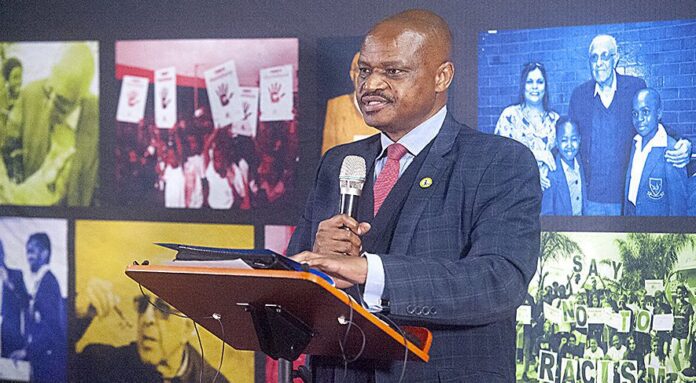

Organised crime and corruption in South Africa are expanding at an alarming rate and are increasingly being facilitated by actors within the state itself, National Director of Public Prosecutions Andy Mothibi warned on Thursday.
Addressing the media during his first briefing since taking office, Mothibi painted a stark picture of the scale of the threat facing the country.
“Organised crime and corruption continue to grow at an alarming rate, often facilitated or enabled by state actors,” he said.
The NDPP cited research including the 2025 Global Organised Crime Index, which points to the growing sophistication and reach of criminal networks operating in the country.
According to Mothibi, these networks often exploit weaknesses within state institutions, making corruption within government structures, one of the biggest obstacles to combating organised crime.
He described state-embedded actors as the government’s “Achilles’ heel” in the fight against criminal syndicates.
Essential infrastructure targeted
The warning comes amid growing concern about organised crime activities ranging from extortion and illegal mining to drug trafficking, cybercrime and attacks on essential infrastructure.
Mothibi said organised crime groups are increasingly targeting sectors critical to the country’s economy and public services.
“Organised crime remains a grave threat to our democracy and economy, especially when it targets essential infrastructure,” he said.
Sectors such as energy, rail, water and telecommunications have been particularly vulnerable to criminal networks seeking to exploit state resources.
The NPA has prioritised the fight against organised crime as one of its key strategic focus areas.
According to Mothibi, the authority has sustained a conviction rate of between 93% and 94% in organised crime prosecutions nationally, even as the number of such cases has grown.
Response plan
The NPA is also working with law enforcement agencies to implement a national strategy against organised crime and strengthen coordinated responses to criminal syndicates.
Among the initiatives underway is a stabilisation plan developed with the South African Police Service to address gang violence in the Western Cape.
The plan is now being expanded to other provinces.
The prosecuting authority has also established specialised structures such as the Organised Crime Component’s Firearms Desk to improve coordination in tackling illegal firearms linked to violent crime.
“If you remove the illegal firearm, you remove the instrument of organised violence,” Mothibi said.
Despite these initiatives, the NDPP acknowledged that organised crime continues to evolve rapidly, particularly with the rise of cybercrime and encrypted communications used by criminal networks.
For South Africa, he warned, the stakes are high.
- Organised crime and corruption in South Africa are expanding at an alarming rate and are increasingly being facilitated by actors within the state itself, National Director of Public Prosecutions Andy Mothibi warned on Thursday.
- Addressing the media during his first briefing since taking office, Mothibi painted a stark picture of the scale of the threat facing the country.
- “Organised crime and corruption continue to grow at an alarming rate, often facilitated or enabled by state actors,” he said.
- The NDPP cited research including the 2025 Global Organised Crime Index, which points to the growing sophistication and reach of criminal networks operating in the country.
- According to Mothibi, these networks often exploit weaknesses within state institutions, making corruption within government structures, one of the biggest obstacles to combating organised crime.