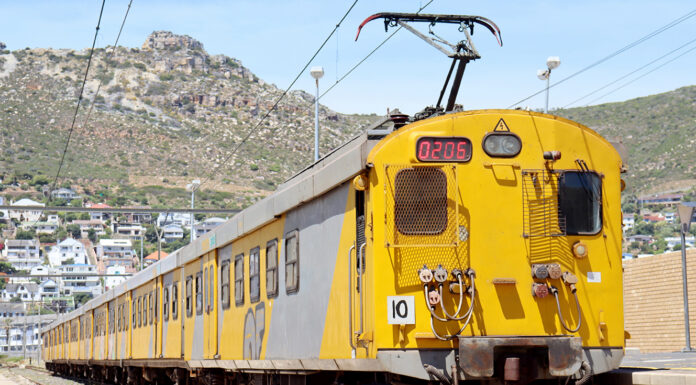
The Passenger Rail Agency of South Africa (Prasa) is caught between a rock and a hard place over its multi-billion-rand general overhaul (GO) programme to repair its old yellow train fleet (metro trains).
The position that the state entity finds itself in is mainly the result of a dilapidated rail network that is not suitable for trains to move even after being repaired, as well as signalling limitations.
Sunday World is in possession of an internal memo from Prasa’s legal, risk and compliance division sent to the board of the entity following a forensic investigation by legal firm Webber Wentzel on alleged irregularities in the GO project.
Having already invested about R4-billion in the project, which cannot be recovered, since the start of the implementation phase in 2022, Prasa is now at a crossroads, having to choose whether to abandon the project or press ahead for completion.
The original projected expenditure stood at R7.5-billion over five years, but it has since jumped to more than R9-billion. Either option has serious cost implications, especially the former, which could possibly lead to crippling lawsuits from contractors it appointed to carry out the project.
However, should the multibillion-rand project continue, it’s highly likely that some metro trains will remain idle.
With allegations of non-performance and price escalation, the memo advises the Prasa leadership to make careful considerations before deciding on the way forward.
Furthermore, an overview of the performance of appointed contractors paints a worrying picture, with only two of the eight marked as “stable” while the rest have been red flagged.
The memo reveals that YNF Engineering’s performance is “operationally stable”, subject to ongoing project steering committee oversight that all contractors are subjected to, while CTE Western Cape is also stable, “subject to audit and governance monitoring”.
One contractor has been terminated for non-performance, with two others in arbitration and review proceedings, while three others are being processed through breach notices.
“Based on a forensic sample review of invoices, allegations of potential overpricing were identified in respect of certain contractors, including CET Western Cape, KNPC and Armtech,” reads the memo Sunday World has seen.
“These findings are based on a sample analysis and have not yet been subjected to a full invoice review across the life of the contracts. “Prasa has initiated further invoice verification exercises. No final determination has yet been made in respect of the full quantum of any alleged overcharges.”
Abandoning the project would save the state-owned entity an estimated R1.7-billion. This would provide some relief since the original project cost went up from R7.5-billion to R9.2-billion. But this option comes with five associated risks.
These risks include compensation to contractors for procured materials, potential claims for damages, loss of profit, and costs related to demobilisation and storage.
“The net saving may therefore be materially lower than the headline R1.6-billion,” the memo cautions.
The second option for Prasa’s top brass to ponder is to complete the repair of the 98 coaches, which are currently “work in progress”, and to cancel the 105 coaches that are “not shunted”. This would result in further expenditure of R826-million while R819-million could be reallocated.
This option is considered “more defensible commercially,” carries little litigation risk, and is unlikely to destabilise the organisation’s supply chain.
The third option would be to complete the project in its current form, which will come with minimal litigation risks but equally limited capital reallocation opportunities. This will, however, inevitably result in some of the trains becoming fully functional but unused owing to Prasa’s systemic rail network challenges.
Consequently, the memo states, the Prasa management acknowledges the need for reallocation of money towards “higher priority assets” due to the underutilisation of the metro trains.
However, the memo cautions, “a structured financial and legal sensitivity model should be completed before final determination”. It also notes that Prasa faces numerous problems, as even some of the new “blue trains” are lying idle and unused.
When Sunday World approached Prasa spokesperson Andiswa Makanda, she declined to comment.