


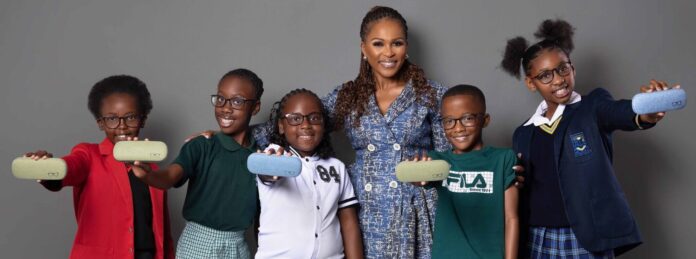
As learners across South Africa head back to the classroom, eye health experts are sounding the alarm over the growing impact of excessive screen time on children’s vision.
With smartphones, tablets and computers now firmly embedded in both learning and leisure, young eyes are increasingly under strain, often with consequences that go unnoticed.
Vision For All is a socially driven organisation that aims to improve eye health among children and impoverished communities in Africa.
Tackling crisis head-on
Director and brand ambassador Judith Mangena, alongside her optometry partners, is tackling this silent crisis head-on. She is doing this through free eye screening programmes in schools. The initiative aims to identify vision problems early and protect children’s eyesight before learning and development are compromised.
“Clear vision is not a luxury, it is a right,” says Mangena.
“Many children are struggling silently in classrooms because they simply cannot see properly. Early eye screening can completely change the trajectory of a child’s life.”
Mangena’s advocacy is rooted in lived experience. She has keratoconus, a progressive eye condition that causes the cornea to thin and bulge. This results in distorted and blurred vision. If left undetected or untreated, the condition can severely affect education, career prospects and overall quality of life.
“I know first-hand what it means to struggle with your vision,” she explains. “If my condition hadn’t been identified and managed, my life would have turned out very differently. That’s why early screening, especially for children, is so close to my heart.”
Young ones most at risk
Children today spend long hours focusing on screens at close range. This exposes their eyes to blue light and prolonged near work. And this has been linked to an increase in myopia (near-sightedness), digital eye strain, headaches, dry eyes, blurred vision and learning fatigue. Over time, especially during critical developmental years, these issues can worsen without intervention.
Experts warn that many pupils fall behind academically. Not because they lack ability, but because they struggle to see the board clearly. Others experience frequent headaches, squinting, poor concentration or avoid reading altogether. Symptoms often misinterpreted as laziness or lack of effort.
The reality is that many children assume the way they see the world is normal. And thus, never report vision problems. Without routine screening, these difficulties can go undetected for years.
Most classroom learning is visual. Undiagnosed vision problems can affect reading, concentration and behaviour. And overall academic performance. Simple interventions, such as corrective glasses, can dramatically improve a child’s school experience and confidence.
Early detection ensures full potential
When detected early, vision problems can be managed effectively. It can allow proper visual development and preventing irreversible damage. This ensures children have a fair chance to reach their full potential.
Through its free school eye screening programme, Vision For All is identifying vision problems early. It refers children for professional care, and raising awareness among parents, educators and communities.
The initiative ensures that no child is left behind. Because of preventable vision impairment. A mission that is especially vital during the back-to-school period, when academic demands intensify.


