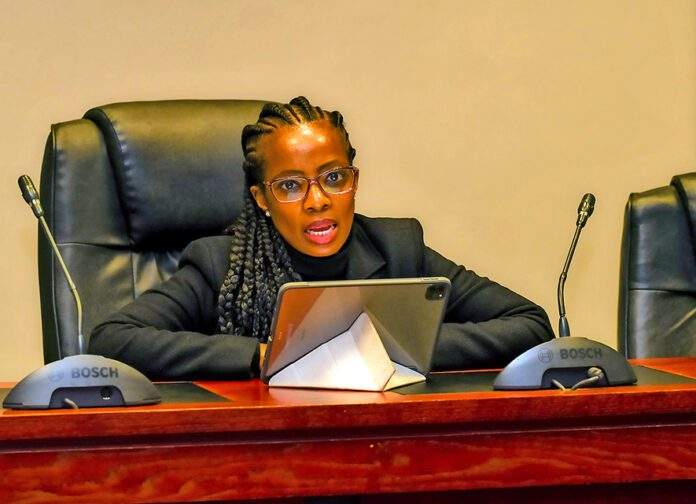
The public protector has found that maladministration, poor planning and significant underspending by the Gauteng Department of Infrastructure Development (GDID) and the Gauteng Department of Health (GDoH) contributed to prolonged delays in repairing the Charlotte Maxeke Johannesburg Academic Hospital following a devastating fire in April 2021.
In a detailed report, the Public Protector Adv Kholeka Gcaleka confirmed that allegations of undue delays in the utilisation of allocated funds for the hospital’s restoration are substantiated. The fire caused extensive damage to Block 4 and parts of the facility, severely impacting the hospital’s structural integrity and forcing the relocation of some services to other health institutions.
Outpatient capacity dropped sharply from about 80,000 patients a month to roughly 30,000 after the blaze, highlighting the scale of the disruption to healthcare services.
Building and fire safety regulations flouted
The investigation revealed that the hospital failed to comply with key building and fire safety regulations, including the South African National Standards (SANS 10400-T) and the National Building Regulations. A City of Johannesburg inspection identified 19 critical compliance requirements, including the need for improved fire-resistant materials, detection systems and emergency escape infrastructure.
The situation was further worsened by the absence of as-built drawings required to design a proper fire safety plan, forcing authorities to develop these from scratch and adding to delays.
No compliant project execution plan
The report found that GDID, which had been appointed as the implementing agent, failed to submit a compliant project execution plan. The plan submitted in July 2021 did not meet required infrastructure delivery standards, contributing to further setbacks.
Persistent disputes between GDID and GDoH over scope, budget and processes, as well as poor coordination and project management, were identified as major factors in delaying the project. These tensions ultimately led to the transfer of responsibility for the hospital’s repairs from GDID to GDoH in February 2022 – a move that itself caused additional delays of more than 18 months.
DBSA jumped to the rescue
The Development Bank of Southern Africa (DBSA) was later appointed to take over as the implementing agent following national government intervention.
Financial mismanagement also emerged as a key concern. Of the R667-million allocated for repairs and maintenance between 2021 and 2024, only about R324.2-million — just over 51% — had been spent by March 2024. In the 2022/2023 financial year alone, only 45% of the budget was utilised.
The report found that persistent underspending, procurement delays and poor record-keeping led to postponed repairs and extended ward closures, ultimately affecting service delivery and increasing costs due to inflation.
Gcaleka noted that these failures point to systemic weaknesses, including lack of accountability, inefficient use of public resources and inadequate internal controls, raising the risk of corruption.
Private donors lent efficiency
In contrast, private donors such as Gift of the Givers and the Solidarity Fund were commended for completing their renovation projects efficiently and within budget, resulting in the reopening of key areas like the Accident and Emergency Unit.
The report also highlighted a recurring pattern of poor coordination between GDID and its client departments across other infrastructure projects in Gauteng, suggesting deeper institutional challenges.
Corrective measures
As part of remedial action, the public protector has directed Premier Panyaza Lesufi to oversee the implementation of corrective measures, including performance reviews and skills assessments for officials involved in infrastructure management. The report also calls for possible lifestyle audits of officials in supply chain and financial management roles.
Both GDID and GDoH have been instructed to submit detailed plans within 30 days to address budget management failures, accelerate project completion and ensure accountability. Officials responsible for delays may face consequence management.
The report further notes that an estimated R1.7-billion is still required to fully comply with fire safety standards across the hospital – funding that has not yet been secured.
The public protector concluded that the conduct of the departments amounted to improper conduct and maladministration, in violation of constitutional and legislative obligations, and resulted in undue prejudice to patients and staff who rely on the facility.