


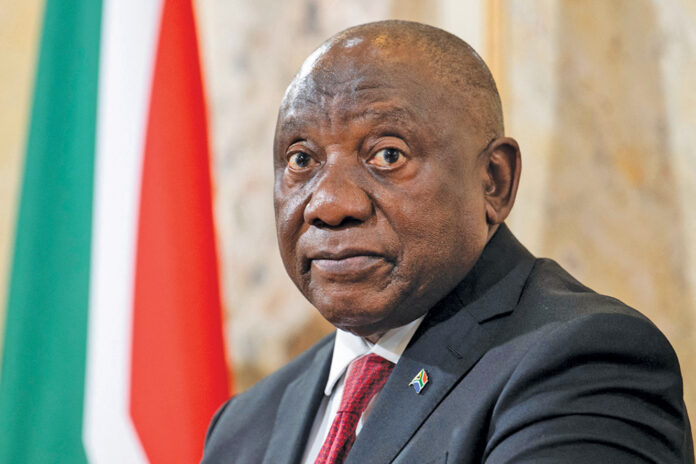
President Cyril Ramaphosa has outlined a series of state interventions, municipal directives, and institutional requirements aimed at addressing gender-based violence and femicide (GBVF) across South Africa, prompted by the discovery of 11 women’s bodies in Ekurhuleni since July 2026, alongside reports of fatal violence against women and young girls in various provinces.
Acknowledging that previous government initiatives and social measures have fallen short of protecting women, Ramaphosa detailed immediate policy directives targeting law enforcement accountability, forensic backlogs, municipal safety hazards, and alcohol regulation.
READ: Kempton Park killings expose SA’s GBVF crisis: POWA
National Case-Recovery Operation and Forensic Audits
To address cold cases and administrative delays within the criminal justice system, the President directed the Minister of Police and the Minister of Justice and Constitutional Development to initiate a national case-recovery operation. Working in coordination with the South African Police Service (SAPS) and the National Prosecuting Authority (NPA), the operation will focus on unresolved murders, attempted murders, rapes, and serious sexual offences against women and children.
The directive establishes two primary implementation phases:
-
60-Day Audit: Within 60 days, authorities must audit all unresolved cases, identify those delayed by pending forensic evidence, list suspects identified but not yet arrested, and highlight instances where prosecutorial or investigative actions have stalled.
-
90-Day Recovery Plans: Within 90 days, individual recovery plans must be formulated for priority and stalled cases, specifying the outstanding actions, responsible officials, and strict completion deadlines.
Simultaneously, a 60-day deadline was issued to the Minister of Police, the National Commissioner of Police, and forensic authorities to present a funded plan to eliminate the national forensic backlog. In a parliamentary response in July, police minister Firoz Cachalia indicated that the police Forensic Science Laboratory had a backlog of 298,710 DNA exhibit entries.
READ: Task team on Madlanga referrals arrests SAPS forensics captain
Key components of Ramaphosa’s proposed intervention include:
-
Ring-Fencing Priority Samples: Mandatory prioritised processing for forensic evidence connected to the rape or murder of women and children.
-
Capacity Assessments: Standardised evaluations identifying equipment shortages, personnel deficits, and target turnaround dates.
-
Quarterly Public Reporting: Mandatory quarterly disclosures detailing progress against established turnaround standards.
Municipal Safety Audits and Infrastructure Directives
Highlighting environmental factors that contribute to public safety risks, Ramaphosa ordered all municipalities to start immediate women’s safety audits in consultation with provincial governments and local SAPS stations.
Under these directives:
-
Identification of Physical Hazards: Municipalities have 60 days to audit high-risk areas, mapping broken streetlights, overgrown public vegetation, abandoned buildings, poorly lit transit routes, and unsecured parks.
-
Funded Implementation: Within 90 days following audit completions, municipalities must rectify urgent hazards or incorporate them into funded maintenance schedules with clear deadlines. Audit findings and remediation progress will be made public.
-
Liquor Law Enforcement: Local and provincial authorities have been instructed to strictly enforce existing liquor by-laws, focusing heavily on unlicensed operations and establishments operating outside permitted trading hours.
Complementing local enforcement, the Minister of Trade, Industry and Competition, alongside the Ministers of Health, Social Development, Police, and Cooperative Governance, must submit a coordinated legislative and enforcement framework to Cabinet within 60 days aimed at reducing alcohol-related interpersonal violence.
Multi-Disciplinary Task Forces in Ekurhuleni
Addressing the ongoing investigations in Ekurhuleni, the President confirmed that a specialised multidisciplinary team led by the Deputy National Commissioner for Detective Services has been elevated to the national level.
Multiple arrests have been made regarding recent murders in the area:
-
A suspect was arrested in connection with the murder of Ntombifuthi Nxumalo.
-
Two suspects have appeared in court regarding the death of Jabulile Ntimba.
-
A suspect remains in custody for the murder of Busisiwe Mahlangu.
READ: Fear grips Kempton Park killing fields
Ramaphosa also appeared to assuage fears of a serial killer being responsible for the spate of Ekurhuleni killings by announcing that current forensic evidence, DNA profiles, and mobile data do not point to a single perpetrator being responsible for all 11 deaths, though all possibilities remain under active investigation.
Institutional Strengthening and Oversight Mechanism
The announced measures build on earlier structural steps, including the operationalisation of the National Council on Gender-Based Violence and Femicide, the expansion of Sexual Offences Courts, Thuthuzela Care Centres, shelter infrastructure, and statutory amendments raising the requirements for bail in domestic abuse and GBV matters.
To ensure strict compliance with the new directives, the Inter-Ministerial Committee on Gender-Based Violence and Femicide, alongside the National Council, will monitor execution across all government sectors.
The first consolidated national progress report is expected to be published within 90 days, followed by mandatory public progress updates issued every quarter.
- President Cyril Ramaphosa announced state interventions including a national case-recovery operation and forensic audits to address gender-based violence and femicide (GBVF) following the discovery of 11 women's bodies in Ekurhuleni since July 2026.
- Authorities must complete a 60-day audit of unresolved GBVF cases and forensic backlogs, and within 90 days create recovery plans with specified actions and deadlines.
- Municipalities are required to conduct safety audits addressing factors like broken streetlights and overgrown vegetation within 60 days and remediate hazards within 90 days with public reporting.
- Local and provincial authorities must strictly enforce liquor by-laws targeting unlicensed operations and illegal trading hours, with a coordinated legislative framework to be submitted to Cabinet within 60 days.
- A multidisciplinary task force led by the Deputy National Commissioner is investigating Ekurhuleni murders, with multiple arrests made, and current evidence does not indicate a single serial killer responsible for all 11 deaths.


