


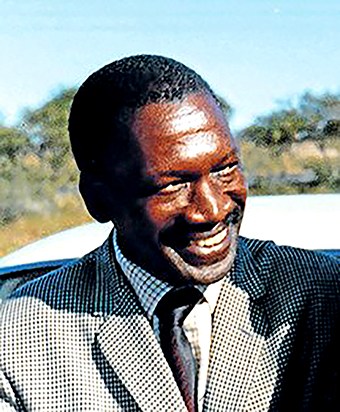
The renaming of Graaff-Reinet, a historic town in the Karoo region of the Eastern Cape, to Robert Sobukwe, has deepened a political and ideological standoff between the Pan African Congress of Azania (PAC) and the DA over transformation, consultation, and executive power.
The PAC rejected the DA’s opposition to the name change, which it deems a “revolutionary act of historical justice”.
In a media statement issued on Tuesday, the PAC said the DA’s resistance had little to do with procedure but everything to do with power, memory, and the version of history allowed to occupy public space.
The party said colonial place names were never neutral and were imposed without consultation on the African majority, making current demands for public participation “hypocritical”.
Renaming Graaff-Reinet after Robert Mangaliso Sobukwe is not merely cosmetic. It is a revolutionary correction of history,” the PAC said, describing Sobukwe as a philosopher of African liberation and the founding president of the party.
The PAC further defended the authority of Gayton McKenzie, insisting that the law was clear about the minister of sport, arts, and culture’s powers in geographical name changes.
Azanian Movement backs renaming
Citing the South African Geographical Names Council Act, the party said consultation informed the process but did not amount to a veto, with the final decision resting with the minister.
“Democracy does not mean that those who benefited from colonial naming have a permanent right to block transformation,” the PAC said.
The party’s defence of McKenzie’s decision was echoed by the Azania Movement, which is led by former EFF MP Nolubabalo Mcinga, who praised the renaming in the wake of sustained parliamentary and institutional engagement.
Mcinga, a Graaff-Reinet native, asserted that research, correspondence, and disciplined engagement, rather than protests or public spectacle, drove the process.
While serving in the National Council of Provinces in 2024, Mcinga tabled a motion calling for the renaming, a process that later faced delays after McKenzie raised concerns about public participation and referred the matter back to the province.
According to the Azania Movement, those delays were challenged through direct engagement with the Eastern Cape Geographical Names Committee and the South African Geographical Names Council, with academic input from historian Dr JJ Klaas.
“The renaming of Graaff-Reinet to Robert Sobukwe town proves that structured
engagement, intellectual rigour, and disciplined persistence deliver real transformation.
“For the people of Robert Sobukwe town, it corrects a colonial legacy and restores historical dignity,” Mcinga said.
According to Mcinga, the renaming of Graaf-Reinet is only the beginning. “Our next step will be to advocate for the renaming of the country itself, as ‘South Africa’ is not a proper name but a geographic direction on the continent.
“Our main focus as the Azania Movement remains ending poverty, and this effort is just the beginning.
“We have engaged specialists, experts, and supportive countries of BRICS to assist the Azania Movement to make this project a success.”
McKenzie accused of misleading public
The DA, however, maintains that the renaming process raises serious concerns about transparency and lawfulness.
In a statement issued by DA MP Samantha Graham-Maré, the party accused McKenzie of misleading the public, noting that he had previously indicated in 2024 that he would not approve the renaming due to insufficient evidence of proper consultation.
“The question we are asking is what has changed since then,” the DA said, arguing that residents, businesses, and community stakeholders felt sidelined and informed only after decisions had already been taken.
Despite acknowledging the importance of honouring liberation figures such as Sobukwe, the DA said transformation had to be matched by responsible governance and genuine consultation.
The PAC dismissed these concerns as a misuse of procedure to delay justice, arguing that African memory had never been consulted when leaders such as Sobukwe were banned, silenced, and politically erased.
“History will not be negotiated with those who benefited from injustice,” the PAC said.
- The renaming of Graaff-Reinet, a historic town in the Karoo region of the Eastern Cape, to Robert Sobukwe, has deepened a political and ideological standoff between the Pan African Congress of Azania (PAC) and the DA over transformation, consultation, and executive power.
- The PAC rejected the DA’s opposition to the name change, which it deems a “revolutionary act of historical justice”.
- In a media statement issued on Tuesday, the PAC said the DA’s resistance had little to do with procedure but everything to do with power, memory, and the version of history allowed to occupy public space.
- The party said colonial place names were never neutral and were imposed without consultation on the African majority, making current demands for public participation “hypocritical”.
- Renaming Graaff-Reinet after Robert Mangaliso Sobukwe is not merely cosmetic.


