
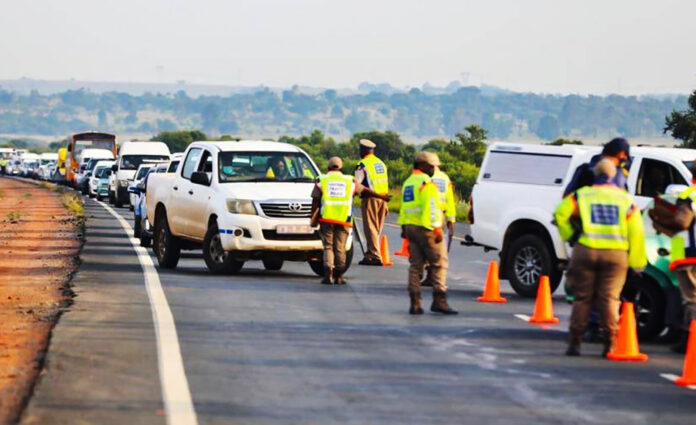
The long Easter weekend is coming to an end, and South Africa’s major routes will once again be bustling with returning travellers. From the worshipful hills of Moria to the shores of KwaZulu-Natal and the border posts connecting Mozambique, Eswatini and Zimbabwe, a nation that briefly dispersed in search of prayer, family and rest is now steadily converging back towards its cities.
The increasing traffic brings with it a familiar national test.
The country’s extensive Easter safety campaign will ultimately be judged by one measure – whether those who left their homes arrive back safely.
“We are calling on every driver, passenger and pedestrian to take ownership of their conduct on our shared roads,” transport minister Barbara Creecy said at the launch of the 2026 Arrive Alive Easter Road Safety Campaign on Thursday.
“I urge those who will be undertaking long-distance journeys to stagger their travel times to avoid peak congestion and to stop every two hours to combat fatigue.”
National traffic police officers have been working tirelessly in three shifts, concentrating on high-volume routes such as the N3 between Pretoria and Villiers, the N1 south towards Kroonstad, the N4 between Pretoria and Middelburg, and the N12 from Johannesburg towards Potchefstroom.
The South African National Roads Agency said it had suspended construction on key national roads to ease congestion.
In KwaZulu-Natal, construction halted on April 1.
In Gauteng, closures on the N3 from Geldenhuys to Buccleuch were lifted to accommodate increased traffic.
Limpopo suspended work along the R101 between Bela Bela and Modimolle, although stop-and-go controls continued on several secondary routes.
Under Operation Paseka, authorities reinforced police visibility across the country, urging communities to cooperate, adhere to road rules, and refrain from drinking and driving.
In Limpopo, the N1 and surrounding pilgrimage routes experienced heavy traffic linked to the Zion Christian Church gatherings. Premier Phophi Ramathuba urged motorists to rest every two hours or after every 200 kilometres.
Taxi operators also stepped into the safety drive, with Santaco activating its Hlokomela campaign, which focuses on vehicle roadworthiness, responsible driving and commuter awareness during peak travel.
Mpumalanga community safety MEC Jackie Macie warned motorists to remain alert to pedestrians and urged them to cross only at safe, designated points.
At South Africa’s borders, a 10-day operation by the Border Management Authority has been managing the flow of travellers since March 31.
- The long Easter weekend is coming to an end, and South Africa’s major routes will once again be bustling with returning travellers.
- From the worshipful hills of Moria to the shores of KwaZulu-Natal and the border posts connecting Mozambique, Eswatini and Zimbabwe, a nation that briefly dispersed in search of prayer, family and rest is now steadily converging back towards its cities.
- The increasing traffic brings with it a familiar national test.
- The country’s extensive Easter safety campaign will ultimately be judged by one measure – whether those who left their homes arrive back safely.
- “We are calling on every driver, passenger and pedestrian to take ownership of their conduct on our shared roads,” transport minister Barbara Creecy said at the launch of the 2026 Arrive Alive Easter Road Safety Campaign on Thursday.