


South Africa may not officially be in recession, but an increasing number of economic indicators are beginning to point toward conditions commonly associated with a deeply pressured economy, and ordinary South Africans are already feeling it.
This week alone delivered another wave of warning signs. Inflation accelerated sharply to 4%, up from 3.1% previously, exactly the type of inflationary uptick I warned about in my Sunday World article “A World on Edge” published on April 5.
This is driven largely by rising fuel and energy costs linked to the ongoing conflict and instability in the Middle East.
Crude oil remains above or, close to $100 per barrel, and there is still no clear sign of an end to the conflict. For South Africa, that matters enormously. We are highly exposed to imported fuel inflation. Every major global oil shock feeds directly into local transport costs, food prices, manufacturing inputs and the broader cost of living.
At the same time, the rand remains vulnerable against the dollar, amplifying the pressure even further and attention is now rapidly shifting toward the South African Reserve Bank’s next interest rate decision.
Only weeks ago, many analysts were discussing the possibility of future rate cuts. That conversation has changed dramatically. The sharp inflation uptick has fundamentally altered the outlook, and markets are increasingly pricing in the possibility of tighter monetary policy rather than relief.
The latest inflation figures likely represent only the early stages of broader cost pressures still moving through the economy. And as I argued again in my Sunday World article of May 3, “Fighting Inflation or Killing Growth?”, South Africa faces a difficult policy contradiction.
Higher interest rates reduce aggregate demand – less borrowing, less spending, less investment – which ultimately slows economic growth. Yet the inflationary pressure now building is largely supply-side driven, led by higher fuel costs, global oil disruptions and a weaker rand.
Economic growth forecasts are now being revised downward. International institutions and major banks are increasingly warning about weaker growth prospects as rising costs squeeze consumers and businesses.
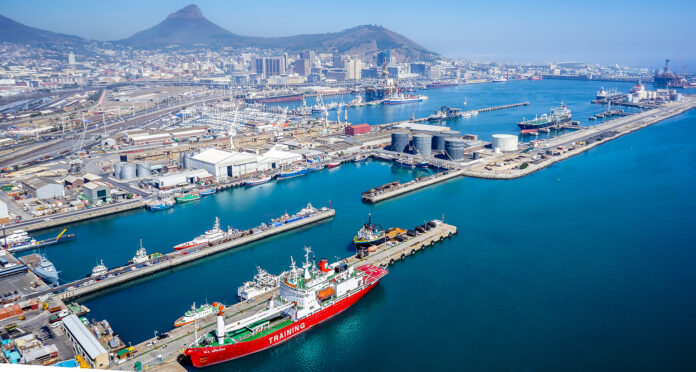
Global shipping traffic around the Cape of Good Hope has surged dramatically due to disruptions in the Red Sea and Strait of Hormuz trade routes.
In theory, South Africa should be strategically positioned to benefit enormously from this shift. Yet, persistent port inefficiencies and logistics failures continue limiting our ability to capitalise on the opportunity.
That is the broader South African economic story right now:
Potential exists. Execution struggles. At the same time, political uncertainty remains elevated during an election year. Markets pay attention to leadership stability, governance credibility and policy continuity. The renewed spotlight on the Phala Phala matter therefore carries economic implications.
Confidence matters in economics. Investment follows confidence. Growth follows investment. Employment follows growth. And when confidence weakens, economies slow gradually before they deteriorating.
By the time economists formally declare recessions, households and businesses have often already been living under recessionary pressure for months.
The average South African feels it differently:
At the fuel pump. At the grocery till. In rising debt repayments. In shrinking disposable income, and in businesses delaying expansion and hiring.
An economy does not weaken overnight; it weakens gradually – through rising costs, falling confidence, infrastructure instability, weak growth and policy uncertainty – until eventually ordinary citizens feel trapped in permanent economic pressure.
That is why South Africa must respond decisively. The country desperately needs growth.
South Africa can no longer afford to rely solely on heavily burdened state-run institutions struggling under debt, inefficiency, mismanagement and alleged corruption. Strategic partnerships with private business are no longer ideological debates – they are economic necessities.
Private capital, private expertise and private execution capacity must increasingly work alongside government to rebuild infrastructure, improve service delivery, unlock logistics efficiency and restore economic momentum. This is not about weakening the state, it is about strengthening the economy.
Business in South Africa is far stronger, more capable and more resilient than perhaps even business itself fully realises. The country possesses world-class financial institutions, deep pools of capital, engineering expertise, entrepreneurial talent and globally competitive sectors.
What has often been missing is coordinated execution and urgency. Rapid action is now required; not panic or pessimism, but action.
South Africa remains strategically positioned within global trade. And if structural reforms accelerate while public-private cooperation deepens, the country can unlock meaningful growth. The economy is sending a message. The question is whether South Africa is finally prepared to act on it.
- Van Doesburgh is an economist, Head of Economics at CPUT and a regular commentator on South Africa’s economic landscape, focusing on financial markets, policy, and business strategy. vandoesburghm@cput.ac.za
- South Africa is experiencing rising economic pressures: inflation surged to 4%, driven by global fuel price shocks and a weak rand, impacting transport, food, and living costs.
- The Reserve Bank is likely to tighten monetary policy with interest rate hikes, reversing earlier expectations of rate cuts, as inflation pressures are expected to persist.
- Economic growth forecasts are being revised downward amid supply-side inflation, transport disruptions, and logistic inefficiencies hampering South Africa’s ability to capitalize on increased global shipping traffic.
- Political uncertainty during the election year and issues like the Phala Phala matter undermine investor confidence, which is critical for investment, growth, and employment.
- To revive growth, South Africa needs urgent structural reforms and stronger public-private partnerships to improve infrastructure, service delivery, and economic execution rather than relying solely on struggling state institutions.


