


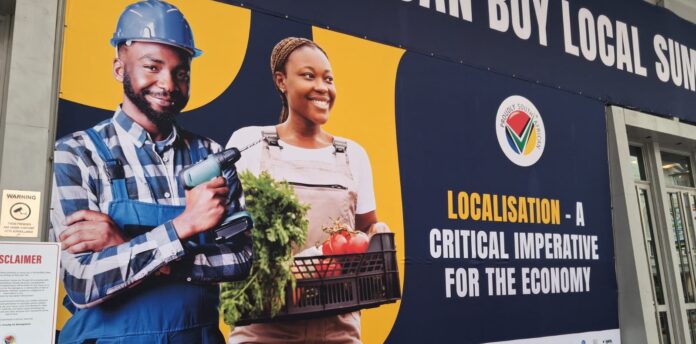
The Buy Local Summit & Expo, hosted by Proudly South Africa, the 14th edition of the annual flagship event at the Sandton Convention Centre, took place this week.
The exhibition hall was filled with locally made products, from honey and jam to art crafts and locally made sachet mouthwash to gin.
The energy was just locally made: localisation and networking. The venue was a vibrant marketplace and a hive of intellectual debate in panel discussions.
Inside the exhibition
Under the banner of “Loved Here. Made Here”, the expo floor was a tapestry of over 200 local exhibitors. It wasn’t just a trade show; it felt like a living museum of South African creativeness.
You could smell the premium soy wax from Makati Tshivhula’s The Light Candles stand, hand-poured in Soweto, while a few metres away, the glint of contemporary geometry from Nolo M’s jewelry designs caught the convention center lights.
The aroma of All Day Jam, featuring a variety of flavors and tastefully made locally, captivates you as you stroll around the room.
The atmosphere was a dynamic mix of high-stakes commerce and grassroots entrepreneurship.
On one side of the hall, captains of industry and government officials were locked in conversation through panel discussions on the impact of unfair and illegal trade practices on localisation and industrialisation.
The summit floor focused on policy and procurement, but the exhibitor booths revealed the true stories. Walking through the aisles, a personal connection to the “Made Here” was visible.
Director and founder of Freshmo Brand Paul Masilo stood there with his mouthwash in a sachet and said he believes everyone has a unique idea and hopes South Africa will see the value of buying local.
And on the other end, a 24-year-old brand ambassador and primary production group member of the All Day Jam sees local production as an opportunity to empower and skill the youth but also to provide job opportunities.
Nearby, the Business Solutions Hub was packed with entrepreneurs hungry for knowledge.
It felt less like a seminar and more like a support group for business owners navigating compliance, funding, and sustainability.
The atmosphere there was collaborative, made of established players sharing war stories and advice with newcomers.
The march and discussions
The energy peaked straight after the first panel discussion during the “Take a Stand” peaceful march.
It was a visual spectacle of solidarity as exhibitors, sponsors, and delegates carried placards and echoed outside the convention center.
The march was at the centre of amplifying the call to authorities to intensify efforts against illicit trade, smuggling, proliferation of counterfeit goods, and unfair trade practices such as dumping to safeguard jobs and local production.
In the panel discussions, the mood was serious but optimistic.
The shadow of foreign competition loomed large in conversations, particularly the staggering statistic revealed by the localisation support fund: offshore platforms like Shein and Temu generated R7.3-billion in local clothing sales in 2024, displacing thousands of manufacturing jobs.
The discussions were on the future of local procurement in South Africa and how brands and consumers can support economic growth through buying local.
Students from the Tshwane University of Technology ‘s different faculties were also in attendance.
Renewed sense of purpose
From the audience, a young business owner (skincare) steered the conversation toward solutions.
How do local businesses fight fire with fire? How do local brands reclaim the narrative against the convenience of foreign e-commerce giants?
- The Buy Local Summit & Expo, hosted by Proudly South Africa, the 14th edition of the annual flagship event at the Sandton Convention Centre, took place this week.
- The exhibition hall was filled with locally made products, from honey and jam to art crafts and locally made sachet mouthwash to gin.
- The energy was just locally made: localisation and networking.
- The venue was a vibrant marketplace and a hive of intellectual debate in panel discussions.
- Inside the exhibition Under the banner of “Loved Here.


