


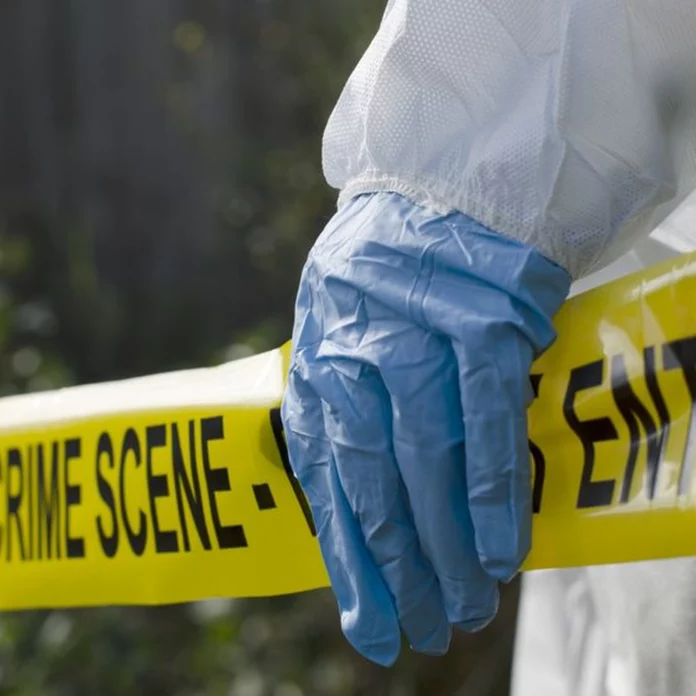
Seven bodies. Read that again. Seven people have been found dead in and around Kempton Park, and an already anxious community is understandably demanding answers.
This is not simply another crime story that will disappear from the news cycle in a few days. Seven deaths should set off every alarm bell in law enforcement. It should trigger urgency, coordination and an investigation that leaves no stone unturned.
Avoiding premature conclusions
And yet, amid the shock and growing fear, there is another danger: jumping to conclusions before the evidence is in.
The obvious question being asked is whether Ekurhuleni is dealing with a serial killer. At this stage, there is no confirmed link between the seven deaths and no evidence establishing that a serial killer is responsible.
That must be made absolutely clear. But saying there is no confirmed link is not the same as saying there is nothing to investigate. Quite the opposite.
Connecting the dots
Seven bodies in the same broader geographical area demand a forensic examination of every possible connection.
Police must be asking whether the victims knew each other. Whether they visited the same places. Whether they disappeared under similar circumstances. Whether their cellphone records overlap. Whether the same vehicles, people, addresses or associates appear in the various investigations.
They need to examine post-mortem findings, DNA, fingerprints, CCTV, cellphone tower data, vehicle tracking information and every other available piece of evidence. And they need to do it urgently. Because every hour matters.
If these cases are connected, the consequences could be catastrophic if authorities fail to identify a pattern early enough. If they are not connected, investigators still need to establish that conclusively. What is unacceptable is complacency.
The information vacuum
The public should not have to become detectives because they believe authorities are not providing sufficient answers.
Social media is already filling the information vacuum with theories, speculation and, potentially, misinformation. That is dangerous.
Police need to get ahead of the narrative by providing credible information whenever they can without compromising the investigations. People living in Kempton Park and surrounding parts of Ekurhuleni have a right to ask a simple question: Are we safe?
A leadership test for police
Authorities cannot necessarily answer that question immediately. But they must demonstrate that they are taking the situation seriously.
This is where leadership matters. The police cannot investigate seven deaths as seven disconnected files simply because no obvious link has yet emerged.
The cases should be examined collectively at an intelligence level, with investigators comparing evidence and looking for patterns. Sometimes the connection between crimes is not immediately visible. That is precisely why intelligence-led policing and experienced detectives are so important.
Questions about missing persons
There is another issue we cannot ignore: missing people.
Were any of these victims reported missing? If so, when? How quickly did investigations begin? Were their last known movements established? Were cellphone records obtained? Were CCTV cameras checked? Were the families properly assisted?
These are uncomfortable questions, but they need to be asked. Every missing person is somebody’s loved one. A disappearance is not an inconvenience or a statistic. It can be the first warning that something terrible has happened.
And when a missing person is eventually found dead, investigators must look backwards as well as forwards.
What happened before the person disappeared? Was there an opportunity to intervene? Was information available that could have helped? Were there warning signs?
If mistakes were made, authorities must learn from them.
The public’s role
The public also has responsibilities.
If you know something, report it. If you saw suspicious activity, speak to investigators. If you have CCTV or dashcam footage that could assist, preserve it.
But do not turn WhatsApp groups and social media into kangaroo courts. Do not publish names of alleged suspects without evidence. Do not identify victims before their families have been formally informed. And do not spread claims simply because they sound plausible.
The stakes are too high.
Seven lives, seven families
At the centre of all of this are seven human beings. They were not statistics. They had families. They had friends. They had lives, plans and people who expected them to come home.
Now there are families waiting for answers. They deserve more than speculation. They deserve the truth. And if someone is responsible for these deaths, that person must face the full force of the law.
If there is a wider pattern, investigators must uncover it. If there is no connection, investigators must establish that too. But what we cannot afford is for seven deaths to become seven separate investigations with no serious attempt to determine whether there is a bigger picture.
A wake-up call for South Africa
Seven bodies should be a wake-up call. Not because we can declare there is a serial killer. Not because we should feed public panic. But because seven deaths demand extraordinary investigative attention.
Ekurhuleni needs answers. The victims’ families need justice. And the public deserves to know that every available resource is being used to establish exactly what happened.
No rumours. No sensationalism. No premature conclusions. Just facts, forensic evidence, relentless investigation and accountability. Because seven bodies are seven lives too many.
Violence has become normalised
We have an average murder rate of over 60 people each and every day. The blood sadly is not stopping to flow. I often say we are living in a “war zone”.
Men must also stand up and say, “Enough is enough.” We cannot sit by and watch the brutal murders continue. The fight against violent crime cannot be left to law enforcement alone. Communities, families and society as a whole must reject the culture of violence that is claiming lives every day.
Only through collective action, accountability and justice can South Africa begin to reverse the tide of bloodshed that has become all too common.

- Yusuf Abramjee is a crime expert and activist.
- Seven bodies have been found in and around Kempton Park, causing significant concern in the community.
- There is currently no confirmed link between the seven deaths or evidence of a serial killer.
- Police are urged to conduct a thorough, urgent investigation including analysis of forensic evidence, CCTV, cellphone records, and connections between the victims.
- Authorities face criticism for a lack of information, which has led to speculation and misinformation on social media.
- The article stresses the importance of leadership, collective police investigations, and community responsibility in addressing violent crime.


