


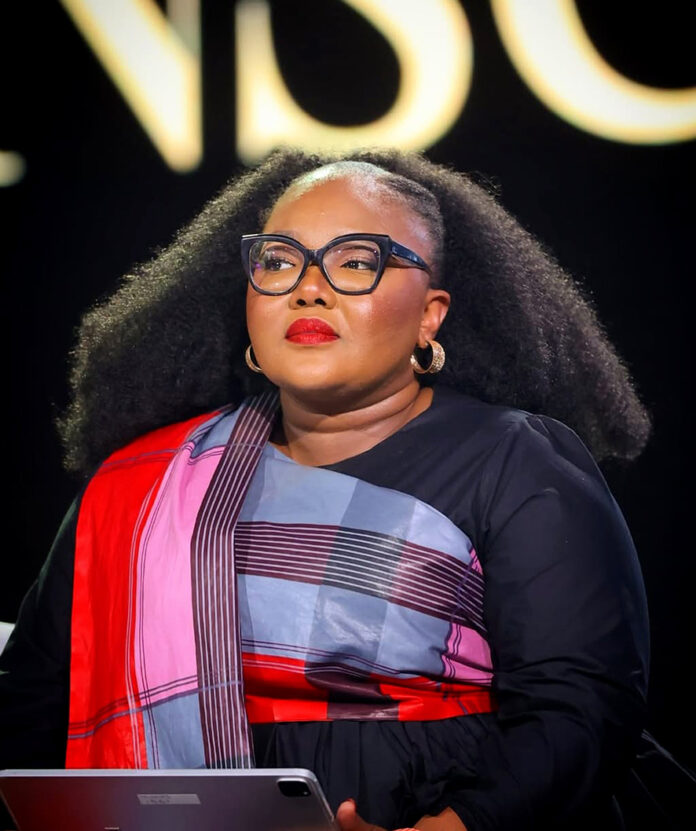
Minister of Basic Education Siviwe Gwarube has used her reply to President Cyril Ramaphosa’s State of the Nation Address (SONA) to strongly defend the government of national unity (GNU), presenting it as both a stabilising political project and a vehicle for urgent education reform.
Speaking in Parliament on Wednesday, Gwarube said South Africa has entered a new era in which parties across the political spectrum are being forced to cooperate in the national interest.
“The GNU is demonstrating that it is possible to work across political lines to stabilise the country. To grow the economy and create jobs,” she said.
DA decision to enter government
Her speech also served as a clear justification of the Democratic Alliance’s decision to enter government. A move that has drawn criticism from opponents who accuse the party of abandoning its traditional role in opposition.
“For the DA, the moment of entering the GNU was not a departure from our values. [It was] an expression of them,” Gwarube said.
She argued that the DA joined the coalition at a moment of “profound uncertainty” to prevent institutional collapse. To fight corruption and ensure reforms are implemented rather than delayed by political paralysis.
“We could never allow the country we so love to fall into the hands of those who wish to throw our Constitution into the bin, for political clout,” she said.
she the took aim at parties such as uMkhonto weSizwe (MK), which she accused of undermining South Africa’s constitutional democracy.
Gwarube aligned herself with Ramaphosa’s emphasis on growth and job creation. But she warned that economic recovery will remain impossible without fixing the education system.
“No country can grow without an education system that works,” she said. She called education the starting point of productivity and national development.
Matric pass rate
Gwarube pointed to the class of 2025 achieving the country’s highest matric pass rate yet, at 88%. And she noted that more than 60% of bachelor’s passes came from no-fee schools.
“Talent and hard work resides even in our most rural and under-served areas,” she said, framing the results as evidence of resilience despite inequality.
Since taking office, Gwarube said her department has shifted focus toward foundational literacy and numeracy. This with early childhood development (ECD) becoming a key pillar of reform.
She highlighted the Bana Pele Mass Registration Drive, which set a target of registering 10, 000 ECD centres by the end of 2025. The department surpassed that goal, closing the year with more than 13, 000 registered centres.
“This means over 1.3 million children have access to good nutrition, foundational learning and safe places,” she said.
Government has allocated R10-billion over the next three years for ECD support. Thus increasing the subsidy to R24 per child per day. In 2025 alone, an additional 150, 000 children gained access.
Nutrition programmes
“South Africa is not a poor country. Our children cannot die of hunger,” Gwarube said. She announced that nutrition programmes will now be extended into ECD centres.
She also revealed a nearly R500-million Outcomes-Based Fund aimed at creating more than 100, 000 new ECD spaces in KwaZulu-Natal, the Eastern Cape and Limpopo.
Gwarube acknowledged that austerity measures have weakened provincial education departments. But she said the GNU government is demanding stronger accountability.
Each province, she said, has been required to produce financial recovery plans to shield classrooms from budget cuts.
At the same time, she said government is encouraging private sector participation. This with corporate and philanthropic partners investing in libraries, classrooms, kitchens, smart devices and sports facilities.
Focus on learners’ basics
Switching into isiXhosa, Gwarube stressed that the measure of success is not only matric passes. It is whether learners leave school prepared for work, further study and entrepreneurship.
“If we get the basics right, reading, writing, counting, safe schools, supported teachers, and accountable governance, we will build the human capital that makes growth possible,” she said.
Positioning education delivery as central to the GNU’s credibility, Gwarube said government would continue until every child, regardless of geography or class, has a fair start.
“We will not stop until we get it right,” she said.
- Minister of Basic Education Siviwe Gwarube has used her reply to President Cyril Ramaphosa’s State of the Nation Address (SONA) to strongly defend the government of national unity (GNU), presenting it as both a stabilising political project and a vehicle for urgent education reform.
- Speaking in Parliament on Wednesday, Gwarube said South Africa has entered a new era in which parties across the political spectrum are being forced to cooperate in the national interest.
- “The GNU is demonstrating that it is possible to work across political lines to stabilise the country.
- To grow the economy and create jobs,” she said.
- DA decision to enter government Her speech also served as a clear justification of the Democratic Alliance’s decision to enter government.


