


South Africa’s 2026 State of the Nation Address and the accompanying Presidential Employment Stimulus report tell a familiar story: cautious optimism, long lists of programmes, and repeated promises of progress.
Yes, parts of the economy show marginally positive signs. But this is a far cry from the deep, structural reform and growth the country urgently needs. Counting “opportunities” created through public employment programmes is not the same as creating sustainable jobs.
Marginal growth, major challenges
Real GDP growth over the past year has been modest. Some gains are cyclical, driven by:
- A rebound in mining, boosted by the global gold and platinum rally; and
- Resilience in certain trade and service sectors.
These improvements are welcome, but they do not represent broad-based, labour-absorbing growth. Structural transformation remains absent. Unemployment continues to soar, and temporary government programmes cannot substitute for real economic expansion.
Why public programmes aren’t enough
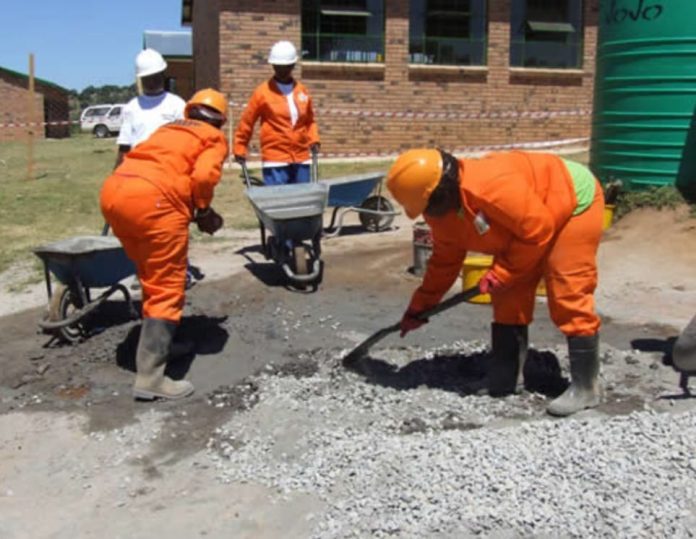
The Presidential Employment Stimulus highlights millions of short-term placements, stipends, and social employment schemes. While these provide temporary relief, they do not offer long-term, sustainable employment.
Worryingly, unemployment is increasingly framed as a problem to manage, rather than a crisis to solve. This is dangerous: managing unemployment is not a substitute for growing the economy.
The private sector imperative
The solution is clear: only the private sector can generate long-term jobs at scale. Governments cannot create millions of sustainable positions; businesses do, when conditions allow them to invest, expand, and hire.
- Private participation across the economy—from infrastructure, ports, rail, and energy to manufacturing and services—is essential; and
- Small and medium enterprises (SMEs) must be empowered. They drive innovation, expand markets, and absorb large numbers of unemployed workers.
Without unlocking private sector potential and SME growth, temporary stimulus programmes will remain holding patterns, not solutions.
Structural and Fiscal Constraints
South Africa’s growth is constrained by persistent structural obstacles:
- Failing logistics networks
- Collapsing municipal services
- High crime and extortion
- Excessive regulatory burdens on SMEs
- Energy instability and policy uncertainty
Fiscal realities compound the challenge. Public debt is above 75% of GDP, and interest payments consume an ever-growing portion of the national budget. The government cannot borrow its way to prosperity; economic growth must come from productive, private-sector-led expansion.
A roadmap for real jobs
To tackle unemployment, policy must focus on unlocking private sector investment and SME participation, including:
- Accelerating private participation across the economy, particularly in ports, rail, energy, and municipal services;
- Reducing red tape and compliance burdens for SMEs to enable rapid scaling;
- Restoring municipal functionality and reliable basic services;
- Ensuring policy certainty to encourage investment; and
- Prioritising export competitiveness and labour-absorbing sectors.
Temporary stimulus programmes can serve as bridges, but real, sustainable jobs come from a vibrant private sector and empowered SMEs.
South Africa does not have a funding shortage. It has a growth shortage. Until this reality is confronted with urgency, courage, and real reform, the country will continue to fall short of the inclusive prosperity its people deserve.
Unlocking private sector participation across the economy and empowering SMEs is the only way to drive real job creation and sustainably reduce unemployment. Anything less is simply managing a crisis, not solving it.
Van Doesburgh is Head of Economics at Cape Peninsula University of Technology (CPUT), businessman, with years of directorships in JSE-listed companies, and a regular contributor to South African business news platforms, including eNCA, SABC News, eTV, Newsroom Afrika, IOL, and Sunday World.


