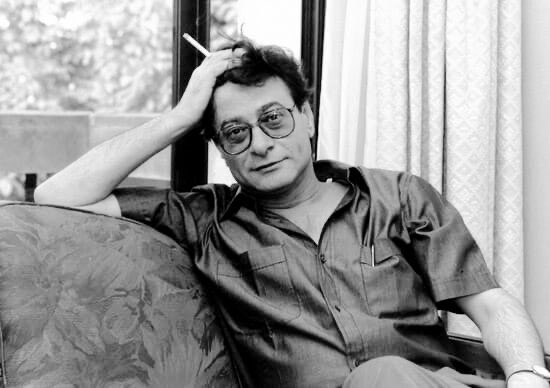
A poignant poem written in an ordinary language such that ordinary mortals like me who do not master the queen’s language all that well can comprehend contextually is what the Palestinian distinguished poet Mahmoud Darwish meant when he penned the poem, Think of Others.
The white South Africa apartheid regime before the dawn of our democracy in 1994 would not have allowed black students to learn this poem from our the Bantu/ Coloured and Indian oppressive systems they fostered us to learn against our will.
Repressive regime would ban poem
The poem, Think of Others, would have been banned by the apartheid regime and our schools would not have been accorded any green light to even dream of prescribing it as one of the literature books to be learned by us black vulnerable students.
The apartheid regime was only too excited to force down our throats poems which bore no relevance to our daily lived experiences. We had to recite by heart poems such as the Afrikaner poem, Oktobermaand, authored by Louis Leipordt and its sister English poem, The Daffodils, written by William Wordsworth.
Such poems were extremely unrelated to our (black) daily survival needs of eating nutritional foods at our homes and at our schools because our parents at their places of employment during the apartheid era were simply treated as “kitchen girls and garden boys” who earned meagre wages sufficient just enough to afford them transportation to commute to work.
After paying for their transport fares to and from work, what remained from their meagre wages could hardly feed us, their children, and yet we were expected to learn poems such as the Oktobermaand and the Daffodils on empty stomachs.
Apartheid looked after whites
In contrast, our counterpart learners in the white schools governed by a different education system enjoyed a healthy learning environment meant to unlock their minds and prepared them to be future owners of the economy, which they firmly command to date 30 years post the achievement of our democratic government.
Do you think that white people ‘Think of Others’? Others being us black people.
Our black professional young people, among them medical doctors who have completed their studies, find themselves in the streets of South Africa carrying placards looking for employment of any sort so long as it is legal.
For brevity purposes, I urge you to read this simple but protest poem: ‘ Think of Others ‘
Perhaps I should also ‘think of others‘, and furnish you with the fuller version of the poem which reads thus:
Think of Others by Mahmoud Darwish.
As you prepare your breakfast, think of others
( do not forget the pigeon’s food ).
As you conduct your wars, think of others
( Do not forget those who seek peace ).
As you pay your water bill, think of others
( those who are nursed by clouds ).
As you return home, to your home, think of others
( do not forget the people of the camps ).
As you sleep and count the stars, think of others
( those who have nowhere to sleep ).
As you liberate yourself in metaphor, think of others
( those who have lost the right to speak ).
As you think of others far away, think of others
( say: “ If only I were a candle in the dark ).
This painful deep protest poem which the then Bantu Education System denied me the right to learn to unlock my brains killed me alive together with my ‘ Soweto Class of 1976.
- Adv Mahlodi Muofhe is an admitted advocate of the High Court of South Africa.
- Mahmoud Darwish’s poem "Think of Others" uses simple language to evoke empathy and social awareness, relatable even to those not fluent in English.
- During apartheid, South African black students were prohibited from learning such meaningful and protest-oriented works, instead forced to study irrelevant poems by Afrikaner and English poets.
- The apartheid education system marginalized black learners, while white learners had access to better resources, preparing them to dominate the economy post-apartheid.
- The poem highlights inequalities and urges readers to remember the struggles of marginalized people, contrasting with the privileged lives of those who ignore such realities.
- Despite democratic progress, many educated black South Africans still face unemployment, reflecting ongoing socioeconomic disparities rooted in apartheid-era policies.