


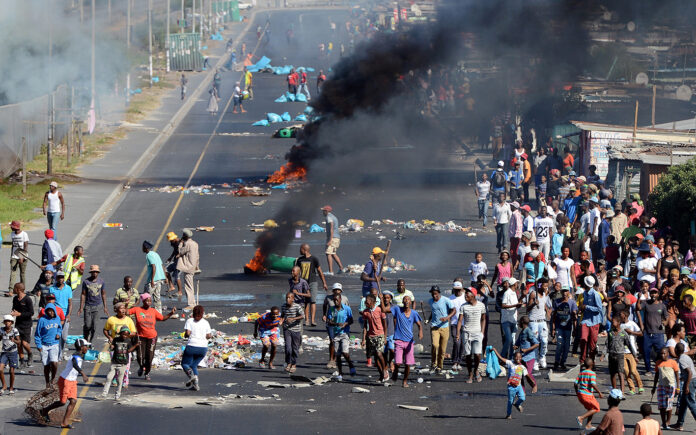
There is something deeply democratic about people taking to the streets when they feel nobody is listening.
In South Africa, where communities continue to face inequality, unemployment, poor service delivery, corruption and institutional failures, protest has given citizens a way to make their frustrations impossible to ignore. It can force government officials to engage, bring attention to neglected problems and create pressure for change.
The argument, therefore, should never be that South Africans should stop protesting. The right to protest is an important part of our democracy.
But we need to ask a more difficult question: What happens after the protest ends?
A protest can force a minister to respond, bring a mayor into a community, secure a meeting with officials or result in a promise that something will be done. Yet a government
response is not necessarily a solution. The real test should not be what happens while people are on the streets but what happens after they return home.
Research into service-delivery protests has repeatedly linked them to poor governance, corruption, weak municipal capacity and administrative failures.
The consequences extend beyond the original dispute.
When roads are blocked, businesses disrupted, public transport affected or schools forced to close, South Africans often bear the cost.
The experience of #FeesMustFall demonstrates the difference between achieving an immediate demand and solving a long-term problem. The movement successfully forced the government and universities to confront the affordability of higher education. Yet it did not resolve the broader structural challenges of funding, student debt and sustainable affordability.
Marikana offers an even more painful example. In August 2012, police killed 34 striking miners. What began as a wage dispute exposed deeper failures involving labour relations and living conditions. The Farlam Commission made recommendations and the government announced measures in response, yet implementation continued to require attention years later.
Government must also ask why citizens feel they have to protest . Public participation processes and formal complaints mechanisms are meant to give communities a voice. When these mechanisms fail, people look for louder ways to make themselves heard.
Success should be measured by whether commitments are implemented and solutions
sustained. South Africa does not need fewer voices demanding change. It needs stronger
institutions capable of responding before those voices become a crisis.
A democracy should be judged by how effectively it ensures that the same grievance does not become a protest again.
•Dusani is interning at Decode, a Pan-African PR agency in Johannesburg
- In South Africa, protests serve as a democratic tool for citizens to highlight issues like inequality, unemployment, poor service delivery, corruption, and institutional failures.
- Government responses to protests often fail to provide long-term solutions, with real progress measured by actions taken after protests end.
- Research links service-delivery protests to poor governance, corruption, weak municipal capacity, and administrative failures.
- The #FeesMustFall movement succeeded in drawing attention to the cost of higher education but did not solve underlying funding and affordability challenges.
- Effective democracy requires strong institutions that respond proactively to grievances to prevent recurring protests, rather than fewer voices demanding change.


