
As Beijing prepares to convene the annual “Two Sessions”, one document stands at the centre of national and global attention: China’s 15th Five-Year Plan.
Set to be formally approved by the National People’s Congress, the blueprint will chart the world’s second-largest economy over the next five years. From industrial strategy to economic priorities, decoding this landmark text is essential, as every word carries far-reaching implications for China and the wider world.
Ambitious priorities
The recommendations of the 15th Five-Year Plan, adopted in October 2025, hint at ambitious priorities. These are higher-quality growth, a stronger financial system, and expanded domestic demand.
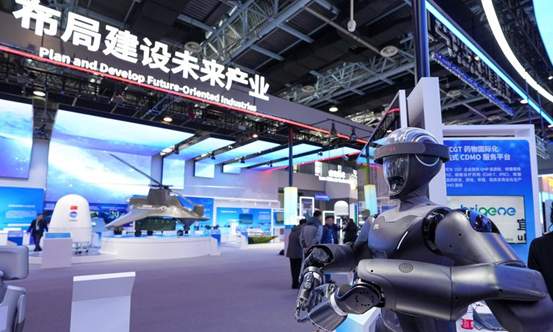
But it is clear that tech innovation is at the heart of China’s strategy. Frequent references to tech self-reliance signal that Beijing sees it not just as a goal, but as the engine of future growth.
China has long relied on strategic, long-term planning to drive economic growth. From 2021 to 2024, despite the Covid-19 pandemic and a volatile global economy, the country averaged 5.5% growth. It contributed roughly 30% to global expansion.
The challenge now is sustaining that momentum amid rising competition and technological bottlenecks. Core technologies remain dependent on foreign sources. And the risk of being trapped in mid- to low-end industries persists.
High-tech sector growth
Yet progress is evident. The country’s high-tech sector has grown rapidly. Thus strengthening its “new quality productive forces” and showing that it can upgrade industries from within. From Chang’e’s lunar missions to Tianwen’s Mars explorations, China is staking its claim in deep space.
Chinese new energy vehicles dominate global production and sales. Huawei’s HarmonyOS represents a push to reduce dependence on foreign software. Domestic players are increasingly challenging global leaders in AI chips and semiconductors. If China wants to remain competitive, the 15th Five-Year Plan’s emphasis on technological innovation is not just ambitious — it is essential.
Domestically, expanding internal demand is central to China’s economic restructuring. The plan envisions a shift from an investment-driven model to a consumption-led economy. Technological innovation is key to this transition, reshaping supply and demand. It is energising the domestic economic cycle, and creating new drivers of high-quality growth.
Five-Year Plan’s global takeover
Internationally, boosting domestic demand helps China buffer its economy against global shocks. This ensures steadier growth and strengthens its influence on the world stage. From space exploration to AI, semiconductors to clean energy, the Five-Year Plan signals that Beijing intends to set the pace in the next era of global technological competition.
The message is clear: technology innovation is no longer optional. China is determined to invest in high-tech industries. Nurturing homegrown capabilities, and reducing foreign dependency are critical to economic resilience and global competitiveness. The 15th Five-Year Plan is as much about shaping the future as it is about sustaining growth.
Visit SW YouTube Channel for our video content