


South Africa is a nation of innovation, where scientific curiosity, research and technological advancement continue to shape solutions for some of society’s greatest challenges.
Our scientists, researchers and innovators are contributing to global progress by using science and technology to improve the lives of people in our country.
The Lodox scanner is one such invention, first developed in the mining industry to detect smuggled diamonds using low-dose, full-body X-ray imaging.
Today, this technology is widely used in trauma centres and hospitals in South Africa and internationally, providing full-body images within seconds while exposing patients to significantly less radiation than traditional X-rays or CT scans. This innovation demonstrates how a solution developed for one sector can be transformed to improve healthcare outcomes and save lives.
Not just one field
South Africa’s contribution to science and innovation extends across several fields.
In medicine, the country has a proud history of pioneering breakthroughs that have influenced global healthcare.
The first successful human-to-human heart transplant was performed by South African cardiac surgeon Professor Christiaan Barnard at Groote Schuur Hospital in Cape Town in 1967, placing South African medical expertise at the forefront of international innovation.
Today, South African researchers continue to contribute to global health through advancements in infectious disease research, HIV prevention and treatment, vaccine development and healthcare solutions that respond to challenges facing communities.
SKA broadens understanding of universe
Inventions and discoveries such as these have ensured that South Africa remains a hub of innovation and technology. Even on a global level, South Africa is at the forefront of scientific exploration through projects such as the Square Kilometre Array (SKA), hosted in the Northern Cape, which is expanding the frontiers of science and our understanding of the universe.
The SKA project is an international effort to build the world’s largest radio telescope, with a collecting area equivalent to approximately one square kilometre.
Co-located in Africa and Australia, the project will generate groundbreaking scientific discoveries that will deepen our understanding of galaxies, black holes, the origins of the universe and the fundamental laws of nature. South Africa’s participation in this global project demonstrates our ability to host and contribute to some of the most advanced scientific initiatives in the world.
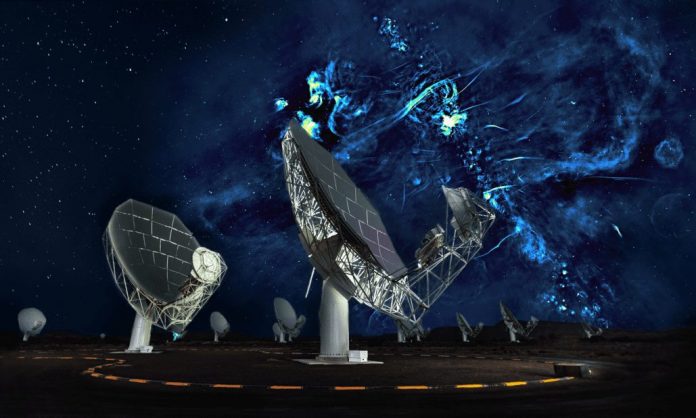
The MeerKAT radio telescope, located in the Karoo, further demonstrates the country’s leadership in astronomy.
This world-class facility has produced important scientific discoveries, including detailed observations of the centre of the Milky Way and research that helps scientists better understand space phenomena. MeerKAT has positioned South Africa as a key contributor to global astronomy and serves as a precursor to the SKA.
- South Africa has a strong tradition of innovation, using science and technology to address societal challenges and improve lives.
- The Lodox scanner, originally developed for detecting smuggled diamonds, is now widely used in hospitals to provide fast, low-radiation full-body X-rays.
- South Africa pioneered the first successful human-to-human heart transplant in 1967 and continues to advance infectious disease research, HIV prevention, vaccine development, and healthcare solutions.
- The country hosts the Square Kilometre Array (SKA), the world’s largest radio telescope project, enhancing understanding of the universe and showcasing South Africa’s role in global scientific exploration.
- The MeerKAT radio telescope in the Karoo has made key discoveries in astronomy, bolstering South Africa’s leadership in space science and serving as a precursor to the SKA.


