


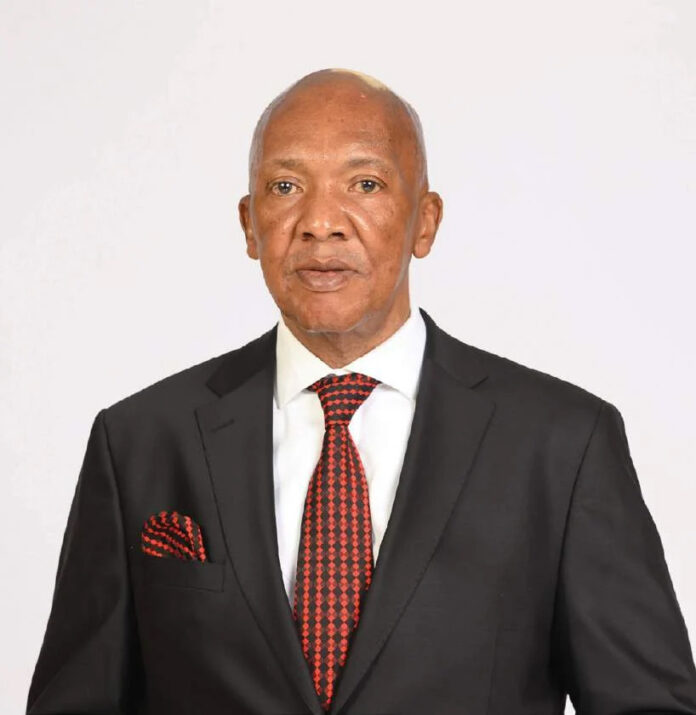
The Gauteng High Court in Pretoria has handed Makhosini Msibi a decisive legal victory after ruling that the board of the Road Traffic Management Corporation (RTMC) acted without lawful authority when it placed him on precautionary suspension.
In a judgment delivered on Monday, Judge Clute Swanepoel reviewed and set aside the board’s July 1 2025 decision to suspend Msibi following whistleblower allegations of fraud, corruption and wasteful expenditure.
The RTMC is South Africa’s national road traffic law enforcement coordinating body, established under the Road Traffic Management Corporation Act to align traffic policing across provinces and municipalities.
Its governance structure places strategic authority in the hands of a shareholders committee made up of the transport minister and provincial MECs responsible for roads and transportation.
Msibi against the board
Msibi approached the court, arguing that the RTMC board exceeded its powers when it suspended him because the law requires complaints against the CEO to be dealt with by the shareholders committee or the minister of transport.
The court agreed with his interpretation of the legislation.
“The board only exercises the powers delegated to it by the shareholders committee in writing,” Swanepoel said in the judgment.
He emphasised that the RTMC’s statutory structure is different from ordinary corporate governance models, with the shareholders committee retaining ultimate authority over the entity.
“The board does not have any powers save for the powers delegated to it,” the judge said.
The court also pointed to a clear provision in the RTMC Act which states that allegations involving the CEO must be escalated to higher authority.
“Any complaint regarding the chief executive officer must be submitted to the shareholders committee or the minister for investigation,” Swanepoel said.
Board charter ruled out
During the court proceedings, the board attempted to justify its decision by relying on a document known as the Board Charter, which it said empowered it to take disciplinary steps against the CEO.
However, the court ruled that the charter itself was unlawful because the board had not been granted the authority to adopt such a governance instrument.
“The adoption of the Board Charter is equally unlawful,” Swanepoel said.
The judge added that if written delegations of authority had existed, the board would have produced them during the litigation.
“The only possible explanation is that there are no written delegations in existence,” the judgment reads.
Although the court declared the charter invalid, it suspended the order of invalidity for 90 days to allow the Shareholders Committee to properly delegate powers to the board in accordance with the RTMC Act.
The RTMC board was also ordered to pay Msibi’s legal costs.
- The Gauteng High Court in Pretoria has handed Makhosini Msibi a decisive legal victory after ruling that the board of the Road Traffic Management Corporation (RTMC) acted without lawful authority when it placed him on precautionary suspension.
- In a judgment delivered on Monday, Judge Clute Swanepoel reviewed and set aside the board’s July 1 2025 decision to suspend Msibi following whistleblower allegations of fraud, corruption and wasteful expenditure.
- The RTMC is South Africa’s national road traffic law enforcement coordinating body, established under the Road Traffic Management Corporation Act to align traffic policing across provinces and municipalities.
- Its governance structure places strategic authority in the hands of a shareholders committee made up of the transport minister and provincial MECs responsible for roads and transportation.
- Msibi against the board Msibi approached the court, arguing that the RTMC board exceeded its powers when it suspended him because the law requires complaints against the CEO to be dealt with by the shareholders committee or the minister of transport.


