


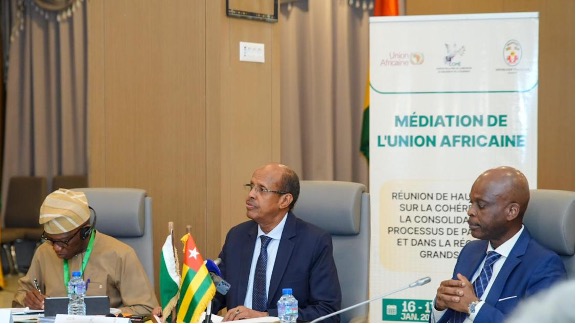
The African Union (AU) has appointed Togolese President Faure Gnassingbé to lead mediation efforts in the eastern Democratic Republic of the Congo (DRC), signalling a renewed push for a more unified, African-led diplomatic approach after previous peace initiatives stalled.
While the move has been welcomed by some as a reaffirmation of “African solutions to African problems”, analysts have questioned the rationale behind the appointment and whether it can break the current deadlock, especially after mediation attempts by regional blocs and external actors failed to deliver lasting peace.
The repeated collapse of these initiatives raises a deeper and more pressing question: what are the structural flaws in Africa’s peace architecture and mediation models, and how can they be addressed?
Why Togo
HORN Institute for Strategic Studies founder and chairman, Dr Mustafa Yusuf Ali, endorsed AU’s choice of Togo to broker peace in the troubled vast Central African nation, underscoring Lomé’s previous track record in conflict mediation as credible.
“It was in Togo with the Lomé Accord that ended a protracted, bloody, violent conflict in Sierra Leone,” Dr Mustafa said, adding that Togo’s geographic position also matters.
The West African nation lies outside both Central and East Africa, regions where many countries have vested interests in eastern DRC.
Another factor of this appointment is about trust.
“There appears to be trust on Togo as a country and also Gnassingbé as a person to lead this process,” he said.
Dr Oluwole Ojewale from the Institute for Security Studies questioned Gnassingbé’s credibility as a mediator but recognised the urgency of the crisis in eastern DRC, emphasising that “it necessitated utilising all available diplomatic channels, however imperfect”.
He argued that AU’s pivot toward a more proactive leadership role in addressing the crisis in eastern DRC represents a significant and encouraging shift in regional security architecture.
“We are seeing the African Union making concerted efforts to take responsibility for the crisis in Congo, and I do hope we will see that extended to other conflict theater like Sudan,” Dr Ojewale said during the show.
Dr Mustafa and Dr Ojewale shared the view that when contrasted with previous interventions, namely the Nairobi and Luanda processes, alongside mediation efforts facilitated by Qatar and the US, the current elevation of an African-led initiative marks a critical transition toward regional ownership.
Criteria of a good mediator
African mediators possess several unique strengths that distinguish them from Western or Middle Eastern intermediaries. But for them to succeed, there are some elements to be considered.
Effective mediation necessitates a synthesis of diplomatic gravitas, emotional intelligence, and strategic wisdom.
“Beyond active listening, a proficient mediator must possess the tactical acumen to orchestrate deliberative formats such as plenary sessions or strategic caucusing while identifying the precise moments to engage external stakeholders to resolve institutional deadlocks,” Dr Mustafa stated.
He added that ultimately, the success of the process hinges on the mediator’s ability to anticipate obstacles and maintain the perceived legitimacy required to navigate complex conflict architectures.
In Ojewale’s view, an effective mediator must first possess strong personal and political credibility, as any history of bias, conflicting interests or similar infractions can quickly undermine trust and legitimacy in the process.
Beyond credibility, he highlights the importance of leverage: successful mediation often requires the ability to combine incentives with pressure, the “carrot and stick”, a capacity more commonly associated with major powers that can deploy resources, influence and deterrence.
Dr Ojewale asserted that the crises in the DRC and Sudan highlight a critical deficit in both coercive deterrence and moral leadership within the African continent.
He further noted that the absence of a robust, active standby force is compounded by what he described as the dwindling presence of “elder statesmen”, naming the iconic Nelson Mandela, “who possessed the moral authority to hold belligerent leaders accountable”.


