


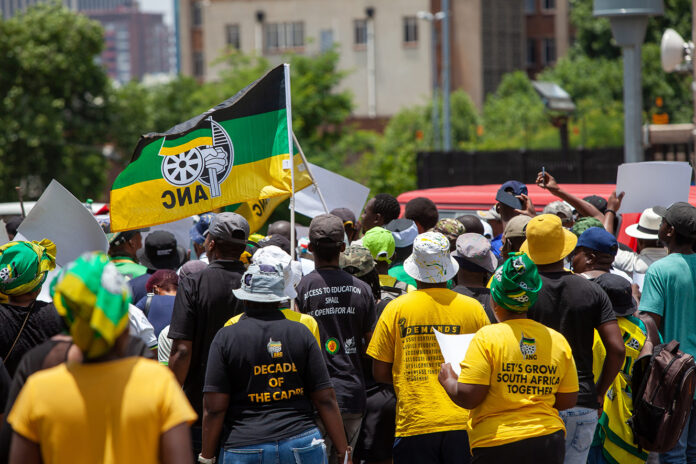
The ANC in Nelson Mandela Bay has admitted that internal divisions, particularly during its candidate selection process, contributed to the party’s declining support in the 2026 local government elections.
With 72% of the votes counted by 09:00 on Friday, the ANC was polling at just over 31%, while the DA was trailing in second place with 24%, according to provisional results.
In a statement responding to the results on Thursday, ANC Nelson Mandela regional spokesperson Bamanye Matiwane acknowledged that disgruntled members and supporters had either stayed away from the polls or voted for rival parties because of unhappiness within the organisation.
“Many of them stayed at home or lent their vote to other parties because they were disappointed by divisions within our ranks during the candidate selection process and many other matters that might have caused them to not vote,” Matiwane said.
READ: Nelson Mandela Bay deputy mayor convicted for skipping court for overseas trip
One of the biggest battles surrounding the ANC’s candidate selection process involved its national executive committee member Andile Lungisa, whose removal from the party’s Nelson Mandela Bay proportional representation candidate list triggered a legal showdown with secretary-general Fikile Mbalula.
Lungisa approached the Johannesburg High Court after his name was removed from the list, arguing that his nomination had been approved by the party’s national executive committee and that Mbalula had no authority to unilaterally remove him.
The ANC had defended its decision, citing its vetting process and Lungisa’s criminal conviction. However, the court ruled on October 9 that his removal was unconstitutional and unlawful, ordering the party to reinstate his name on its internal candidate list. The court also ordered the ANC, Mbalula and the NEC to pay his legal costs.
The dispute added to tensions within the organisation over the handling of candidate nominations ahead of the elections.
The ANC now faces the prospect of having to negotiate its way into the next administration, with no party having secured an outright majority in the metro.
The regional leadership also conceded that residents’ frustrations over persistent service delivery failures, including dry taps, deteriorating infrastructure and unstable council politics, had contributed to the party’s electoral decline.
“The ANC does not own this city, and its support has never been an entitlement. Our mandate comes from the people, and the people have spoken clearly,” Matiwane said.
The ANC said its regional leadership took collective responsibility for the election outcome, acknowledging that the party could not rely on its historical standing in the city to retain voters.
In its statement, the regional leadership invoked the ANC’s 2001 document, Through the Eye of a Needle: Choosing the Best Cadres to Lead Transformation, which warned that leadership positions were not an entitlement and that public contests for positions could damage the movement.
The region said its approach to forming the next administration would be guided by decisions of its National Executive Committee and the party’s coalition framework.
It said any coalition arrangement would have to prioritise residents, ensure stability in the council, protect poor and working-class communities and guard against corruption and the misuse of public funds.
“Any arrangement must put the residents of Nelson Mandela Bay first, bring stability to the council, protect the poor and working class, and be firmly against corruption and the misuse of public funds,” the statement said.
The party did not identify which political parties it would be willing to work with, saying its position would be guided by the NEC’s framework.
Matiwane also urged ANC members and supporters to remain disciplined and refrain from making public statements that could undermine the movement’s unity while the official results were being finalised and party structures deliberated on the way forward.
READ: DA-led coalition dethrones ANC in Nelson Mandela Bay
The regional leadership said it would await the Electoral Commission of South Africa’s official declaration of results on Sunday, November 8, before making any final determinations.
The statement also reflected on the ANC’s historical roots in Nelson Mandela Bay, recalling how Raymond Mhlaba led volunteers into the Europeans Only section of New Brighton railway station on June 26, 1952, to launch the Defiance Campaign.
It cited struggle stalwarts Govan Mbeki, Vuyisile Mini and Florence Matomela as part of the movement’s history in the region, arguing that the ANC had grown through grassroots organisation and service to communities.
However, the regional leadership conceded that this history alone would not secure its political future.
“That history does not guarantee our future. It reminds us that the ANC grew strong in this region when its branches were close to the people. It will grow strong again only on that basis,” the statement said.
The ANC thanked residents who participated in the elections, as well as its volunteers, branch members, alliance structures and supporters who campaigned across the metro. It also commended the IEC and security services for overseeing what it described as a largely peaceful election.
- The ANC in Nelson Mandela Bay acknowledged that internal divisions during its candidate selection process contributed to its declining support in the 2026 local government elections, polling just over 31% with 72% of votes counted.
- Disgruntled ANC members and supporters either abstained from voting or supported rival parties due to dissatisfaction with internal divisions and the candidate selection process, according to regional spokesperson Bamanye Matiwane.
- A legal dispute arose when ANC member Andile Lungisa's removal from the candidate list was ruled unconstitutional by the Johannesburg High Court, ordering his reinstatement and legal costs paid by the ANC and its leaders.
- The ANC conceded that persistent service delivery failures, including dry taps, infrastructure decay, and unstable council politics, also contributed to the party's electoral decline in Nelson Mandela Bay.
- The ANC's regional leadership plans to follow the National Executive Committee's coalition framework to negotiate a stable administration focused on prioritizing residents, preventing corruption, and protecting poor and working-class communities.
The ANC in Nelson Mandela Bay has admitted that internal divisions, particularly during its candidate selection process, contributed to the party's declining support in the 2026 local government elections.
With 72% of the votes counted by 09:00 on Friday, the ANC was polling at just over 31%, while the DA was trailing in second place with 24%, according to provisional results.
In a statement responding to the results on Thursday, ANC Nelson Mandela regional spokesperson Bamanye Matiwane acknowledged that disgruntled members and supporters had either stayed away from the polls or voted for rival parties because of unhappiness within the organisation.
“Many of them stayed at home or lent their vote to other parties because they were disappointed by divisions within our ranks during the candidate selection process and many other matters that might have caused them to not vote,” Matiwane said.
READ: Nelson Mandela Bay deputy mayor convicted for skipping court for overseas trip
One of the biggest battles surrounding the ANC's candidate selection process involved its national executive committee member Andile Lungisa, whose removal from the party's Nelson Mandela Bay proportional representation candidate list triggered a legal showdown with secretary-general Fikile Mbalula.
Lungisa approached the Johannesburg High Court after his name was removed from the list, arguing that his nomination had been approved by the party's national executive committee and that Mbalula had no authority to unilaterally remove him.
The ANC had defended its decision, citing its vetting process and Lungisa's criminal conviction. However, the court ruled on October 9 that his removal was unconstitutional and unlawful, ordering the party to reinstate his name on its internal candidate list. The court also ordered the ANC, Mbalula and the NEC to pay his legal costs.
The dispute added to tensions within the organisation over the handling of candidate nominations ahead of the elections.
The ANC now faces the prospect of having to negotiate its way into the next administration, with no party having secured an outright majority in the metro.
The regional leadership also conceded that residents' frustrations over persistent service delivery failures, including dry taps, deteriorating infrastructure and unstable council politics, had contributed to the party's electoral decline.
“The ANC does not own this city, and its support has never been an entitlement. Our mandate comes from the people, and the people have spoken clearly,” Matiwane said.
The ANC said its regional leadership took collective responsibility for the election outcome, acknowledging that the party could not rely on its historical standing in the city to retain voters.
In its statement, the regional leadership invoked the ANC's 2001 document, Through the Eye of a Needle: Choosing the Best Cadres to Lead Transformation, which warned that leadership positions were not an entitlement and that public contests for positions could damage the movement.
The region said its approach to forming the next administration would be guided by decisions of its National Executive Committee and the party's coalition framework.
It said any coalition arrangement would have to prioritise residents, ensure stability in the council, protect poor and working-class communities and guard against corruption and the misuse of public funds.
“Any arrangement must put the residents of Nelson Mandela Bay first, bring stability to the council, protect the poor and working class, and be firmly against corruption and the misuse of public funds,” the statement said.
The party did not identify which political parties it would be willing to work with, saying its position would be guided by the NEC's framework.
Matiwane also urged ANC members and supporters to remain disciplined and refrain from making public statements that could undermine the movement's unity while the official results were being finalised and party structures deliberated on the way forward.
READ: DA-led coalition dethrones ANC in Nelson Mandela Bay
The regional leadership said it would await the Electoral Commission of South Africa's official declaration of results on Sunday, November 8, before making any final determinations.
The statement also reflected on the ANC's historical roots in Nelson Mandela Bay, recalling how Raymond Mhlaba led volunteers into the Europeans Only section of New Brighton railway station on June 26, 1952, to launch the Defiance Campaign.
It cited struggle stalwarts Govan Mbeki, Vuyisile Mini and Florence Matomela as part of the movement's history in the region, arguing that the ANC had grown through grassroots organisation and service to communities.
However, the regional leadership conceded that this history alone would not secure its political future.
“That history does not guarantee our future. It reminds us that the ANC grew strong in this region when its branches were close to the people. It will grow strong again only on that basis,” the statement said.
The ANC thanked residents who participated in the elections, as well as its volunteers, branch members, alliance structures and supporters who campaigned across the metro. It also commended the IEC and security services for overseeing what it described as a largely peaceful election.


