


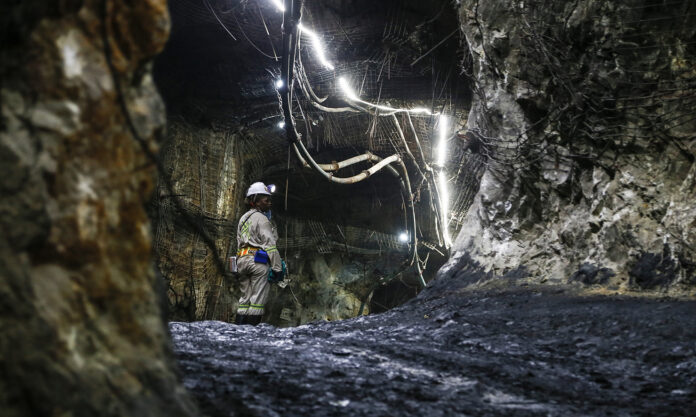
As the ANC sits for its national executive committee lekgotla this weekend, a significant push is expected from several provinces to decentralise control of the mining sector.
Three ANC provinces – North West, Limpopo and Mpumalanga – are set to advocate for the devolution of certain mineral resources competencies, aiming for their provincial departments to assume greater powers.
The move is framed as a necessary response to chronic local underdevelopment despite mineral wealth.
“The North West Province has three economic hubs: mining, tourism and agriculture,” said Tumelo Maruping, ANC spokesperson in the province. “It is, therefore, disheartening for this province to have the highest unemployment rate in South Africa.”
This challenge fuels the argument against the longstanding, top-down governance of mineral resources, which remain centrally controlled by the national Department of Mineral Resources and Energy.
Provinces argue they bear the social and infrastructure costs of mining – such as roads, water and housing – without proportionate authority or revenue.
“In response to all these, during the ANC national general council, we made a firm proposal that mineral resources must be a shared competency,” stated Maruping. “The objective of this submission is that the provincial government does not have any direct influence in the mining sector.”
A core complaint is the glaring misalignment between provincial plans and mining companies’ mandated social investments. Maruping illustrated the dysfunction: “The annual performance plans of provincial government and service delivery plans are totally not aligned to social labour plans of the mines.”
He gave a concrete example: “For instance, if the provincial government plans to build houses in Ward 35 in Rustenburg, Marikana, and the municipality in the same year plans to construct internal roads, and the mine comes and builds a community hall, part of the human settlement at that time could’ve been bulk water supply. There is absolutely no synergy, and that has been left for too long.”
The push for devolution includes a call for an assisted revenue-sharing model and greater provincial oversight, particularly in mining-intensive districts like Moses Kotane and Bojanala in the platinum belt.
Proponents contend this would allow strategic alignment to stimulate local economies and fund critical projects.
The issue is compounded by migration patterns. “Mining companies have an obligation in terms of the law to develop labour-sending areas,” Maruping noted. “In the context of our province, the majority of labourers in our mines are people from outside the province.”
He clarified, “It must be noted, though, that we are not saying people from outside the boundaries of the North West are not supposed to work here; rather, we are advocating for a reasonable ratio as the inheritance of the land.”
This weekend’s lekgotla will thus confront a fundamental governance question: can provinces secure a greater role in monitoring mines and aligning their benefits with local needs without fracturing national policy unity?
The outcome will signal the party’s direction in a debate that pits centralised control against provincial demands for direct influence over the resources that define their economies.
- As the ANC sits for its national executive committee lekgotla this weekend, a significant push is expected from several provinces to decentralise control of the mining sector.
- Three ANC provinces – North West, Limpopo and Mpumalanga – are set to advocate for the devolution of certain mineral resources competencies, aiming for their provincial departments to assume greater powers.
- The move is framed as a necessary response to chronic local underdevelopment despite mineral wealth.
- “The North West Province has three economic hubs: mining, tourism and agriculture,” said Tumelo Maruping, ANC spokesperson in the province.
- “It is, therefore, disheartening for this province to have the highest unemployment rate in South Africa.” This challenge fuels the argument against the longstanding, top-down governance of mineral resources, which remain centrally controlled by the national Department of Mineral Resources and Energy.


