


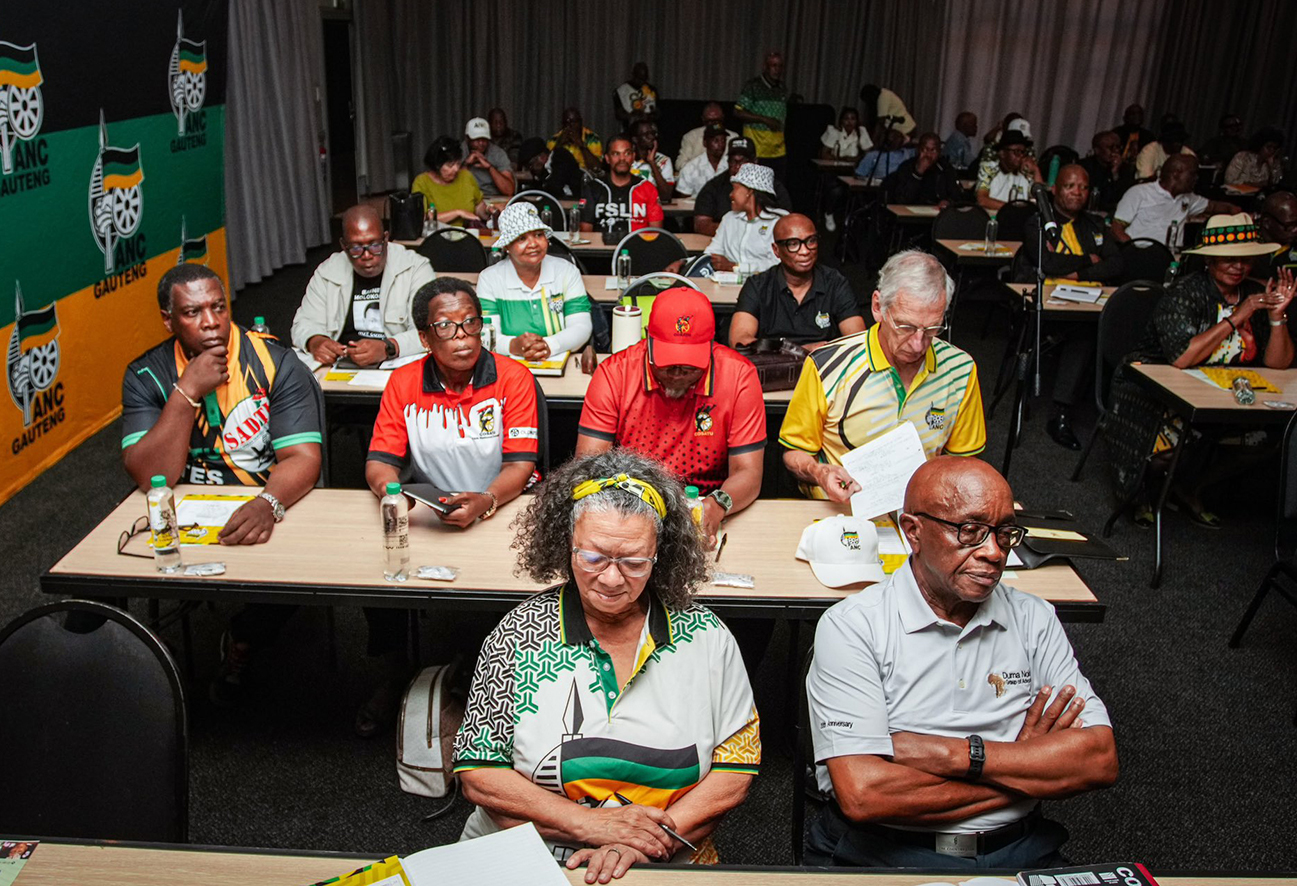
The ANC NEC this week endorsed a view that the party remains central to deciding who governs South Africa’s hung municipalities despite its sharp decline in the November 4 elections.
With just over 30% of the vote, the ANC has become a sought-after partner in coalition talks. Even the Council of the Left has acknowledged its importance in forming governments in metros and secondary cities.
Negotiating approach
That position shaped Thursday’s ANC national executive committee (NEC) meeting, which adopted “tactical flexibility” as its negotiating approach, according to insiders who spoke to Sunday World. The meeting continued until midnight.
The ANC believes that having the first round of coalition meetings, at the invitation of the parties they are meeting, provides them with “leverage”.
ANC negotiators were invited to meet the EFF on Friday and the IFP, ActionSA and MK Party, among others, yesterday. They are due to meet the DA today.
‘DA arrogance’
The NEC heard widespread complaints about the DA’s “arrogance and bullying” of the ANC since the formation of the government of national unity (GNU).
Many members warned against extending that relationship to municipalities and favoured exploring agreements with the EFF and MK Party, albeit cautiously.
“Everyone was given an opportunity to air their views in the NEC meeting, and people spoke about their displeasure in how the DA treats the ANC in the GNU and why it is dangerous to continue on that path,” said a credible NEC member who attended the meeting.
“But in a nutshell, the meeting concluded that the negotiating team must go negotiate with everyone because we cannot dictate as if we have an outright majority.
Another senior leader who contributed to the debate at the NEC said although everyone seemingly agreed that the DA must be sanctioned for its stance on the transformative manoeuvres of the ANC, divorcing them for a marriage with the MK Party and EFF was not the solution.
“The Left radicals are reckless with their push against the DA because it has consequences of being catastrophic. This excitement that ANC, Action SA and MKP and EFF must unite against [the] DA, especially Helen Zille, will not work,” our source said.
“First of all, capital will not accept a deal that says Zille must be stopped and they have sway whether we like it or not. Also, that push may trigger the collapse of the GNU and be the final nail in President Cyril Ramaphosa’s political coffin.”
Ramaphosa removal
This perspective argues that there are no guarantees that going with the MK Party, ActionSA and EFF in municipalities will mean they will vote against the removal of Ramaphosa as head of state through a vote of no confidence in Parliament.
“The views of the MKP and EFF about President Ramaphosa are an open secret; they want to see his backside, and if voting with the DA to achieve that presents itself, they will pounce on it,” another NEC member said.
“If the ANC adopts [an] ahabambe attitude against the DA, the confidence of big business in the country will deteriorate and it will collapse the national government when they pull out.
“Therefore, the question is: What is the cost of instability to the GNU?”
Difficult choices
The risks of going with the MK Party and EFF were also raised in the NEC, backed with
arguments that their lack of democracy and radical stances on issues like land and the Constitution would scare investors and capital.
“It’s difficult choices that we are confronted with; hence, the tactical flexibility approach is the only safe option,” said another NEC mole.
“We cannot be threatened with the reaction of capital as a permanent scarecrow against the ANC, but we also must be alive to what is pragmatic and the best deal for the stability of the country.”
The ANC NEC unanimously rejected a sweeping two-party pact that would allow it and the DA to divide control of South Africa’s hung municipalities.
As part of the “tactical flexibility” strategy, the former liberation movement will negotiate separate arrangements in every council. It could work with the DA in some municipalities, choose other parties elsewhere or surrender power and assume the opposition benches.
The position rejects one of the central options placed before the NEC. That proposal would have allowed the ANC and DA to support each other where either party emerged strongest.
The ANC also wants agreements to address stability, transparency, accountability and corruption but will issue its detailed statement on Tuesday.
- The ANC NEC endorsed "tactical flexibility" in coalition negotiations following its decline to just over 30% of the vote in the November 4 elections.
- ANC negotiators held meetings with the EFF, IFP, ActionSA, MK Party, and are scheduled to meet the DA as part of coalition talks.
- The NEC criticized the DA for "arrogance and bullying" but rejected a sweeping two-party pact allowing the ANC and DA to share control of hung municipalities.
- Concerns were raised about alliances with the MK Party and EFF, citing risks to investor confidence, national government stability, and potential threats to President Ramaphosa's leadership.
- The ANC will negotiate separate arrangements in each municipality, potentially partnering with different parties or acting as opposition, and plans to issue a detailed statement on Tuesday.


