


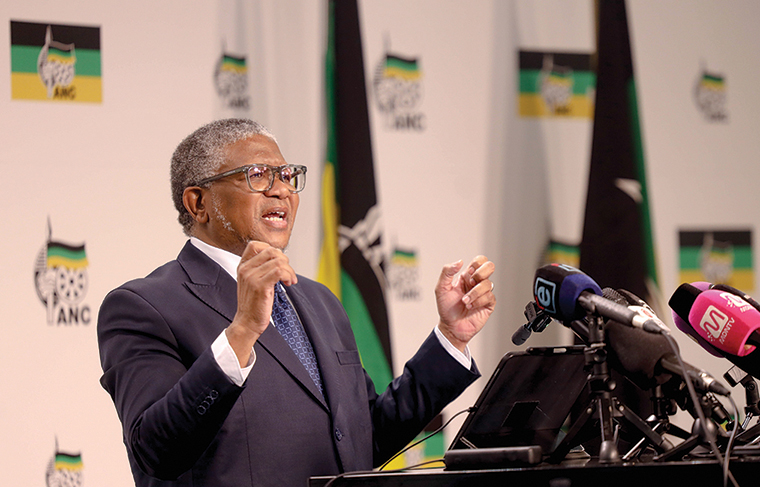
The ANC appears to be singing one tune in public and another behind closed doors, with most members of its national executive committee (NEC) backing the view that the DA should be a partner of last resort in municipal coalition negotiations.
The position puts the ANC at odds with its own coalition framework, which says the party winning the most votes in a municipality should lead a coalition government.
The contradiction could have major consequences in Gauteng, where the DA emerged as the biggest party in Johannesburg, Tshwane and Ekurhuleni in the recent local government polls.
DA the last resort
Sources who attended Thursday’s NEC meeting in Boksburg told Sunday World that most committee members supported the view that the DA should be considered only after other options had been exhausted.
This is despite ANC national spokesperson Mahlengi Bhengu-Motsiri saying before the meeting that the ANC would use its 2023 coalition framework as a guide.
The apparent disconnect between the ANC’s public position and the sentiment expressed inside its highest decision-making body raises questions about whether the framework will carry any real weight when the party sits down to negotiate.
The framework
The framework, adopted after an NEC meeting in April 2023, is clear about who should lead a coalition government.
“The party that has won the largest votes should lead the coalition … and executive positions should be allocated in proportion to the votes obtained by coalition partners,” it states.
It further warns against political parties using coalition negotiations to divide positions at the expense of voters.
“Coalition governments should reflect the will of the people, not just elite deal-
making among parties.”
Yet, with the DA being viewed by most NEC members as a partner of last resort, the ANC’s commitment to allowing electoral performance to determine coalition leadership appears to be under strain.
The framework was not discussed at Thursday’s meeting, according to sources and no formal resolution was taken to amend or replace it.
Further provisions
But its provisions go beyond deciding which party should lead a coalition. The document proposes collective executive systems in municipalities where no party has secured an outright majority of 50% plus one, with executive representation reflecting the electoral support of coalition partners.
It also requires coalition partners to agree on a common minimum programme with measurable service-delivery and community-development targets, which must be made public and discussed with residents.
The ANC further committed itself to quarterly public reporting on coalition performance and proposed protecting municipal administrations from political bargaining between parties.
“The law should be amended to ensure that public administration is insulated from coalition deal-making and bargaining, and motions of no-confidence are not abused,” the framework states.
Perhaps most significantly, the document does not exclude cooperation with parties despite ideological differences.
DA performance
The DA’s electoral performance makes the implications of the ANC’s latest position particularly significant.
In Johannesburg, the DA secured 34.79% of the vote against the ANC’s 20.25%. In Tshwane, it received 34.37%, ahead of ActionSA on 22.07% and the ANC on 20.22%.In Ekurhuleni, the DA got 30.68%, the ANC 22.11% and ActionSA 18.5%.
The ANC now faces the challenge of reconciling its stated commitment to that framework with the position favoured by most of its NEC members.
If the party ultimately negotiates in a manner that sidelines the largest party, its 2023 coalition framework risks being reduced to a declaration of principles that carries little influence when political interests are at stake.
- Most ANC national executive committee (NEC) members support the view that the DA should be a partner of last resort in municipal coalition negotiations.
- The ANC's 2023 coalition framework states that the party winning the most votes in a municipality should lead the coalition government.
- The DA was the biggest party in Johannesburg (34.79%), Tshwane (34.37%), and Ekurhuleni (30.68%) in the recent local government elections, ahead of the ANC in each.
- The ANC's coalition framework includes provisions for collective executive systems, public reporting on coalition performance, and insulating municipal administrations from political deal-making.
- No formal resolution was taken to amend or replace the coalition framework during the NEC meeting, though the framework was not discussed.
The ANC appears to be singing one tune in public and another behind closed doors, with most members of its national executive committee (NEC) backing the view that the DA should be a partner of last resort in municipal coalition negotiations.
The position puts the ANC at odds with its own coalition framework, which says the party winning the most votes in a municipality should lead a coalition government.
The contradiction could have major consequences in Gauteng, where the DA emerged as the biggest party in Johannesburg, Tshwane and Ekurhuleni in the recent local government polls.
Sources who attended Thursday’s NEC meeting in Boksburg told Sunday World that most committee members supported the view that the DA should be considered only after other options had been exhausted.
This is despite ANC national spokesperson Mahlengi Bhengu-Motsiri saying before the meeting that the ANC would use its 2023 coalition framework as a guide.
The apparent disconnect between the ANC’s public position and the sentiment expressed inside its highest decision-making body raises questions about whether the framework will carry any real weight when the party sits down to negotiate.
The framework, adopted after an NEC meeting in April 2023, is clear about who should lead a coalition government.
“The party that has won the largest votes should lead the coalition ... and executive positions should be allocated in proportion to the votes obtained by coalition partners,” it states.
It further warns against political parties using coalition negotiations to divide positions at the expense of voters.
“Coalition governments should reflect the will of the people, not just elite deal-
making among parties.”
Yet, with the DA being viewed by most NEC members as a partner of last resort, the ANC’s commitment to allowing electoral performance to determine coalition leadership appears to be under strain.
The framework was not discussed at Thursday’s meeting, according to sources and no formal resolution was taken to amend or replace it.
But its provisions go beyond deciding which party should lead a coalition. The document proposes collective executive systems in municipalities where no party has secured an outright majority of 50% plus one, with executive representation reflecting the electoral support of coalition partners.
It also requires coalition partners to agree on a common minimum programme with measurable service-delivery and community-development targets, which must be made public and discussed with residents.
The ANC further committed itself to quarterly public reporting on coalition performance and proposed protecting municipal administrations from political bargaining between parties.
“The law should be amended to ensure that public administration is insulated from coalition deal-making and bargaining, and motions of no-confidence are not abused,” the framework states.
Perhaps most significantly, the document does not exclude cooperation with parties despite ideological differences.
The DA’s electoral performance makes the implications of the ANC’s latest position particularly significant.
In Johannesburg, the DA secured 34.79% of the vote against the ANC’s 20.25%. In Tshwane, it received 34.37%, ahead of ActionSA on 22.07% and the ANC on 20.22%.In Ekurhuleni, the DA got 30.68%, the ANC 22.11% and ActionSA 18.5%.
The ANC now faces the challenge of reconciling its stated commitment to that framework with the position favoured by most of its NEC members.
If the party ultimately negotiates in a manner that sidelines the largest party, its 2023 coalition framework risks being reduced to a declaration of principles that carries little influence when political interests are at stake.


