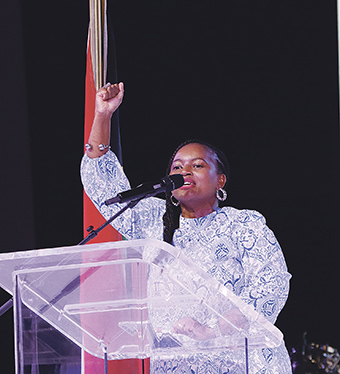
The South Gauteng High Court has dismissed Stanley Itshegetseng’s urgent application to interdict the ANC Greater Johannesburg Regional Executive Committee (REC), looking to overturn the election of Regional Chair Loyiso Masuku over Johannesburg Mayor Dada Morero.
Judge Wilhelmina du Plessis did not even consider whether the December 2025 regional conference was properly conducted. The judgment hinged on a narrower issue: whether the applicant had followed the ANC’s internal dispute processes before seeking judicial intervention.
Itshegetseng alleged ‘serious irregularities’
The conference, held from 3 to 5 December, produced a new REC expected to shape the party’s organisational direction in Johannesburg ahead of the 2026 local government elections. Masuku had already been promoted to the position of deputy mayor.
Itshegetseng alleged “serious irregularities”, including a conflict of interest involving the electoral agency, failure to announce results in a conference, and post-conference adjustments to enforce gender parity.
Judge located the dispute within settled authority
Du Plessis located the dispute within settled authority, beginning with Ramakatsa and others v African National Congress. From that judgment, she restated that the ANC, as a voluntary association, is governed by its constitution and rules, which “collectively constitute the terms of the agreement entered into by its members” and form “a unique contract”.
The court went further, drawing directly from Ramakatsa to underline that political participation inside a party is structured internally: “These activities are internal matters of each political party” and “the constitutions of political parties are the instruments which facilitate and regulate participation”.
Route to court is mediated by the party’s own processes
That framing places the dispute in a particular posture. It is not that courts lack jurisdiction. It is that the route to court is mediated by the party’s own processes.
Earlier authority, such as Turner v Jockey Club of South Africa and Natal Rugby Union v Gould, sits in the background of this reasoning. Both establish that members of voluntary associations are bound by internal rules and that those rules must be engaged before external remedies are pursued.
Du Plessis expressed the position in direct terms: members are “ordinarily expected to utilise those mechanisms… before approaching courts, unless they can demonstrate that internal processes have been exhausted, are unavailable, or would be futile”.
‘Itshegetseng did not satisfy internal processes’
The court relied further on Sithole and others v African National Congress, which affirms the same requirement in the specific context of ANC disputes.
On the facts, Itshegetseng did not satisfy that threshold.
He had written to party officials, including the secretary general, but the court found that “those letters… did not trigger the dispute-resolution machinery contemplated by the party’s rules”.
‘Process is formal, not inferential’
Du Plessis noted that the applicant “did not invoke any of the formal dispute mechanisms as prescribed by the ANC constitution and guidelines” and did not show that any internal structure “refused to entertain such a complaint” or rendered remedies ineffective.
The explanation that correspondence went unanswered did not alter that conclusion. The judgment treats process as something formal, not inferential.
The court added that permitting a member to proceed in this way would “undermine the internal constitutional order of the voluntary association that the courts are required to respect”.
‘Obligation to adhere to internal dispute-resolution mechanisms’
There is a measured acknowledgement of the applicant’s position. Du Plessis accepted that he acted out of “genuine concern for the integrity of his party’s internal democracy”. But the judgment draws a line: that concern “cannot override his obligation to adhere to the internal dispute-resolution mechanisms prescribed by the ANC constitution”.
The court also leaves open the possibility of direct judicial intervention where internal remedies are “demonstrably illusory” or implicated in the alleged illegality. It found no such circumstances here, stating that “this… is not such a case on the facts before me”.
Contest over conference outcome not resolved
The application was struck from the roll as premature. The court concluded that the applicant “has not exhausted the available internal processes and has not advanced cogent reasons why those remedies were unavailable, inadequate or futile”.
Costs followed the result.
The judgment situates the dispute within a familiar legal structure. It does not resolve the underlying contest over the conference outcome. It determines when, and how, that contest may be brought before a court.
- The South Gauteng High Court dismissed Stanley Itshegetseng’s urgent application to block the ANC Greater Johannesburg REC election that favored Loyiso Masuku over Dada Morero.
- The court focused on whether Itshegetseng exhausted the ANC’s internal dispute resolution mechanisms before seeking judicial intervention, not on the election’s conduct.
- Judge Wilhelmina du Plessis ruled that members must follow the ANC’s formal internal processes before approaching courts, citing precedent that respects party constitutions as binding contracts.
- Itshegetseng's correspondence with party officials did not formally trigger the ANC’s dispute resolution procedures, making his court application premature and procedurally defective.
- The court acknowledged his concerns about party democracy but emphasized the obligation to use internal remedies first, leaving open court intervention only if internal processes are futile or unavailable.