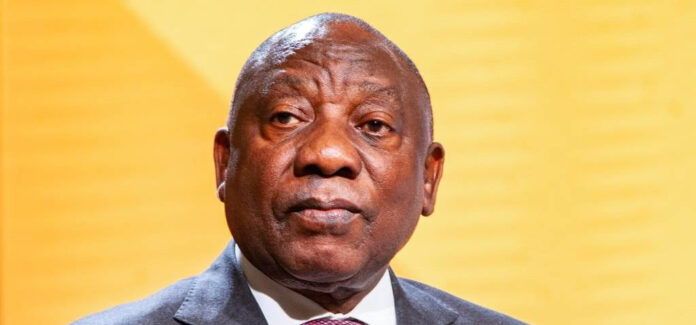
President Cyril Ramaphosa used his 2025 National Reconciliation Day speech to challenge misleading narratives about South Africa, following recent comments from US President Donald Trump regarding farm killings and alleged human rights violations.
When he delivered his address at the Ncome Museum in Nquthu, KwaZulu-Natal, Ramaphosa was welcomed by KwaZulu-Natal Premier Thami Ntuli and Minister of Sport, Arts, and Culture Gayton McKenzie.
This year’s commemoration carried the theme “Reaffirming Reconciliation for Future Generations”, which the president emphasised as particularly relevant given the distorted portrayal of South Africa in some international circles.
Opportunity to face difficult history
While Ramaphosa did not mention the US statesman directly, the address appeared to respond to Trump’s posts on his social media platform, Truth Social.
Trump claimed that the US had boycotted the G20 in South Africa due to what he described as the targeting of white farmers and alleged land seizures, further accusing the media of ignoring what he called a “genocide” and warning that South Africa could be excluded from the 2026 G20 summit in Miami.
Ramaphosa reflected on the importance of December 16, stating that the day offered South Africans an opportunity to face the country’s difficult history and recommit to a future grounded in peace and mutual understanding.
He described reconciliation as a vital pillar of South Africa’s democracy, built through generations of struggle, resistance, and sacrifice.
Warning against attempts to divide nation
The president cautioned against attempts to divide South Africans by spreading fear and misinformation, noting that such claims ignored the progress made in race relations since apartheid.
“They do not show a society where children of different races learn, play, and grow together,” Ramaphosa said, highlighting that the nation’s diversity should be openly acknowledged and addressed rather than denied.
Acknowledging that reconciliation remains an ongoing process, he pointed to persistent inequality and widespread poverty as obstacles to social cohesion.
Ramaphosa stressed that genuine unity would remain elusive while economic marginalisation continued to affect the majority of black South Africans.
- President Cyril Ramaphosa used his 2025 National Reconciliation Day speech to challenge misleading narratives about South Africa, following recent comments from US President Donald Trump regarding farm killings and alleged human rights violations.
- When he delivered his address at the Ncome Museum in Nquthu, KwaZulu-Natal, Ramaphosa was welcomed by KwaZulu-Natal Premier Thami Ntuli and Minister of Sport, Arts, and Culture Gayton McKenzie.
- This year’s commemoration carried the theme “Reaffirming Reconciliation for Future Generations”, which the president emphasised as particularly relevant given the distorted portrayal of South Africa in some international circles.
- Opportunity to face difficult history While Ramaphosa did not mention the US statesman directly, the address appeared to respond to Trump’s posts on his social media platform, Truth Social.
- Trump claimed that the US had boycotted the G20 in South Africa due to what he described as the targeting of white farmers and alleged land seizures, further accusing the media of ignoring what he called a “genocide” and warning that South Africa could be excluded from the 2026 G20 summit in Miami.